Walmart plans to eliminate all packaging waste by 2025

Home > Archives

About Jim Carroll


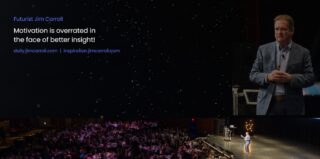
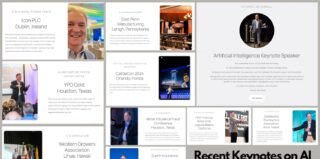
As we wind down 2011, it’s a good time to reflect on some of the events I highlighted this year. It proved to be quite the year year, with many fascinating events where I opened or closed a large scale conference or corporate meeting with a keynote address.

One of Jim's key themes is the opportunities of the future - at one in Las Vegas, one fellow was so inspired by the message that he asked Jim when he might consider running for President of the United States. Click to watch!

As we approach the end of the year, everyone turns their attention to 2012 — and begins to wonder “what comes next?” All of my clients are focused on that theme when they engage me for a keynote or corporate workshop — and so a sense of what they were thinking about in 2011 gives you a good sense of what’s going to be important in 2012!

Some of the highlights from this year includes these events:

  • CSC Executive Exchange 2011, St. Andrews, Scotland. A small, intimate, invitation only event where I shared keynote duties with Jimmy Wales, the Founder of WikiPedia. I had CEO’s, CIO’s and CFO’s of some pretty major global organizations. Key theme: “The Next Wave of Digital Game-Changers” – I took a look at how every industry is soon to be caught up in Silicon Valley velocity, as technological comes to change every industry at lightening speed.
  • McKesson IdeaShare 2011, San Francisco, California. Changing roles, changing opportunities. I open this annual event with a message for 4,500 pharmacist / owners that with significant challenges and change in the world of healthcare and retail, the time is ripe for them to innovate with their role and their methods because their has never provided a bigger time for opportunity. The big theme: “Healthcare 2020: The Transformative Trends That Will REALLY Define Our Future.” This proved to be a huge topic for this year, and continues into 2012, as people come to seek insight on what will really happen in the world of healthcare beyond the current political rhetoric.
  • Multi-Unit Franchising Conference 2011, Las Vegas. I share the stage with Sean Tuohy, subject of the Blind Side, who owns quite a few franchise operations on his own. The focus in my keynote is on the fast changes occurring in the world of retail with consumers, technology, advertising and branding, social networking – you name it all!
  • US Air Force Research Laboratory, Dayton, Ohio: This group, which controls the entire research budget for the Air Force, brings me in to open a conference in which they examine new opportunities and methodologies for innovative thinking. Fascinating audience, and indicative of the fact that every organization realizes that the world is changing so fast that a lot of traditional assumptions about innovation and R&D are changing at lightening speed!
  • Consumer Goods Technology Magazine 2011 , Orlando, Florida. The pre-eminent conference for packaged goods, food and consumer products companies, with a huge number of Fortune 500 executives. My theme focuses on ‘what world class innovators do that others don’t do‘, particularly to keep up with changing consumers, mobile technologies, social networks and a variety of other trends. It leads to a blog post by one fellow, “Some mind blowing stats from Jim Carroll ….” Big themes: “Mobile, Social, Location!
  • Maple Leaf Foods, Toronto, Canada. A blog post, “Food industry trends 2011; Report from a keynote” was based on this talk. This blog post is now one of the first search results for anyone searching for anything having to do with food trends — and is now easily the most trafficked Web page on my site. After health care, food trends is probably the second busiest topic area for the year.
  • T. Rowe Price 2011 Investment Symposium. 600 investment managers, senior executives and CEO’s. The other keynotes are Colin Powell and Charlie Cook. My job is to close this two day event with an inspirational, motivational message based on the theme “When Do We Get to Normal? Why Thinking BIG Will Help You Seize The Opportunities of the 21st Century.”
  • World Pharma Innovation Congress, London, UK. I’m honored to open this renowned global conference on innovation within their crucial sector – most of the global heavy hitters from the world of pharma and bio-science are in the room. Opportunities for growth and innovation are coming from hyper-science, opportunities for externally sourced innovation insight, and the big global ‘idea machine’ that is revolutionizing opportunities for innovative thinking.
  • Interactive Manufacturing Exchange, Las Vegas, Nevada. A massive highlight from September — with a dinner keynote for 600 major manufacturing executives, and a morning keynote for 1,000 more. My keynote focus is that there is plenty of room for growth in the North American manufacturing sector, given the tremendous advances that have occurred with methodology and technology. My message must have resonated — after my talk, one fellow got up during the Q&A and asked if I would consider running for President of the US!
  • DSSI Forum, San Antonio, Texas. One of the largest seniors care conferences in the US. I spoke at length and with passion about the big opportunities for innovative thinking in the sector, particularly in light of the big challenges that society faces. This was a very personal event; those who know me well know that we have learned quite a bit about the challenges society faces with Alzheimer’s as a close family member has suffered from the disease.
  • Lockheed Martin, Washington, DC. I’m asked to speak at their 2011 global HR conference. The organization is aligning itself to deal with fast paced change in ever sector of its operations: my theme is what companies are doing o achieve “skills agility”, and why the issue of “deploying the right skills at the right time for the right purpose” is an increasingly important model for the future.
  • Pearson 2011. The future of education. A talk that linked key future trends to the need for massive, transformation thinking in the world of knowledge delivery. Noted one attendee: “Jim Carroll gave a particularly poignant keynote address about the need for true, innovative thinking.  (Think of a 5 year mission on steroids…)”
  • Bombardier Global Operators Conference. The future of corporate and leisure travel. Manufacturing innovation. Consumer change, and the impact of mobility. A wide ranging talk that challenges global airline operators to think about innovation in every aspect of their operations.
  • Fairmont / Raffles Hotels International. A corporate event, focused on the future of the global meetings and events industry. Key theme: organizations will increasingly require short, sharp shocks of knowledge delivery — corporate meetings and events are a big part of this trend, and are a key part of the short term strategic planning cycles that organizations are focused upon.
  • Texas CattleFeeders Association, Amarillo, Texas. The 2nd of two major talks for the cattle/beef industry in the US. Earlier in the year, I opened a private event that had in the room the top 100 cattle ranchers from across the country – representing a  multi-billion dollar investment. My keynotes focus on the significant opportunities for growth in the agricultural industry.
  • International Foundation 57th annual Employee Benefits Congress, New Orleans, LA. A morning keynote for 4,500 people at 730AM in New Orleans — and they all show up, confirming that description that “what I do for a living is go out and talk to large groups of hungover people.” It’s a rousing talk on the theme of Healthcare 2020: Today’s Trends, Tomorrow’s Opportunities
  • Linde Health Group, Munich, Germany. Global opportunities in the world of healthcare – how do we link future trends to opportunities for growth.

There were quite a few other keynotes for associations, government and corporations. In addition to these high profile engagements, which featured audiences of up to 6,000, I also hosted a number of small CEO level events. In one case in Washington, I spent the morning with a small group of 15 CEO’s/CIO’s/CFO’s in a boardroom style setting, where we explored the opportunities for growth that coming from linking future trends to innovative thinking.

Advance bookings for 2012 are exceedingly strong — so far, I know I’ll be in Palm Springs, Tampa, Orlando, Phoenix, Aspen, New Orleans (x2), San Antonio and many other locations.

Think growth. Think opportunity. Think trends. Think positive!

For over 20 years, I’ve been working from my home office, serving a global clientele that includes some of the largest organizations in the world, with unique insight on future trends and innovation. Everyone from the PGA of America to Johnson & Johnson, NASA and the Walt Disney Company. Not unsurprising, this has involved some pretty heavy duty travel – I’ve seen the world!

This week, I’ll have the perhaps dubious distinction of surpassing 1 million miles on one of the airlines that I utilize the most. That’s 1 million miles actually IN THE AIR. (I’m told by the airline that I’ve actually earned over 5 million miles if we add in all the flight, car, hotel, credit card and other bonuses.)

That’s like going to the moon twice and back. At an average speed of 500MPH on a jet, it’s about 2,000 hours spent in the air — more counting taxing and all the other delays. Just over 83 days “up there.”

Out of a sense of curiosity, I did a few calculations, and figure that I’ll pass this milestone somewhere over Lake Michigan on my return to my home airport of Toronto, Canada.

I can’t help but thinking of this scene from the movie Up In The Air, starring George Clooney, in which he surpassed 10 million miles. I couldn’t imagine! So with this dubious distinction in mind, here’s the clip.

Fortunately, unlike the fellow George Clooney portrayed in the movie, I very much have a life beyond flying! Most of my trips are short and to the point ; there is much time in the home office and with my family; and for many of my more exciting international trips, I’ve had the wonderful opportunity of bringing my wife and two sons with me. Just this summer, I was booked to keynote a pretty significant CEO level event in St. Andrews, Scotland — we all went on the voyage, and managed, of course, to get a round of golf in.

Here’s to the next million miles!

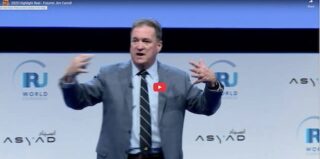
From the Q&A portion of a recent keynote in Las Vegas – I’m on stage, have finished my talk, and get asked this question from someone in the audience!

The folks at PollEverywhere — the service that I use to conduct live text message polling while on stage — have just run an interview with me over on their blog as to how I utilize the tool.

I’m reposting it here since it does provide a good overview of just how wonderful and interactive their service is.


Jim Carroll is recognized one of the world’s leading international futurist, trends & innovation experts — and he’s got the client list to prove it, having provided his insight to such organizations as NASA; Lockheed Martin; National Australian Bank; Pfizer; Diners Club; HJ Heinz; and PPG.

And he’s a raving fan of Poll Everywhere – using the service in a huge range of global Fortune 1000 and other organizations as well as countless association events, such as being the opening keynote speaker for 4,000 people at the annual National Recreation and Parks Association annual conference in Salt Lake City.

“I’ve been using [Poll Everywhere] on stage as part of my keynote for at least two years, and the service has truly helped in building a live, rich interactive experience with my audience. I’ve used it in small CEO level sessions with just 20 people, and in large scale Las Vegas events where you’ve got to be a top-notch performer to keep a crowd engaged – particularly if they are in rough shape after a night out on the town!”

One of Jim’s most thrilling moments came when he found himself on stage in front of 500 golf pros for the 94th Annual General Meeting of the Professional Golfers Association of America. “The management team at PGA invited me in to speak to their members on the need for innovative thinking. They never had an outside speaker in before, in their entire history. And so starting out by having them pull out their cell phones in order to gauge some of their opinions about change, the future and challenges facing the game — it certainly made them think! The reaction was powerful and pretty astounding, because I was able to quickly shape my talk to respond to their concerns.”

While Jim can speak to audiences of 7,000 in Las Vegas or Orlando, he recently found himself on stage in front of 250 kids at his son’s high school. “My son knows that I’ve had a strange job for the last 20 years – flying around all over the world to speak at events — and his teachers thought it would be great if I could come in and talk about the future of their careers.”

Jim’s opening comments, as found in his blog post “What happens when high school students are told to text” (www.jimcarroll.com/2011/04/what-happens-when-high-school-students-are-told-to-text) captures the fascinating dynamics that occur on the big screen when PollEverywhere grabs the minds and attention of the ultimately wired generation. “That was a pretty cool moment,” says Jim. “And it really should get anyone thinking about the future of education, corporate and association meetings, and conferences.”


Jim’s method of audience interaction has proven to be a big selling point with his client base —  so much so that he devotes a Web page to what he does. www.jimcarroll.com/keynotes-workshops/interaction-from-the-stage


Not only that, but his blog offers a sometimes fascinating look into his client base – consider the opinions offered up by a group of manufacturers from Ohio: “Report from the heartland: Is there life in manufacturing in Ohio? You bet!” http://www.jimcarroll.com/2011/02/report-from-the-heartland-is-there-life-in-…

“People want to interact and be engaged with a speaker. This tool lets me reach out to their minds and hearts, and make them immediately part of the talk. And it has certainly provided me with a very unique tool in getting across some of the key trends which are impacting the future and opportunity for innovation.”

An interesting article in the Globe & Mail yesterday on trends with corporate boards. This article struck close to home, because last November I graduated from the University of Toronto – Rotman Director’s Education Program, which provides individuals with a key range of skills to serve on a corporate or not-for-profit board.

"...boards are increasingly searching for younger directors who are up to date with changes in business and technology...."

I certainly keep busy with some 60-80 keynotes worldwide, and this is certainly one of the most thrilling careers that one could imagine. I’m regularly providing high level strategic guidance to CEO’s and senior management teams for some of the largest organizations in the world. Yet being a futurist, I’ve always had in my mind a 5 to 10 year plan for my career, and looking forward, I anticipate taking on some more substantive strategic work on several corporate boards. That’s why I took the Rotman program.

And that’s why the Globe article was interesting, in that it noted that increasingly, the demographics of corporate boards are changing in a big way:

The ranks of top corporate directors in Canada are swelling with younger directors, which represents a shift for boards, according to a new review of 100 large company boards by Toronto-based director search firm Spencer Stuart. The average age of new directors added in the past three years was 57, down from 62 in the three-year period from 2000 to 2002.

Andrew MacDougall, who leads Spencer Stuart’s board services practice in Canada, said boards are increasingly searching for younger directors who are up to date with changes in business and technology, and who will be able to serve at least a decade before hitting boards’ mandatory retirement ages.

“Boards are more aware now than they might have been in the past that things are changing rapidly in this world, and the fact is that the younger you are – within reason – the more of a sense you’ll have of what those changes look like,” Mr. MacDougall said.

Directors from the baby boom generation (people born between 1947 and 1966) help bring “a new energy and new perspective” to boards, he said.”

Now that caught my interest – “the younger you are – within reason – the more of a sense you’ll have of what those changes look like.” I’m part of that baby boomer generation, and I often find that there is a huge difference in the reaction to my message on the urgency of (business model, strategic, competitive) change for an audience of mine that is composed of baby boomers or below, and those who are of an older generation. And there’s a big difference in the receptiveness to change between boomers and Gen-X. And an even bigger attitude shift between Gen-X and Y….. I think the younger you are, the more open and able you are to deal with change.

As I say in my keynotes, “for the younger generation, constant change is like oxygen.”

And I think here’s what the Globe article is really asking: how can a corporate board possibly be effective if its demographic is primarily a group of CEO’s and senior executives who are 65+? Not to be disrespectful, but I have long had a sense that many corporate boards don’t really have a sense of urgency in dealing with the very fast paced change that is swirling around the organization.  Social networks, technology, changing workforce attitudes, disruptive business model change — it often seems that much of what i focus upon in my keynotes involves extremely dramatic, fast rates of change, often driven by a younger demographic who is intent on changing the business world at the pace that is faster than previous generations, and certainly shaped in a huge way by the tsunami of technology-driven change.

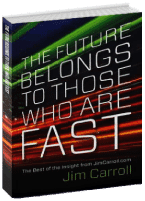
There’s a phrase I use when I open any keynote,: “The future belongs to those who are fast.”

The role of corporate boards, and as a result the role of corporate directors, is changing quickly, and the observations from the Globe article reflect that reality. Now and in the future, corporate boards will take on a greater role in understanding the massive trends that will impact the organization in the future, and make sure that the CEO properly anticipates that very fast change and continually adjusts the corporate strategy to deal with that fast paced change.

There are quite a few boards that are deficient in that regard. And that’s where I’m hoping to help fill the void.

To read about my Rotman experience, read my article, “Learning for a Living

Graduation time!
November 18th, 2010

This weekend marks an interesting chapter — I’ll be graduating on Sunday!

It’s been quite a long time since my last official graduation ceremony — some 30+ years ago.

When I graduated from university at the ripe young age of 20, I certainly seemed to look different — the suit size was a bit smaller, the style with a 3-piece suit a little bit fascinating, and signs are evident in my hand of a particularly nasty bad habit (that I ended up bandoning more than twenty years ago!)

So what’s up? On Sunday afternoon, I will become a proud graduate of the University of Toronto – Directors Education Program. It’s an intense, executive level education program aimed at “helping Directors’ become better directors.” The class includes many individuals who play an active role on corporate, not-for-profit or other governance oriented Board of Directors — or those who aspire to do so.

I’m in the latter category. I was active on a TSX listed board in the earlier part of the decade, but the ongoing demands from building a brand as one of the world’s leading futurists and innovation experts largely diverted the time I could devote to such activities.

But always looking forward, I realized some time ago that over time, I would continue to transition back to that role, providing my future guidance to corporate organizations in many different ways — including as an active, independent corporate director.

There are many thoughts which drove my decision to get involved in the Rotman program, including these:

  • learning is what most adults will do for a living in the 21st century: read my article that summarizes my goals with the course, which appeared in CAMagazine, Learning for a Living
  • future-oriented strategy is more important than ever before. Back in 2007, I wrote a blog post that echoed my long held belief that the role of directors must transition to less “compliance with the issues of the day” and more on active, strategic governance of the direction of the organization
  • global, high level strategic insight matters more than ever before. As I note on a bio page on my goals, “there is no doubt that both corporate and not-for-profit organizations are faced with significant challenges, particularly with the continued impact of globalization, heightened market competition, rapid business model change and the impact of new technologies…. organizations need to continually challenge themselves to keep up with rapid change in the business environment in which they operate. Ongoing transformational change throughout the business landscape will continue to lead to corporate baords playing a more significant role in helping to steer the CEO and the organization through these changes.” I intend to play a BIG role in this in the future.

It’s funny, but while I was writing this blog post, “Don’t Stop Believin” by Journey became the next track on my Pandora Quick Mix.

Don’t stop believing — and don’t stop learning!

09iPhoneApp.pngAt 2pm yesterday, the new Jim Carroll iPhone App became available on the iTunes App store.

The app runs on any iPhone or 2nd generation iPod. It does require Wi-fi or cell connectivity for most content.

With the app, you’ll have a direct link to my Twitter feed, blog posts, Youtube videos, a group of videos embedded in the app itself, and other information pertaining to the future and trends.

It’s a 1.0 release: clearly, I’m looking for feedback and insight into what you’d like to see in the app. Future releases are likely to include a daily trends overview, weekly newsletter, and other regular updates on trends and innovation issues.

The project was pulled together by iEveryWare (http://www.ieveryware.com/), and was based on some earlier work they did for the entertainer Sonny Rollins. They’ve actually now rolled the architecture into a system that would let have your own app for $995US.

Grab the app, give it a try, put your ratings into iTunes, and send me feedback!

Jim Carroll iPhone App:

  • Launch iTunes and grab the app

2009FutureFastHalifax.jpgExpectation gaps create tremendous opportunity

Chronicle Herald, November 2009

By Kelly Hennessey, ABC


There are two ways your community can look at the rapid-fire pace of change we are experiencing: Bury your collective heads in the sand and hope it goes away, or embrace the opportunity change presents for transformative growth.

Jim Carroll would strongly encourage you to seize transformative growth and the opportunities it presents.

Mr. Carroll, a Halifax native, is a world-leading global futurist, trends and innovation expert speaking today at the Greater Halifax Partnership’s Building Our Future event, the last in a series for 2009.

“There are two trends communities need to face now to stay strong for tomorrow,” says Mr. Carroll. “One trend is the expectation gap.”

Take any segment – health care, pensions, post-secondary education – and boomers expect there is enough money to fund these costs for themselves and their children in the future. The gap?

“We can’t fund our current levels in many sectors into the future,” says Mr. Carroll, “but that’s okay. This quickly changing environment creates the opportunity to innovate – and innovation opens the door to all kinds of new possibilities, new jobs, and new growth.”

Take the health care and life sciences sectors in Halifax. These groups are critical to the economic stability of our region and Mr. Carroll believes as they solve the expectation gap in their sector, it will open up big potential here – and on a worldwide basis.

Which brings us to Mr. Carroll’s second trend: That overseas markets present the next big opportunity for this region.

“Canada has always thought it important to look overseas to reduce reliance on one economic partner. What is happening now is there are more, and more frequent, border irritants to the south. This makes the overseas markets even more attractive and more important.

“Given the global knowledge economy, there is no better time for Nova Scotia to turn aggressively outward and do more of the Bermuda-type ‘in-shoring’ deals.” In January 2009, the provincial government signed a memorandum of understanding between Nova Scotia and Bermuda to encourage new business growth in the areas of knowledge, finance, education and tourism.

Amid the trends, Mr. Carroll makes one other key point: Complacency is not an option for organizations seeking future growth.

“There’s so much going on in terms of disruptive innovation, the rapid emergence of new opportunities and fascinating new technologies for marketing and promoting your business. I think the best thing to do is simply to adopt an attitude that it’s fast, it’s scary, but you’re fully prepared to experiment, try out new ideas, and always stay focused on potential new opportunities.”

“The timing of Jim Carroll’s insight couldn’t be better,” says Paul Kent, President and CEO of the Greater Halifax Partnership. “We’re pleased to bring him back home to invigorate our thinking and open our eyes to the trends we can capitalize on for economic growth.”

The Greater Halifax Partnership is the catalyst for economic growth and confidence in Greater Halifax, the economic hub of Atlantic Canada.

twitter-black.jpg.jpegI’ve been online since 1982, which is a relatively long period of time. (27 years!)

I signed up for a Twitter account in 2008, but never bothered using it.

I’ve finally succumbed, and am now using it to post updates about new blogs, my travels, who I’m keynoting to and things like that.

Follow me if you like!

RSDCustom-Foreword.jpgSince Ready, Set, Done: How to Innovate When Faster is the New Fast was published a year ago this week, it proved to be a book that has provided unique innovation guidance to thousands of people.

And in many cases, the book has been purchased in bulk, with copies distributed to those in attendance at one of many keynote presentations or workshops through the year.

Many CEO’s and event organizers have indicated that it would be great if they could tie their innovation message to that found within the book. To that end, we’ve done a few custom print runs during the year. We’ve now decided to formalize the process.

Effectively immediately, with an order of as small as 250 copies, we can offer you a custom edition of the book.

What you get:

  • Prominent mention of the name of your CEO or sponsor on the cover of the book
  • Four pages (2 pages, 2 sides) for a custom Foreword right at the front of the book, bound into the book

Contact Jim Carroll for details, to explore this fascinating new opportunity.

The cost for a custom print run will range from $16-18 depending on volume, plus shipping costs. For a group of 250, that’s a cost of just $4,000 to put in front of your staff, customers or association, a customized message with a very special book about innovation.

About Jim Carroll, MBI
January 1st, 2008

JC-blog.jpg(*) “The world doesn’t need many more folks with a Masters of Business Administration — it needs a lot more with a Masters in Business Imagination!Jim Carroll, imagining what it would be like if we could earn our MBI

Here’s a bit of background about Jim

  • a leading international futurist, trends & innovation expert, recently covered in The Advertiser, Credit Suisse’s Bulletin, Dubai’s Capital Magazine
  • The Walt Disney Corporation needed to inspire senior staff on the topics of innovation and creativity: and brought in Jim Carroll
  • Business Week : “Jim is one of four leading sources for insight on innovation and creativity”
  • a featured expert on the prime time CNBC series, “The Business of Innovation,” hosted by Maria Bartiromo
  • Credit Suisse profiles Jim Carroll in their global customer publication Bulletin: “unique insight on growth
  • Example keynote: 7 Things You Need to Do Right Now: Aligning The Fast Future to Your Current Strategy
  • a strategic thinker and “thought “leader” – deep insight into trends, the future, creativity, innovation, with a global client base that includes Nestle, Motorola, American Society for Quality, Caterpillar, SAP, Verizon, the BBC, Microsoft, Blue Cross Blue Shield, Property and Casualty Insurance Association of America, and the Swiss Innovation Forum and many more — see the client list
  • an author, columnist, media commentator, consultant, with a focus on linking future trends to innovation and creativity, provides high energy keynotes for audiences of 3,000, or intimate, detailed customized strategic planning insight for CEO / board / senior management meetings
  • hundreds of thousands have shared his insight with highly energized presentations in Zurich, New York, Vancouver, Cayman Islands, Palm Springs, London, Los Angeles, Budapest, Miami, Toronto, Costa Rica, San Francisco, Nassau and Stockholm,
  • Jim is the author of Ready, Set, Done: How to Innovate When Faster is the New Fast, and What I Learned From Frogs in Texas: Saving Your Skin with Forward Thinking Innovation
  • Sample topic: Game Changers: The 8 Big Trends That Will Rock Your World
  • an 18 year track record in providing direct, independent guidance to a huge, diverse client base, combined with a previous professional financial background, including 12 years with the world’s largest professional services firm
  • he has researched key innovation success factors for dozens of industries, associations, professions, companies, individuals
  • has provided industry specific keynotes and strategic planning sessions for life sciences, health care, insurance, automotive, manufacturing, agriculture, technology, education, government, consumer products, retail, banking, and countless other industries
  • he has provided his insight in dozens of books, in over 600 articles, and in over 3,000 interviews on radio, television and in print, with media exposure and interviews with ABC News, BusinessWeek, INC, Fast Company, CNBC, Texas Meetings and Events, the South China Morning Post (Hong Kong), American Way, The Age (Sydney, Australia), CAPITAL Magazine (Dubai/United Arab Emirates) CEO Magazine Hungary, Association LEADERSHIP, the National Post and PROFIT, to name but a few

otherjc.jpgOne fascinating aspect of the new world in which we find ourselves is that some companies have found that globalization has meant some very unique “brand management” challenges, as their brand or company names runs up against long-standing brand or companies from elsewhere in the world.

I’ve got the same interesting challenge, but from a very different perspective.

The “other Jim Carroll” is an extremely well known poet, Pulitzer Prize winner, author of the Basketball Diaries (which became a Hollywood movie, with Jim Carroll played by Leonardo DiCaprio of Titanic fame), and leader of the 80′s punk group, The Jim Carroll Band (best known for the hit, “Those are People Who Died.”)

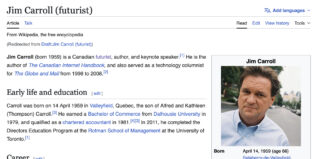
There are many people on the Web who are looking for that Jim Carroll – he has an enormous global popularity, as seen by his Wikipedia entry.

I’m often told stories by people as to how they’ve found him when they are looking for me. Most often, this has been after a keynote somewhere or other; they’ve heard the name Jim Carroll and go off and do a Google search.

We both show up, of course.

jc-search.jpg

When they do their search, end up finding him, and kind of wonder about the poet aspect…..that’s why I’ve long had this page that links to the “other Jim Carroll,” in order to ease the brand confusion.

It certainly makes for interesting conversations!


Please note — I am not Jim Carroll, author, poet, rocker singer — the fellow best known as author of The Basketball Diaries .

That’s him on the right…… and if you are looking for him, try his Web site here .

I do own many of his albums, have seen the movie, and have read many of his books — and yes, I’m a fan.

Jim does a lot of spoken word on campuses today. He tells a powerful story concerning his upbringing, drugs, and the challenges of addiction. He’s a good person, and has a huge number of worldwide fans. I hope to meet him one day.

Performance Optimization WordPress Plugins by W3 EDGE