
Intergenerational wealth transfer will be about $150 trillion in the next 20 years

Home > Archives

Blog


It’s the first day of school and my family is busy getting back to work and school and life in general.

It has been an extraordinarily difficult summer. My wife, two teenage sons and I were due to take a three week vacation to Europe in early August. Two days before we were due to leave, my mother in law had a massive heart attack and stroke; she died several days later. She was 90 years old and in failing health; although we expected a complex situation at some time, we still found ourselves in a state of shock.

The rest of the month was mostly taken up by moving my wife’s father into an assisted living apartment; he spent about a month living with us directly after the funeral. Time has mostly been a blur.

I’ve marvelled in the strength and inspiration of my wife and sons during this last month as they rallied through very difficult circumstances. It has been extraordinary time.

In any event, it’s great to be back in the office. I have a full set of keynotes lined up in the next several weeks, all of which provide opportunities to share more insight on innovative thinking.

08beach.jpgI’m now into a bit of a slow stretch for some summer; postings here will be slow for a time.

Years ago, inspired by similar times, I wrote about how innovation thrives in the building of sandcastles. It was a great post — and it made it into BusinessWeek. I thought it a fitting post to leave here while I’m busy doing other things — such as building sandcastles.

With that line of thinking,. here’s my list of “10 Reasons Why Innovation Thrives in the Building of Sandcastles: and What We Can Learn From Such Creativity.”

Continue Reading

At the recent Consumer Electronics Association CEO summit in Ojai, CA, I focused on how social networks are coming to have a huge impact on brand perception.

But aside from that main thread, I also concentrated on my message of innovation in an era in which “faster is the new fast.” Here’s an older clip that looks at what’s happening in the world of product innovation.

I pointed out to the crowd – which included the CEO’s of some of the largest digital technology companies in the world — that some product lifecycles are collpasing to ZERO. Case in point — Lenovo announced a tablet computer at the CES show in January. They dropped it after the iPad came to market, perhaps because it was bound to be a dud compared to the feature set of the iPad.

But maybe if they got it out sooner, it could have established a beachhead.

What do you do in a world in which a product is dead before you can get it to market? Innovate faster. Focus on fast. Do fast. Be fast. In the high velocity economy, speed and agility are everything.

With all the keynotes I do, I spend a huge amount of time on airplanes — and often end up going through a lot of video. As of late, I’ve seen a number of rock documentaries, and was struck by some of the unique innovation stories in these films. And so I’ve put this list together!

Start with the slide show on the image below: use the right arrow key to advance through the list! (SLIDESHOW)

Powered by Cincopa WordPress plugin

You can also continue reading the list below.

#10 Woodstock: 3 days of peace, music …and love

They figured out the HP InkJet business model, long before we even had personal computers

Innovation is all about risk, and Woodstock Ventures Inc. was all about risk. Everything went wrong — problems with ticket sales, the decision that the concert would have to be free, last minute problems that forced a change in concert location which drove up costs. They lost a ton of money on the concert — but made it up in spades with the film and album. Which is an innovation model that many would follow years later, with companies giving away printers for free, and making gazillions off the ink they would later sell you!

Continue Reading

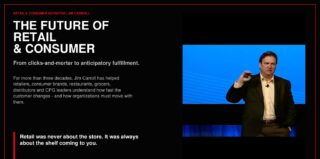
I just came from giving a keynote for the annual conference of a major customer loyalty organization, with the talk focused on some of key trends impacting the world of retail today.

There’s certainly a lot going on and a lot to think about. Extremely rapid business model change, the emergence of new competitors, ongoing consumer confidence volatility, rapid product turnover and faster product life-cycles.

So what are they really, really worried about? Let’s put in context the people I had in the room — senior VP’s and managers in major retailers representing several billions in revenue in a wide variety of markets, including pharmaceutical, grocery, consumer goods and electronics. Not to mention quite a few bankers, responsible for credit card portfolio’s, loyalty programs and other customer oriented programs and infrastructure.

Given all that, the top of mind issue is — new methods of customer interaction.

Look at the poll results below. The issue stands out far and away as the most important concern of the day!

Hence, my keynote was bang-on. I didn’t touch too much on the social networking phenomena, as this type of crowd has been drowning in social-networking Powerpoints.

My focus was on interactivity, location, and intelligence,, and the extremely rapid emergence of new forms of in-store interaction and product sales uplift. Things like digital signage, in-store electronic promotional displays, iPod based coups. A flood of new stuff and new ideas that promote new ways of

Listen folks, I know I’ve said it here before, but I’ll say it again.

2010 is the year of location, combined with mobility, and it’s happening faster than you think.

I’m pumped about this topic and the reaction, so I’ve rolled this into a new keynote description:

Location is the New Intelligence: Customer Interaction in the Era of Pervasive Mobile

We’re at the leading edge of the merger of three perfect trends: the rapid and massive emergence of a massive mobile infrastructure with increasingly intelligent devices. Pervasive location awareness as a results of GPS and location intelligence/mapping trends in those very same tools. And a consumer mindset that is increasingly open to new forms of interaction. The result is massive business model disruption, absolutely transformative market change, and complete obliteration of old assumptions as to the nature of the customer relationship. Smart, innovative super-heroes know that this is an unprecedented time to jump on the emergence of location as the new intelligence, in order to provide for new ways of product uplift in the retail space, changing the very nature of customer loyalty through new forms of interaction, and enhancing existing one-to-0ne conversations through a more direct, distinct and fascinating new form of location based relationships. Futurist, Trends & Innovation Expert Jim Carroll is setting the retail, marketing and advertising world on fire with his fast paced insight into one of the most important trends to shape the customer-business relationship in the last few decades. Move over social networking — location is the new intelligence!

Read more: Location is the new intelligence

With a lot of university graduations and commencements, it might be a good moment and pause to think about a degree that colleges and universities should be offering their students. That’s why I opined a number of years ago that we needed to prepare people for a fast paced future by letting them enroll in a Masters of Business Imagination Degree.

MBI PDF

Grab the PDF to the right, and share it around. Here’s how it reads.

“In a time of rapid, disruptive change can be a death sentence – not only for organizations, but for the careers and skills of those who work there! It’s time to abandon the thinking that has had you anchored firmly to the past – and to shift your focus to the future, with enthusiasm, motivation and imagination.

You can do this by abandoning any pretense that the skills of yesterday will be important tomorrow. Figuratively and literally, it is time to move beyond the thinking that has led us to a world of MBA’s – Masters of Business Administration – and focus upon the critical skill that will take you into tomorrow. The world doesn’t need more administrators. It needs more MBI’s – Masters of Business Imagination!

What are the attributes? MBI’s:

  • see things differently
  • spur creativity in other people
  • focus on opportunity, not threat
  • refuse to accept the status quo
  • bring ideas to life
  • learn and unlearn
  • refuse to say the word can’t
  • accept challenges with passion and enthusiasm
  • thrive on diversity
  • challenge assumptions
  • are solutions oriented

Grab the Masters of Business Imagination PDF

Here’s a summary of my observations from a keynote I did in New York City for retailers, agencies, marketing organizations, food and CPG companies, on some of the trends that are sweeping their industries today.

The summary is courtesy of the event sponsor, the Readers Digest Food & Entertainment Group.

1. The New Consumer Is Shifting Their Attention Faster than Ever

Consumers suffer from “continuous partial attention” with more stimuli around them than ever before:

  • The number of text messages sent each day exceeds the population of the earth
  • There are 62.6 million videogame households (up 11.4%) and the average age of a video game consumer is 41
  • consumers spend about 10 hours per day and $1,000 per year with various media – primarily wireless devices, iPods, in store displays, in-auto media content and the Internet
  • 93% of American teens are online, proving that the Internet will become ubiquitous

Consumers across demographic segments are immersed in this new interactive world forcing brands to engage them across all mediums to stay connected.

Continue Reading

This is a long post.

Way back in 1997, I wrote a book called “Surviving the Information Age.” It’s now out of print, but a few copies are still at Amazon.

The book took a long look at the trends that would impact our future. I dug it out again today when CNN ran an article, “Say goodbye to full time jobs without benefits“, decrying the fact that with the recession coming to an end, we were seeing more jobs that were contract oriented rather than full time. Reading the article, it seems they see this as a shocking new trend.

D’uh! What planet are these people on. Countless people have been talking and writing about the significant structural change occurring in hiring practices. I’ve been speaking about it since 1987 when the New York Times wrote an editorial entitled “Tomorrow’s company won’t have walls.”

So in the spirit of going back in time, I offer up an extract from my Surviving the Information Age book, in which I wrote at length about the trend.

Continue Reading

Kids today spend some 7.5 hours a day engaged with some type of media; with with multitasking, that’s 11 hours of screen time per day, or almost  53 hours a week, according to the Kaiser Family Foundation!

That’s more than a full time job, and more time than their parents spend at work.

Here’s a video clip where Jim was the opening keynote speaker for the 2010 US Navy, Air Force & Marine Child Youth Program Conference in Dallas, Texas, putting these numbers into perspective and speaking to the new realities in providing support services today

Here’s my June CAMagazine column, about a new initiative that I have underway in my life.

Learning for a living
by Jim Carroll, CAMagazine, June 2010

So what does a CA who has evolved into a global futurist do for his next gig? Go back to school, of course.

It’s truly become an unusual job I’ve taken on over the past decade. At this point, I travel about 100,000 miles a year, speaking at 50 to 60 conferences or leadership meetings all over the world.

It’s a very odd feeling, standing backstage at the Theatre for the Performing Arts at Planet Hollywood in Las Vegas, about to go out and speak to 4,000 people. I can’t help but wonder, as an accountant, how did I ever get here? Continue Reading

What do innovative organizations do? They re-orient themselves for an economy in which their ability to react to fast paced change will increasingly define their success.

In this clip, Jim Carroll outlines for an audience of several thousand the key attributes of today’s innovation heroes:

In essence, these organizations concentrate upon:

  • an accelerated innovation cycle
  • the rapid ingestion of new technologies / methodologies
  • faster time to market
  • rapid re-focusing of resources to deal with new opportunity or threat
  • a rabid focus on operational excellence
  • a  rapid response to volatility
  • and a re-orientation to fast paced consumer and brand perception

Jim has studied the innovation attitudes of hundreds of global organizations, and has carefully come to define what it is that allows some organizations to achieve stunning levels of innovation success, while others become innovation laggards. These attributes are a good part of the defining characteristics for success.

What do you think?

Way back from about 1999 to 2005, I would often talk on stage about “things from the olden days.” It was a story that reflected how my young sons, from the ages of 3 & 5, saw certain things around the house as something completely ancient — when just a few years previous, they had been a part of my life.

Earlier this year, I keynoted the joint US Navy, Air Force, & Marine Child Youth Program conference in Dallas, Texas. I had about 1,500 folks in the room who manage social, counselling, day care and recreation programs on military bases worldwide. The focus of the talk was around innovation in delivery of services. In order to get across to this crowd the rate of change, I resurrected my olden days story.

It still makes for good viewing, and can help you to think about the rate of business change that continues to occur out there today. And in fact, if you look around you, you’ll find that an ever greater number of things are becoming things from the olden days, and it’s occurring at a faster rate.

Ask yourself this question: do you work in an organization that just simply doesn’t get it? Who is oblivious, blind, completely unaware of just how much business model change is occurring out there?

Here’s the thing — there are three types of people in the world:

  • those who make things happen
  • those who watch things happen
  • and those who say, “what happened?”

I’ve often pointed this out on stage, and have emphasized the point, by suggesting that  the folks who find themselves last on the list sit back and say, “whoah, dude, what happened? Where’d that come from?”

In other words, they’ve been completely blind to the trend which would cause massive upheaval within their industry, or refuse to accept the significant business model disruptions which are already occurring.

Guess what — it’s happening right now as a lot of financial institutions don’t realize just how quickly mobile technology is going to change everything in the consumer financial services industry! Or in countless other industries where the blindness of current market leaders is leading them to their own “whoah, dude” moment.

Continue Reading

I’ll often be lined up for a conversation with the CEO of a client organization when I’m preparing for a private client CEO leadership/innovation keynote.

It’s part of a careful diplomatic dance. They want to ensure that the framework of my keynote addresses the key issues and challenges that they need to address to ensure that they can become a high velocity innovation hero. I often work with them to help them understand the unique innovation perspective I am bringing into the room.

During the conversation, I often prepare a summary list of the issues that they put on the table that I’ll use in preparing my talk.

I’ve got dozens of scribbled notes from such conversations. Here’s one that I just came across for an event over a year ago; the CEO of this Fortune 1000 organization (obviously, not named) outlined some of the key themes that I needed to address. As he put it, “we need to:”

  • increase our bench strength. We don’t seem to have the right skills and the right capabilities at the right time for the right purpose. We need to get better at our skills mix and agility if we are to max out our creative capabilities.
  • institutionalize learning. We tend to fall behind and miss opportunities because our people don’t know enough about what is going on “out there”
  • grow high value customer relationships. We could get much better in solving customers problems before they know they have a problem. If we could do that, we could extend existing revenue faster.
  • accelerate product innovation. We’re slow. By the time we get to market, our competitor has already been there. We need to speed things up.
  • have a better talent pipeline. We’ve got a lot of “dead wood” lying around, performing a lot of tactical, non-strategic work. We need to ensure that we are developing/ingesting new talent faster, for the faster emergence of new issues.
  • reduce our structural costs through collaboration. Simply put, there is simply too much duplication of effort. It’s the era of social networks; why can’t we be “social” internally?
  • suck less. There’s still huge opportunity to reduce product costs through process innovation and better project execution. (Yes, he did use this phrase)
  • scale faster. We really, really need to get better at identifying and capturing growth markets.
  • plug knowledge gaps. There’s lots to learn about things we don’t know about. We need to invest more in risk oriented projects. We have to fail faster.

What’s fascinating about these conversations is that the CEO knows the challenges that need to be addressed, and is confiding in me those concerns; my role is helping to build a message for the team as to what they really need to do to become high velocity innovation hero’s.

The simple list above — and this is but one of dozens of such summaries — gives a bit of insight into how you can take innovation beyond simple product oriented innovation.

Remember – innovation is all about answering the questions: “What can I do to run this business better? What can I do to grow this business? And what can I do to transform the business!”

I was in Baltimore last week, where I was the opening keynote speaker for the 2010 Passkey Corporate Housing Forum.

Passkey is a company that provides software for the corporate and association event management industry; in attendance were meeting planners, executive who manage corporate functions for hotels, and a lot of folks from various convention and visitors bureaus. My goal was to speak about the trends impacting the meetings and events industry, such as found in  my recent article, Does Your Future Suck?

I ran a quick text message poll at the start to find out what these folks see as the big challenges they are faced with.

There are some obvious issues : budget cutbacks, organizations beginning to explore more virtual event technologies, or challenges with delegates bypassing conference facilities and booking on their own (‘booking outside the room block’).

But what is most fascinating is that fully 1/3 of those in the room felt that the biggest challenge / trend that they are seeing is that more organizations — particularly corporations — are organizing more strategic meetings at the last moment, of a smaller scale than before.

That’s certainly what I’ve been seeing: I continue to get bookings for a significant number of small, CEO or senior management level strategic planning meetings. These folks want to bring their team together to discuss innovation, future trends and key strategies for exploring growth opportunities.

I’ve framed many of these talks around the theme of What Do World Class Innovators Do That Other Organizations Don’t Do?, which is a theme that has been quite popular since January of this year.

In my talk for PassKey, I noted two key statistics from Dana Communications, a company that specializes in the events industry:

  • only 17% of meeting planners have “meeting planner” in their job titles
  • less than 20% of meeting planners spend over 50% of their work time planning meetings

This echoes my experience: many of the calls that I get exploring my services are from a senior executive, or the executive assistant to an executive.

Clearly, organizations are of a mindset that is focused on taking them out of a recession, and into a world of exploring future opportunities. The fact that event planners, CVB’s and hotel event managers are seeing the same trend is a significant sign that the economy continues to bounce back.

Today, I’m speaking at a leadership meeting for HJ Heinz in Pittsburgh. I wrote this article in 2003, and thought it appropriate to make it available once again!

Coping with Ketchup, by Jim Carroll
Globe & Mail, September 2003

Go on, admit it: You still set the “upside down” ketchup bottle down cap up.

You’re not alone. Lots of people — adults mostly — automatically turn the bottle so the white cap is at the top — even though it’s been almost a year since Heinz started to offer the new bottle. It’s a pretty good example that when change comes about, there are plenty of people who struggle to adapt.

Continue Reading

I’ve been quite priviliged through the years to be able to observe, within my global blue chip client base (which includes clients such as the National Australian Bank; Diners Club; HJ Heinz, General Dynamics / Northrop Grumman Nestle), some of the fascinating innovation strategies that market leaders have pursued.

What is it they do? Many of them make big, bold decisions that help to frame their innovative thinking and hence, their active strategies. For example, they:

  • make big bets. In many industries, there are big market and industry transformations that are underway. For example, there’s no doubt that mobile banking is going to be huge, and its going to happen fast with a lot of business model disruption. Innovative financial organizations are willing to make a big bet as to its scope and size, and are innovating at a furious pace to keep up with fast changing technology and even faster evolving customer expectations
  • make big transformations: I’m dealing with several organizations who realize that structured operational activities that are based on a centuries old style of thinking no longer can take them into a future that will demand more agility, flexibility and ability to react in real time to shifting demand. They’re pursuing such strategies as building to demand, rather than building to inventory; or pursuing mass customization projects so that they don’t have to compete in markets based on price.
  • Continue Reading

What happens when Silicon Valley takes over the innovation agenda within an industry? In this video clip from a recent keynote, Jim challenges his audience to think about what happens in the world of banking, particularly with the likely fast paced emergence of contact-less payment technology based on mobile devices.

Innovative organizations need to make sure that they understand the external factors that will influence their future, and need to react appropriately. And as we enter the era of hyper-connected intelligent devices, with the impact of location-intelligence technology and the rapid adoption of mobile technologies, we’re likely to see every industry — even beyond financial services — impacted.

New business models, disruptive competition, a shift in control, customer churn — everything is up for grabs once Silicon Valley seizes control and defines your future!

What’s your tin can?
May 14th, 2010

Have you been to your local grocery store as of late? Have you seen the StarKist Tuna plastic re-sealable pouch? That little package – a new product innovation if there ever was one – is responsible for almost $200 million in new revenue since it first hit the shelves.

That’s not displaced revenue, but entirely new revenue that didn’t exist before.

It’s a big change – and it took a long time to come about. After all, StarKist sold tuna for 110 years in the same old way – in a tin can. Yet they finally managed to come up with something new, and the results are stunning.

The new tuna pouch is a good segue into what is perhaps one of the most important issues for innovators to deal with – getting people out of their tin-can rut.

Continue Reading

With all the upcoming leadership events and keynotes that I have on my schedule, I’m on a pretty constant stream of planning conference calls.

As I dig into the culture and attitude of a client through interviews with the CEO and other team members, I’m always mystified to find  that some organizations just seem to do everything they can to shut down new ideas.

Here’s a few of the key mistakes that I think organizations make when it comes to innovation. They:

  • form a committee. An absolute sure fired way of shutting down ideas! The herd mentality takes over, and activity sclerosis soon sets in.
  • defer decisions. It’s easier to wait than to make any bold, aggressive moves. Uncertainty is a virtue; indecision is an asset.
  • hide failure. If anyone tries something new and doesn’t succeed, make sure that no one else sees it. You don’t want to set a message that it is important to take risks. Continue Reading
UA-117171-1

Powered by Web Design Company Plugins