346 million people read blogs on a daily basis

Home > Archives

Economic recovery

There are a tremendous number of new companies and new industries being built around the high velocity of ideas that surround us – and that's what will drive future economic growth. And in fact, it's happening now!


On a conference call with a client, the issue of optimism and pessimism came up. For many of the corporate or customer events in which I’m asked to speak, people are seeking my insight on the trends that will provide for future growth. In the call, I mentioned one recent keynote where I made a joke on stage about choosing optimism over innovation – in a bit of a unique way.

But my optimism is grounded by the trends I observe. In this short clip, you’ll also see a lead-in to how I plan to build the case for optimism.

It’s a short, good watch, I think with a key relevant point — and begs the question — are you able to consciously choose optimism over pessimism, despite the environment that you might find yourself in?

A report from T. Rowe Price on my recent keynote for the 2011 Investment Symposium follows, where I was one of three keynote speakers (the other two being Colin Powell and Charlie Cook). You can find some blog links to each of the three key themes in the article at the end of the article below.

""We thought Jim was amazing - just the positive message we wanted to leave folks with"

It was a fabulous event, and a great opportunity to get a pretty impressive audience — investment managers for a broad range of investment managers for a broad range of Fortune 1000 organizations, pension funds and government agencies.

Summary:

Futurist Jim Carroll, one of the world’s leading experts in global trends and innovation, described how advances in technology and human innovation will combine to create positive change in the future. He explained how businesses can be held back by what he calls “aggressive indecision”— postponing action because they are constantly waiting for economic conditions to improve. Carroll noted that as the pace of change accelerates, the companies that prosper will be those that can adapt and innovate most quickly.

Key Points

  • Long-term trends that will lead us into the future. Silicon Valley is redefining everything—industries that get involved with Silicon Valley will be brought up to their speed. One powerful trend is pervasive interconnectivity—the fact that electronic devices are connected and can communicate with each other—as a driving force. For example, a staid industry such as air conditioning and heating benefits when people can control their entire home environment remotely through a cell phone. On the health care front, sensors can monitor the activities of seniors and report any changes in behavior, allowing people to live independently longer. On a more dramatic note, he believes advances in exploring the human genome will change medicine’s focus from reactively treating disease to proactively searching for potential health problems before they occur.
  • The paradox of pessimism and reality. While many business people are pessimistic about the future and believe economic recovery is at least two years away, technological advances are creating the potential for greater productivity and efficiency. For example, the auto industry now has the flexibility to produce in response to demand instead of building huge inventories that may go unsold. Products can also be brought to market much faster to take advantage of changes in consumer tastes.
  • The next generation. The next generation has grown up with rapid advances in technology, so they are at home with change. This familiarity means young people will greatly increase the rate of innovation as they enter the workforce. This group is not afraid to take independent action—50% believe self employment offers more job security than working for a company. The next generation will receive $12 billion to $18 billion in intergenerational wealth transfers in the next 12 years alone, which could help fund their ambition.

More information:

  • Major 10 year trend: The future of every industry to be controlled by Silicon Valley Innovation  
  • The new face of manufacturing: agility, insight and execution 
  • Creativity and the new workforce 


On stage in Las Vegas for a recent conference, Jim is speaking to the real trends that are driving global growth. Watch this in the context of a great observation by Bill Gates: “Most people overestimate the rate of change that will occur on a two year basis, and underestimate the rate of change that will occur on a 10 year basis.” Looking out over 10 years, it is clear that we are in an era that is still witnessing significant global growth!


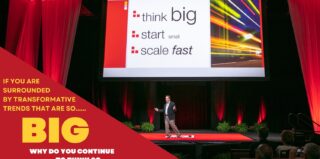
I’m honored to be invited to be the closing keynote speaker for this event which starts tomorrow; I speak at the closing lunch on Friday, on the theme, “When Do We Get to Normal? Why Thinking BIG Will Help You Seize The Opportunities of the 21st Century.” I’m sharing headlining duties with two other fascinating speakers.

Jim Carroll will be the closing keynote speaker for the 2011 T. Rowe Price Investment Symposium, offering his thoughts on the global economy, future trends and innovation!

Im my talk, I will be examining three key issues :

  • next generation investor trends. This is somewhat like the talk I did for the National Australian Bank just two years ago – how is the next generation of hyper connected, socially networked investor going to change in terms of wealth management, investment decisions and other activities. There’s a good blog post referenced below, “14 Key Innovation Strategies for Financial Advisors, and Financial Organizations” that you’ll find here.
  • the future and optimism: where are we going to witness the next billion and trillion dollar industries? What’s happening with science, connectivity, manufacturing, skills and innovation that will drive global economies forward?
  • “Designed in Emerging Markets!” – what’s next, and in particular, what’s happening with innovation worldwide — and what does that mean for the global economy.

So much of the global investment community is overdosing on pessimism – I’m not with what I see happening within my global client basis.

As I often observe when I walk out on stage — “I’m a futurist. I can’t walk out there and tell you that your future sucks — because it doesn’t. The world I see is full of innovation, creativity, the reinvention of existing business and the birth of new ones.”

Fresh from my keynote in Orlando this week, I’ve come across a blog post from someone who attended, and saw my early-Monday keynote – “‘Breakthrough performers’ and ‘pervasive connectivity’: Notes from the CGT Business & Technology Leadership Conference.”

"Leading international author and “futurist,” Jim Carroll, delivered the keynote address, capturing the audience’s attention with some mind-blowing stats on the rapid pace of change and innovation in the technology space."

You can read the full post by Sean Rollings, Vice President, Product Marketing over at the E2open blog, or read an extract below.

In the room were senior executives from many of the largest consumer product and food companies in the world; indeed, I was dazzled from the presentation of a senior executive from PepsiCo who took to the stage right after me with his observations on what is happening in the consumer space.

The essence of my message in Orlando was modelled on the themes found in these two blog posts:

  • “What do world class innovators do that others don’t do?” 
  • “Food industry trends 2011: Report from a keynote” 

I can tell you that these two pages are among the top-10 most heavily trafficked on my Web site, and so obviously there are a lot of senior executives in the food and consumer products sector who realize that when it comes to innovation, one of their key goals must be, how do we speed things up to deal with the reality of fast-paced consumer, technological, market, product, and global change.

“Breakthrough performers” and “pervasive connectivity”: Notes from the CGT Business & Technology Leadership Conference
Sean Rollings, Vice President, Product Marketing, E2open

 I made my way to the Sunshine State this week for the Consumer Goods Business & Technology Leadership Conference in Orlando. The turnout is impressive, with technology and supply chain professionals from all the major players in the CPG space (plus a number of up-and-comers). And while the keynote sessions and panel discussions cover a gamut of topics, everyone is really here for the same thing: learning and collaborating on the “what’s next” for technology and the consumer goods business.

Leading international author and “futurist,” Jim Carroll, delivered the keynote address, capturing the audience’s attention with some mind-blowing stats on the rapid pace of change and innovation in the technology space. According to Carroll, recent research indicates that 65 percent of current preschool students will work in a job that does not yet exist. Along the same lines, 50 percent of the information taught to first-year Science undergraduates will be obsolete by the time they graduate.

The business-related statistics were no less shocking. For example, roughly 60 percent of Apple’s revenue is currently generated by products that are less than four years old. The rate of innovation is accelerating, big time. And from Carroll’s perspective (and the evidence is convincing), the only way to stay competitive in today’s marketplace is to embrace the current onslaught of change and innovation—and run with it!

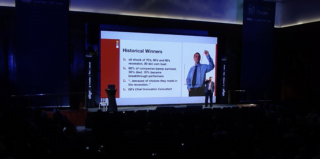
In keeping with this theme, Carroll shared a compelling piece of research from GE innovation consultants: Of those companies in existence during the economic recessions of the 70s, 80s, 90s, and our most recent “Great Recession”—on average—60 percent survived, 30 percent died, and 10 percent became breakthrough performers. How did this top-10 percent do it? According to Carroll, these companies succeeded because they invested in world-class innovation while everyone else was retrenching. For the “breakthrough performers” of our most recent recession, this innovation has been largely focused on pervasive connectivity—everyone connected to everyone, regardless of geographic location or technical sophistication.

The GE study that I refer is a theme that I use in many presentations — you can catch a glimpse of how I put the reality of innovating despite economic uncertainty in this video clip from a keynote in San Antonio, Texas, earlier this year.


Last week, I spoke to several hundred manufacturing executives from throughout North America, at IMX Las Vegas — the Interactive Manufacturing Exchange!

Here’s a key clip from the start of the keynote. Watch it, and ask yourself — are you guilty of focusing on short term volatility — or are focused on opportunity of the long term?

I’ve just returned from Las Vegas, where I was the keynote speaker for a new manufacturing conference that has attracted quite a bit of attention – IMX 2011 – “The Interactive Manufacturing Experience.”

Seen on Twitter: "@imXevent this morning's speaker Jim Carroll was amazing and insightful! had powerful information! #imXevent"

I was in esteemed company on the stage; the other two keynote speakers were Peter Schutz, author and retired CEO of Porsche AG, and President Barack Obama’s new “Chief Manufacturing Officer, Michael Molnar, who chose this conference to deliver his first public address.

I actually had two keynotes, starting out with a quick 20 minute talk at the Gala celebration dinner on the second day of the conference, an invitation only event with the CEO’s and senior management of some of the largest manufacturing based organizations worldwide. The next morning featured an opening keynote for Day 3, for about 400 manufacturing executives.

Let’s turn to the Gala. It was a celebratory dinner — and my goal came to be one of highlighing the transformative trends that are driving the manufacturing industry in North America forward and providing for future opportunity and potential rebirth of the sector.

Wait a moment, you might think! Isn’t this an industry that is dying by degrees? Certainly the media spin is that manufacturing in North America might be all but over!

Consider, for example, a headline that ran in the Huffington Post just a few days before my talk:

The article goes on to note that August saw a net loss of “3,000 jobs” — and that perhaps this is a sign of the yet continuing decline of the industry.

My first bit of advice to the audience. Knowing that economic volatility is the new normal, they should tune out the day to day media noise, and focus on the fact that there is a significant reinvention and transformation of the manufacturing sector that is well underway!

Given that, what’s the mindset of some of the leading manufacturing based organizations from throughout North America. On the stage, i summoned up a quick text message poll: and in a matter of two minutes, had a good summary of the belief in the room that an economic recovery was well underway:

This echoes the experience I had earlier this year when I keynoted Techsolve 2011, a meeting of leading manufacturers in the state of Ohio (Read: “Report from the Heartland: Is There Life in Manufacturing in Ohio?” You Bet!“) — who also responded in resounding fashion that they believe the economic recovery is happening now.

So what’s going on in the world of manufacturing that’s “right” and that will allow organizations to seize advantage of opportunity in the future.

Many things which I began to cover off in my keynote. Read these points and check the related posts, since it will help to clarify each point where necessary.

Agility: I wrote a story into an article a few years back — actually, about 2004. It’s self explanatory on the agility theme:

I recently spent time with the CIO of a US-based patio furniture manufacturer. His organization was hammered in the last decade by countless factors, including the fact that a Chinese manufacturer could provide a similar product for a much lower price.

He convinced his leadership team that it needed a financial management system that would permit it to run leaner, faster and with more insight into operations. The company spent a whack of money on it and suffered greatly with the challenges that came with implementation.

Then one day, it reaped the rewards of a financial management insight system. Last winter, it had a call from Wal-Mart, asking if it might supply 110,000 patio swings; Wal-Mart was unable to source the product from its usual Chinese supplier. With the analytical tools the organization had put in place it was able to look up and down the supply chain to ensure supplies could be immediately sourced. In an instant, it was able to analyse the numbers and determine a price bid it could live with. It examined its resources and changed the production schedule to fit things in. The company was able to go to production two weeks later, delivering the product in advance of the order date, and on budget.

The company had the agility necessary to respond to a world of rapid change — and serve as a perfect case study of what we can really do when we focus on the benefits that sophisticated accounting insight can bring.

There’s a tremendous amount of focus on agility today, and it is one of the key trends that is driving the transformation of the sector.

Flexibility: I often compare the “old” business model of “building to inventory” to the new business model of building to demand. Read my blog post, in which I compared the approach of Ford, vs that of Honda. (“The new face of manufacturing: agility, insight and execution“. ) There’s also YouTube video you can watch – “Innovators focus on corporate agility.” I’m that video I’m actually on stage for 3,000 people for a global food company — in the exact same conference room at the Bellagio hotel a few years previous to the IMX event! Another key concept is that of “chameleon revenue” — success comes from the ability to generate new streams of revenue that haven’t existed before. Read “Innovation and the concept of chameleon revenue” for insight into what is happening here.

Post-flat strategies: smart companies avoid the complications of the “flat-world” by changing the rules of the game. Take a look at “What do you do after the world gets flat? Put a ripple in it!” in which I outline the attributes that I’ve seen successful manufacturing organizations make. And for more enthusiasm, read a 2008 post, “Is there hope for manufacturing?” which continues with the theme.

Faster time to market: tools have emerged that permit rapid industrial design: rapid concept generation, rapid concept development, and rapid prototyping.  We’ve got the capable for physical plant modelling, virtual commissioning, process simulation, analysis of factory flow in a virtual tool pre-design — all kinds of new capabilities. Quite simply, organizations that upgrade their skills and capabilities with these new tools are discovering the very real pathway to agility and flexibility.

Arrival of the digital natives: The speed with which the new methodologies is being adopted is increasing due to the arrival of a new generation of tech-savvy, innovation-oriented, open-minded individuals who are fully ready and willing to exploit and take advantage of every digital tool, methodology and capability to expand the capabilities of the manufacturing sector to respond to the demands of todays new, fast paced world.

The tinkering economy. Spend some time at MakerBot, Ponoko (which bills itself as “your personal factory….” or similar sites, and you’ll discover an entire global collaborative culture that is sharing ideas and insight on how to “build the next thing.” This “tinkering mindset” is going to influence manufacturing, for it is drawing in the skills and interest of this next generation, and also their unique way of thinking about the world. Read the article “Tinkering Makes a Comeback Amid Crisis” and you’ll get a sense of the fascinating things that are underway — and project this trend into its impact on manufacturing.

The inevitability of mass customization: Of course, one way of avoiding a “flat-world” is by premium pricing your product — and you can do that by establishing a market of one. Mass customization has been around a long time, and there are a number of successful examples. Yet the arrival of the digital natives is going to speed up this trend, helping to lead to a  resurgence of manufacturing.

New business model exploration: at the same time, they’re also busy exploring new methods of reaching out to consumers, raising equity funds, or collaborating on fascinating new projects. Sites like KickStarter.com are going to have a profound impact on manufacturing — for a really innovative story, take a look at the TikTok and LunaTik Multi Touch Watch Kits and the story behind their development.

Pervasive connectivity and intelligent assembly: the definitive trend for the next decade, in which “everything plugs into everything else.” Quite simply, we have a lot of opportunity to reinvent the future with transformative technology, because we will know three things about every device on the planet — including those that include the manufacturing process — their location, their status, and their Internet address. This is going to permit a STUNNING level of rethinking of assembly lines, manufacturing process and methodology, cost efficiency, and all kinds of other fascinating new opportunities. Not only that, but it leads to the opportunity to manufacture new intelligent devices for use in the areas of energy, health care, or just about anything else.

Transformation change: I’ve barely scratched the surface of what is yet to come. One of the most fascinating developments, well underway in the move from the conceptual to the practical stage, involves the use of “3D printers” and the inevitable shift to “additive manufacturing” from “subtractive manufacturing based on cutting, drilling and bashing metal…” There’s a good article on recent developments at MIT . Noted the Observer newspaper in a recent article: “Just as Bill Gates wanted to put a computer in every home …. all of us will eventually own a 3D printer. The key will be making them affordable.”

Here’s what it comes down to : there are a lot of negative trends happening with North American manufacturing. But as shown at IMX, there are also a lot of trends that are providing for transformative change and opportunity.

I closed my keynote with the observation that “some people see a trend and see a threat. Innovators see the same trend and see nothing but opportunity.” So it is in the world of manufacturing.

This article was released in my CAMagazine column in March 2009. shortly after the great economic collapse of 2008.

Inertia — real or implied — establishes a culture of inaction, and that can lead to another slippery slope

Given the new economic volatility, shrieking stock market headlines, and the reappearance of a sense of dread in the corporate world in September 2010, it’s probably a good time to re-read the article.

There are countless examples where history has shown us that it is those organizations who focused on ensuring that they were still actively pursuing innovation — whether through product development, the exploration of new business models, external partnerships, the pursuit of new markets and customer groups — were those who managed to achieve the greatest success in the long run.

Catch the key line at the end: “The greatest mistake any organization can make right now is to do nothing.”


Keep Those Ideas Coming
Jim Carroll, March 2009

I have started to think about the events of the past few months in the context of economic grief — an emotional process closely related to the stages of bereavement. The economy unraveled so quickly that many organizations still find themselves in the early phases of economic grief, marked by shock and denial. Corporate idea factories have come to a standstill and innovation paralysis is settling in.

The result is that we’re not just in an economic recession; we’re entering an idea recession, similar to that of the last downturn starting in 2001. Yet, in allowing innovation to dry up, businesses are missing out on great opportunities for success. After all, companies such as Burger King, Microsoft, CNN and FedEx were all started up during recessions.

The Wharton School of the University of Pennsylvania released a provocative article in November 2008 suggesting a recession is the perfect time for disruptive innovation — that is, rewriting an industry’s business model to achieve significant growth. Think of Steve Jobs and the iPod, which he first released during a less-than-rosy economy in 2001.

So what do companies need to do to make the most of this recession? First, accept the economic reality. Those unable to move past shock, denial and anger through to acceptance will be innovation laggards and will only be ready to innovate once the market and industry recovery is underway. Unfortunately, that may be too late.

Innovation leaders, however, are prepared to keep their idea factories running (perhaps not at full tilt, but running nevertheless) in the face of uncertainty. They know there is still a place for innovative thinking despite the vast sections of the economy under stress. They know there are growth markets and opportunities for marketplace, distribution-channel and operational innovation. These leaders are aware ongoing change in consumer behaviour means there are still new ways to brand, grab customer mind share and forge unique and distinct relationships.

It is critical that organizations begin to undertake a series of bold actions that reorients them to face future challenges. These actions should include several integrated elements.

  • Boost the experiential capital of the organization. Get your teams working on projects and ideas that build up their experience. For example, they might explore new methods of branding and marketing (particularly to the next generation); investigate technologies that can stream-line business processes; or work with distribution models that expand market potential.
  • Identify weaknesses or areas for improvement. Consider what elements of the organization’s product line, skills or structure could benefit from specific innovation efforts. For example, are competitive threats emerging that you haven’t really thought about? What should you be doing to innovate your way around those challenges?
  • Explore key opportunities through a variety of risk-oriented initiatives. If, for example, you focus on a customer-retention strategy (such as visiting every customer in the next three months to see if you are meeting their needs) can you put a stop to future revenue leakage?

The greatest mistake any organization can make right now is to do nothing. Inertia — real or implied — establishes a culture of inaction, and that can lead to another slippery slope. Today, innovation isn’t simply an option — it’s critical because it is the best way to gain traction.

I’m finally back in the office full time after a very busy summer with my family.

And what do I return to? A September that seems to feature screaming headlines about a potential recession and some pretty wild economic and market volatility.

If you are thinking about how you are reacting to this fast-paced world in which we find ourselves, then here is a key question: are you going to stay focused on the future, opportunity and innovation – or are you going to allow yourself fall into the trap of aggressive indecision.

Watch this clip from a recent keynote I gave in which I challenge the audience on this very issue:

My recent post about using a live text message poll while speaking to a group of high school students drew a fair bit of attention as an example of the novel use of a social networking tool.

This isn’t the first time I’ve been using this type of tool on stage — I’ve been doing this for close to four years, and it always provides for an amazing amount of interaction with the audience.

Here I am opening the 94th Annual General Meeting of the Professional Golfers Association of America, immediately diving into a poll with the audience in order to gauge their thoughts on when we would see an economic recovery. While running the poll, I challenge the PGA to think about the impact of mobile technology out on the golf course!


Pretty darned effective, isn’t it!

Last year, I was the opening keynote speaker for the 2010 International Association of Conference Centersl my focus was on the future of the meetings and events industry (in which, as a keynote speaker, I play a frequent role.)

Jim Carroll's thoughts on the future of the global meetings industry

I just found that they ran a report on my talk, and it’s a good summary of what I believe to be the key trends driving this industry forward. It was a fairly accurate overview, in that signs for 2011 are that by and large, many aspects of the global meetings and events industry, though still challenged, are bouncing back from their lows of 2009 and 2010.

—–

From IACC’s CenterLines Publication

Futurist Jim Carroll confidently assured his audience of IACC conferees that their bread & butter – face-to-face meetings – is not leaving the business landscape.

The words of his Thursday morning keynote were music to the ears of an audience that is battling business downturns. Carroll said he’d lived through five recessions and the thing they have in common is that they all are temporary.

What happens with an economic correction, even a significant one?” Carroll asked. “We always get to the point where we see articles about economic growth. The collective sense in this room is that we’ll see this happen in six months to two years. … We know how this movie ends.”

While acknowledging the wonders of evolving technology and the specter of developments not yet imagined, Carroll said the need to meet face- to-face is fundamental and will not be replaced.

New products are developed and updated with amazing speed, and how do you have a sales force that can deal with that continual flood without providing proper education?” he pondered. “Effective sales teams are built through sheer enthusiasm for a goal that comes from face- to-face meetings.”

Carroll pointed to an Australian study that predicted that 65 percent of preschoolers would eventually work in jobs and careers that do not currently exist. And, in any degree program based on science, because knowledge is evolving so fast, it is estimated that half of what somebody learns in the first half of the degree program will be obsolete or revised by the time they graduate.

The reality of the future of meetings is that learning is what most people will do for a living in the 21st century,” he said. “There will be a requirement to constantly replenish that knowledge, and a huge focus on knowledge delivery.

Carroll observed that Microsoft has suggested that in the coming years, 50 percent of U.S. gross domestic product will be taken up by training and knowledge delivery. Progressive organizations will continue to bring people together to meet. Carroll ignores the purveyors of doom who say the meeting business is in a death spiral.

We’ve been there before. Remember the post- 911 buzz? Everybody was going to stop flying, stop going to hotels – it was the end of the event industry,” Carroll said. “People said it was the end of face-to-face. It didn’t happen then, and it isn’t going to happen now.”

Carroll suggested that constant re-evaluation and the quest for new ideas is key to staying ahead of the curve. Observing key habits and attitude, Carroll said that world class innovators …

  • possess a relentless focus on growth
  • move beyond the short term
  • constantly replenish revenue streams.
  • obsess over the concept of corporate agility
  • don’t fear the future; they just do the future
  • invest heavily in experiential capital
  • banish the innovation killers.

Well, the headline caught your attention, didn’t it?

So what gives? How could “golf” possibly be the most important word in a year which promises ongoing economic volatility, potential signs of a recovery, restless consumers, potential challenges with the housing market, extremely fast paced business model change driven by technology — and countless other opportunities and worries?

Because the game of golf is probably one of the best barometers for the pace of the economic recovery. And in and of itself, the fact that the game is examining its future is probably the best sign that innovation and change has risen to the top of the leadership agenda.

Consider the first issue: golf and the economy. When the economy is hot, and companies are secure in their belief in economic growth, there are a lot of leadership events in which strategies are discussed, customers are engaged, and new business ideas are launched.

Corporate off-sites. Leadership meetings. Customer events. CEO-led strategy sessions. All the things that organizations do to ensure that they can focus on opportunity and growth. When the economy is in a good way, we see a lot of these events, and inevitably, they’re held at a resort, conference center or hotel that includes some great opportunities for golf, because that’s where a lot of the real business gets done.

Two years ago, many of these events disappeared or were scaled back in a significant way, as many organizations were focused on survival rather than growth. In the darkest days of the economic downturn and the subsequent era of gloom, customer and leadership events were small, low key, local, and didn’t have an element of golf.

But these events are back in a big way, and they’re being done in such a way that “golf” is most definitely back on the agenda. Only it’s not labelled “golf” on the agenda anymore – instead, you’ll see something like : “1:00PM – Private meetings”. In the last while, I’ve been doing or having been booked for a significant number of leadership, CEO and customer-oriented events at golf-oriented conference centers and locations all over North America.

Smart Meetings Magazine, a US publication, covered my thoughts in the January 2011 issue this way:

“Jim Carroll, a futurist, trend and innovation expert who has written and spoken about the economic horizon, often quotes the American Chamber of Commerce when discussing what lies ahead: “We’re going from a really bad economy to a new economy.” Here’s a rundown of what that will look like. … While Carroll says he’s seen a dip in association bookings, “corporate leadership events are way up.” In this sector of the industry, 2011 bodes well for the amount of meetings held and the funds devoted to them. …. With the economy in ascent, planners should see more hefty budgets allocated for meetings (or, as Carroll puts it, “There will be more golf this year.”)

Here’s the second reason why the world “golf” is so important — because the game itself know that innovation and change has become absolutely critical to provide opportunities for growth.

Read about the PGA of America's reaction to Jim Carroll's keynote

Last November, I was invited to be the opening speaker for the 94th Annual General Meeting of the PGA of America.

It’s the first time they have EVER had an external speaker open their event.

When I first got the call, I was a little bit stunned. This was THE PGA.

But then I began to think about my conversation with their senior management. Everyone knows that growth of the game is challenged by a variety of issues, including demographics, the collapse of attention spans, time availability, and a host of other issues. The PGA knows this, and they know that focusing on innovation and change — and confronting these trends — has become one of the most important things they needed to do.

And so they found me — and invited me in to challenge their members to begin just such a dialogue.

I’m seeing many such events. Heck, just over a month ago, NASA — yes, that NASA — had me down to Texas to speak to a senior leadership team on the issue of “Transformational Leadership”. I had in the room with me a very fascinating audience — astronauts, program directors, launch controllers. What was the real issue on the table? NASA’s world is changing fast, and the need for innovative thinking has become critical.

If organizations like the PGA and NASA are putting innovation at the top of their agenda, and innovation is the driver of economic growth — then clearly, golf has to be most important word in indicating where we are going with the economy in 2011.

One of the highlights of 2010 had to be the day that I was the opening speaker for the 94th Annual General Meeting of the PGA – Professional Golfers Association of America. It was the first time they have ever had an external speaker open their meeting; I was invited in to discuss the major trends that will continue to impact the growth of the game, and the innovation strategies that could be pursued to accomplish that.

So it is  a fitting way to close out 2010 as we wind down the officer here, by offering up a video clip from that keynote, “Where’s the Growth.” It’s from a section in the talk where I put into perspective some of the key trends and innovations which will provide for sustained economic recovery over time.

There some additional insight on trends going forward into the future in my post, “Trending in 2011: 10 Major Trends to Start Thinking About Now.”

Here’s to 2011 –it’s going to be a great year. Indeed, the future is going to be fabulous!


When you are on stage in front of several hundred people, you’ve got to be prepared to be interactive and open to insight.

That’s why I regularly use a text message polling tool on stage — I can quickly get a sense of what people in the room are thinking about.

Here’s the results from a recent poll – at the start of a talk I asked the audience (in this case, a group of professionals from a national organization) when they thought we might see an economic recovery. Within 2 minutes, I had 218 responses, which probably represented 75% of the audience.

Of course, that gave me the opportunity to lead into a very important observation — if the majority of folks in the room think that economic recovery is still some time off, what are they doing now to prepare for the inevitable economic upturn?

This was a great time to hit them with a key observation by GE’s Chief Innovation Consultant — breakthrough performers manage to accomplish great things because of a decision to focus on innovation right in the middle of an economic challenge — rather than waiting till they came  into a recovery phase.

Here’s the bottom line : during the oil shock of 70’s, 80’s and 90’s recession, and the 2000 dot com bust, of those companies surveyed, 70% of companies barely survived, 30% died, and 10% became breakthrough performers.

Noted the GE head of innovation: it was explicitly “…because of choices they made in the recession..”

So it really comes down to this: when do you innovate? Are you going to wait until you are comfortable that we’re in a sustained period of economic recovery? Bad decision — because economic volatility is the new normal. Everything we have learned from past recessions has taught us that the winners were those who decided that it was an important thing to keep moving ahead despite massive amounts of uncertainty.

When do you innovate?

I captured this sentiment on stage in Las Vegas some time back. Maybe it’s worth a watch. Ask yourself the question, and look around at what you are doing right now to prepare for the future. Are you in an innovation frame of mind right now?

Yesterday I spoke to several thousand people as the closing keynote speaker for the 2010 Fresh Summit for the Produce Marketing Association in Orlando. I focused on several issues, including the rapid changes occurring in the world of retail and consumer change.

But in addition, my message included insight into how innovative people focus on opportunity, not threat; on growth, not fear. It’s an important message right now, given the continued economic volatility.

Coincident with my keynote, the Produce Marketing Association published an article in Fresh magazine.

Are you guilty of aggressive indecision?

Fresh Magazine, Fall 2010

Acknowledged as a leading global futurist, Jim Carroll is also an author and motivator with a massive global blue chip client list. He helps transform growth-oriented organizations into high-velocity innovation heroes.

How many times in the past two years have you heard this sentiment: We’re not going to pursue that opportunity right now due to the current business climate? Jim Carroll calls this mindset aggressive indecision, and believes it is a trap that all too regularly blocks progress and ensnares opportunity.

Jim Carroll considers this most recent recession the fifth downturn he’s experienced, a sentiment that suggests he is a seasoned Boomer who has been around long enough to pos- sess a decent perspective on the cyclical nature of markets. And, while he acknowledges that every downturn has had its challenges, he reminds us that each has also been followed by a recovery.

But rather than simply saying to look on the bright side, Jim points to what he calls Long-term Transformative Trends. “These are the big issues that will impact our lives 15 years down the road,” he outlines. He invites us to calm our fears, to step back from the precipice, and take a look at what these big changes mean and the opportunities they present.

“I can’t be a futurist and be a pessimist,” states Carroll. “When I look ahead, I see nothing but opportunity. We are constantly witnessing the birth of new industries, new jobs, new careers. These transformative trends represent huge potential.”

So just what are some of these transformative trends? Carroll covers five here:

Healthcare: With an increased focus on healthy lifestyles, a greater emphasis will be placed on managing diet by in- creasing the use of fruits and vegetables. This represents enormous opportunities for the produce industry to create innovative ways to differentiate and market existing products and come up with new varieties and packaging solutions.

Demographics: Ethnicities will represent a larger percentage of the population, which will result in different demands. Carroll tells the story of two farmers, one of whom continued to plant the same crops year after year, even though he was losing money. The other one saw that there were more ethnic groups demanding more egg- plant, so he switched his crops to eggplant, resulting in his unprecedented prosperity.

Ethical Packaging: There will continue to be a push to create more efficient packaging that has less impact on the environment. Wal-Mart has set a goal date of 2015 to be completely envi- ronmentally friendly in its packaging. Other companies are following suit.

Retailer/Consumer Relationships: Citing companies such as Apple and Trader Joe’s, Carroll notes that the retail landscape is changing in terms of brand loyalty and customer relationship. As social media infiltrates our culture, mobile technologies with apps that generate electronic coupons will influence pur- chasing decisions, as will greater in-store promotions.

Smaller Niche Markets: With more single consumers living in large cities, an opportunity will be created for portion size, consumer relationship. It doesn’t take a social scientist to see that large department stores are losing market share to smaller niche stores.

“Twenty years from now, we [Boomers] will have less of an impact on what happens in the world,” admits Carroll. “If we can acknowledge that the world is changing, step away from the fear, and make the decision to adapt,” he believes that the opportunities are virtually limitless

I was in Baltimore last week, where I was the opening keynote speaker for the 2010 Passkey Corporate Housing Forum.

Passkey is a company that provides software for the corporate and association event management industry; in attendance were meeting planners, executive who manage corporate functions for hotels, and a lot of folks from various convention and visitors bureaus. My goal was to speak about the trends impacting the meetings and events industry, such as found in  my recent article, Does Your Future Suck?

I ran a quick text message poll at the start to find out what these folks see as the big challenges they are faced with.

There are some obvious issues : budget cutbacks, organizations beginning to explore more virtual event technologies, or challenges with delegates bypassing conference facilities and booking on their own (‘booking outside the room block’).

But what is most fascinating is that fully 1/3 of those in the room felt that the biggest challenge / trend that they are seeing is that more organizations — particularly corporations — are organizing more strategic meetings at the last moment, of a smaller scale than before.

That’s certainly what I’ve been seeing: I continue to get bookings for a significant number of small, CEO or senior management level strategic planning meetings. These folks want to bring their team together to discuss innovation, future trends and key strategies for exploring growth opportunities.

I’ve framed many of these talks around the theme of What Do World Class Innovators Do That Other Organizations Don’t Do?, which is a theme that has been quite popular since January of this year.

In my talk for PassKey, I noted two key statistics from Dana Communications, a company that specializes in the events industry:

  • only 17% of meeting planners have “meeting planner” in their job titles
  • less than 20% of meeting planners spend over 50% of their work time planning meetings

This echoes my experience: many of the calls that I get exploring my services are from a senior executive, or the executive assistant to an executive.

Clearly, organizations are of a mindset that is focused on taking them out of a recession, and into a world of exploring future opportunities. The fact that event planners, CVB’s and hotel event managers are seeing the same trend is a significant sign that the economy continues to bounce back.

I was in Billings, Montana last week, speaking at the annual meeting of a financial group.  The audience included a large cross section of business executives from throughout the Midwest. My talk centred around the trends that might provide for sustainable economic growth. Here’s what I focused on:

  • a significant and lasting change in perspective. I spend a lot of time with major international organizations, either in strategic leadership meetings or at various association events or conferences. I often run a text message poll at the start of such sessions to gauge the audience perspective of the current rate of economic growth. As I noted in this post, I’ve seen quite a change in attitude and perspective in the last few months.
  • significant growth is emerging from “solving the big problems.” I am a big believer that the efforts to solve the big challenges with respect to energy, the environment and health care will provide the momentum to kickstart the economy once again. I spend a lot of time examining signs of innovation and growth; and there is a tremendous amount of mind share being devoted to each of these areas.
  • fundamental and long lasting growth trends in global markets. Before the economy went sour in 2008, McKinsey was extremely bullish on the prospects for economic growth driven by the rapid industrialization of emerging economies, noting that “almost a billion new consumers will enter the global marketplace in the next decade …. with an income level that allows spending on discretionary goods,” and that “the ranks of the middle class will swell by 1.8 billion to become 52% of total population, up from 30% today.” I think on a long term basis, those trends are still valid and will provide for tremendous economic growth.
  • rapid response of organizations to the fast emergence of new markets and opportunities. I am seeing a significant number of organizations focused at the top on “revenue innovation” — that is, generating revenue by entering new markets or through new products and solutions. One CEO of a major global organization put it to me this way: “traditional markets are declining … we’re going other places that have better growth opportunities.” This is the concept of chameleon revenue, which you should read about here.
  • signs of various industries reinventing themselves. China and India and Brazil are cleaning our clocks when it comes to manufacturing, with sheer brainpower and design capabilities; the period from 1990 to 2010 saw the decline of the North American manufacturing industry with the resultant massive economic shock. But what I’m seeing out there tells me that North American companies will learn to compete again by challenging old assumptions, and by challenging themselves to do things differently this time around; for example, with mass customization, and through the reinvention of traditional manufacturing processes.
  • the emergence of intelligent infrastructure. Quite simply, every device around us is going to gain intelligence in the next decade. We’ll have awareness of their status, location, and address; this leads to the birth of countless new products, companies and industries. There is real transformative industry growth will come when everything plugs into the cloud, and as location intelligence becomes a significant transformative trend.
  • the impact of the next generation. While many people bemoan the ‘work ethic’ of Gen-Y, I think they are likely the most entrepreneurial generation ever. They collaborate, think, and generate ideas in exciting and different ways, and I think that provides them with a motivation to “do their own thing” unlike any other generation in history. And that is a significant driver for economic growth. During the recession of 2001, 569,750 new companies were created in North America – mostly small businesses. And companies with less than 20 employees accounted for 100% of the new job growth from 1990 to 2000. Global experience shows similar trends. That’s the context of what this ‘next generation’ will do.

As a futurist, I’m optimistic and bullish on the future. (I have to be; I can’t quite go on stage and say to people — “guess what — your future sucks!”)

I don’t think there is any wishful thinking behind this sentiment ; it comes from the discussions and observations I get from going out and speaking to tens of thousands of people at various conferences and events through the last several months.

The return of growth
April 23rd, 2010

My mantra about innovation is that it is always about three questions: how do you run the business better, grow the business, and transform the business. Address those three issues, and you’ve nailed the essence of innovation.

Since the economic downturn, most of my global clients have been focused on the first issue: how can we run the business better? They’ve been razor-arrow sharp on achieving operational excellence, managing costs, downsizing, and other critical steps necessary to survival.

Now that’s changed.

In the last few months, I’ve had a significant number of bookings — often by senior VP or CEO level execs within  Fortune 1000 organizations — for keynotes at leadership meetings that have the purpose of examining how to grow the business and transform the business.

In other words, folks, GROWTH IS BACK. I think the mindset of the global Fortune 1000 is shifting quickly to strategies that are aimed at transitioning products and markets; generating revenue where revenue hasn’t existed before; growth through acquisition; and countless other innovation strategies aimed at growth. And they’re thinking as to what they need to do this; how do they realign their skills base to deal with rapid change ; how do they more rapidly share ideas on fast emerging opportunities; how do they partner up in order to move faster?

This is the fifth recession I’ve gone through in my professional career. I’ve seen these signs before.

Growth is definitely back in business.

More information

  • Read: Success Comes to Those Who Evolve

09FocusonGrowth.jpgMy news tracker picked up this small interview that appeared in Food Processing Magazine a few months ago.

In a tough economy like this, it’s time to hold the line on spending and to be especially cautious of leading-edge technology. Right?

History’s full of companies that leapt ahead of competitors by increasing spending, especially on innovation, during down times. Jim Carroll, author and innovation consultant, recalled a speaking engagement in which he followed the CEO of a global restaurant chain, who spoke for a brief but powerful 20 minutes.

“For the first minute, he spoke about the global economy and the meltdown. He then spent the next 19 minutes identifying eight growth opportunities and how this organization could do great things if they relentlessly obsessed over them.

“How cool is that?” asks Carroll. “All these other companies are retrenching, pulling back, and here’s a guy who’s saying to his team, ‘Let’s focus on growth.’ ”

He says growth plans and strategic if judicious spending is mandatory for managing during a downturn. Companies that aren’t paralyzed by total spending freezes can get the jump on those competitors who are. And when the economy is back on track a year or whatever from now, Carroll says only then will we be able to point to companies and say which ones lagged and failed and which ones “took risks and did great things.”


More information:

  • Read the original article

09Chameleon.jpgI am not alone in thinking we’re in the midst of a significant economic transformation. As Mick Fleming, president of the American Chamber of Commerce Executives, said recently, “It’s going to be a move from a bad economy to the next economy.”

What is the shape of the next economy? In many cases, it will involve structural change based on an acceleration of business cycles. Consider manufacturing, for example. We’re moving from a world of mass production to mass customization, or what I call agility-based manufacturing. I often cite the case of Honda, as noted in a 2008 article on the financial website Bloomberg: “Honda’s assembly lines can switch models in as little as 10 days.” By contrast, the article suggests, it could take months for most rivals to make the same change.

Companies such as Honda can see what’s selling strongly and quickly reorient their production to fit that demand. In the meantime, its competitors are busy cranking out 700,000 versions of the same old car, hoping to sell it to consumers who have already moved on to something different. It’s no wonder Detroit is being killed off by its long-term reliance on gas-guzzlers.

Everyone now understands that the old Detroit-based manufacturing business model was deeply flawed. The newer model, based on agility and flexibility, is the model of the future. If an organization can rapidly change its production to accommodate what consumers are willing to buy, it has a good chance of future success.

This ability to respond quickly to change is a corner-stone of opportunity. Competitors will emerge, particularly as the new connected generation rejects existing business models and innovative people continue to shake up the fundamentals. Take the business model of Wizzit, a South African cellphone-based banking system, which could cause upheaval throughout the banking sector as mobile technology garners more of our attention.

Furthermore, the nano-cannibalization of markets is becoming a business trend rather than an aberration. For example, Apple broke new ground years ago by tossing out an entire iPod Nano product line worth billions of dollars of revenue, replacing it with a newer, up-to-date product. Imagine even considering that. How could it cannibalize its own product revenue?

I recently spoke at a leadership meeting for a global organization, where the CEO spoke of a future in which the company’s success would come from what he called “chameleon revenue” – the sales derived from entirely new product lines. The chart he presented said it all: the organization’s future consisted of a steady decrease in baseline revenue and accelerating revenue streams from markets it currently does not participate in.

I think this will become the norm for most organizations. The ability to rapidly enter and exit markets will define future success. The ability to sustain multiple, short-term product life cycles, each perhaps no more than 36 to 48 months long, will be a critical success factor. Agility at discovering, producing and capitalizing on new revenue sources will be a fundamental necessity. In other words, your ability to change your spots and your colour on a dime will be the key driver for your potential.

Which begs the question: does your financial system have the capability to provide information on your chameleon revenue streams? Does it provide the insight and analytical tools to tackle product life-cycle revenue so the organization can assess how quickly its chameleon revenue streams are evolving? If it doesn’t, what do you need to do to adapt?

From Jim Carroll’s CAMagazine December column

Performance Optimization WordPress Plugins by W3 EDGE