When the iPhone was released, YouTube traffic rose by 1,700%

Home > Archives

Leadership

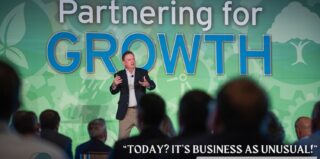
What has been fascinating is that in sharing the stage with a variety of CEO’s, for both massive, global organizations and smaller associations and businesses, is seeing that there are many who share a relentless focus on growth and opportunity


With a lot of university graduations and commencements, it might be a good moment and pause to think about a degree that colleges and universities should be offering their students. That’s why I opined a number of years ago that we needed to prepare people for a fast paced future by letting them enroll in a Masters of Business Imagination Degree.

MBI PDF

Grab the PDF to the right, and share it around. Here’s how it reads.

“In a time of rapid, disruptive change can be a death sentence – not only for organizations, but for the careers and skills of those who work there! It’s time to abandon the thinking that has had you anchored firmly to the past – and to shift your focus to the future, with enthusiasm, motivation and imagination.

You can do this by abandoning any pretense that the skills of yesterday will be important tomorrow. Figuratively and literally, it is time to move beyond the thinking that has led us to a world of MBA’s – Masters of Business Administration – and focus upon the critical skill that will take you into tomorrow. The world doesn’t need more administrators. It needs more MBI’s – Masters of Business Imagination!

What are the attributes? MBI’s:

  • see things differently
  • spur creativity in other people
  • focus on opportunity, not threat
  • refuse to accept the status quo
  • bring ideas to life
  • learn and unlearn
  • refuse to say the word can’t
  • accept challenges with passion and enthusiasm
  • thrive on diversity
  • challenge assumptions
  • are solutions oriented

Grab the Masters of Business Imagination PDF

Ask yourself this question: do you work in an organization that just simply doesn’t get it? Who is oblivious, blind, completely unaware of just how much business model change is occurring out there?

Here’s the thing — there are three types of people in the world:

  • those who make things happen
  • those who watch things happen
  • and those who say, “what happened?”

I’ve often pointed this out on stage, and have emphasized the point, by suggesting that  the folks who find themselves last on the list sit back and say, “whoah, dude, what happened? Where’d that come from?”

In other words, they’ve been completely blind to the trend which would cause massive upheaval within their industry, or refuse to accept the significant business model disruptions which are already occurring.

Guess what — it’s happening right now as a lot of financial institutions don’t realize just how quickly mobile technology is going to change everything in the consumer financial services industry! Or in countless other industries where the blindness of current market leaders is leading them to their own “whoah, dude” moment.

Continue Reading

I’ll often be lined up for a conversation with the CEO of a client organization when I’m preparing for a private client CEO leadership/innovation keynote.

It’s part of a careful diplomatic dance. They want to ensure that the framework of my keynote addresses the key issues and challenges that they need to address to ensure that they can become a high velocity innovation hero. I often work with them to help them understand the unique innovation perspective I am bringing into the room.

During the conversation, I often prepare a summary list of the issues that they put on the table that I’ll use in preparing my talk.

I’ve got dozens of scribbled notes from such conversations. Here’s one that I just came across for an event over a year ago; the CEO of this Fortune 1000 organization (obviously, not named) outlined some of the key themes that I needed to address. As he put it, “we need to:”

  • increase our bench strength. We don’t seem to have the right skills and the right capabilities at the right time for the right purpose. We need to get better at our skills mix and agility if we are to max out our creative capabilities.
  • institutionalize learning. We tend to fall behind and miss opportunities because our people don’t know enough about what is going on “out there”
  • grow high value customer relationships. We could get much better in solving customers problems before they know they have a problem. If we could do that, we could extend existing revenue faster.
  • accelerate product innovation. We’re slow. By the time we get to market, our competitor has already been there. We need to speed things up.
  • have a better talent pipeline. We’ve got a lot of “dead wood” lying around, performing a lot of tactical, non-strategic work. We need to ensure that we are developing/ingesting new talent faster, for the faster emergence of new issues.
  • reduce our structural costs through collaboration. Simply put, there is simply too much duplication of effort. It’s the era of social networks; why can’t we be “social” internally?
  • suck less. There’s still huge opportunity to reduce product costs through process innovation and better project execution. (Yes, he did use this phrase)
  • scale faster. We really, really need to get better at identifying and capturing growth markets.
  • plug knowledge gaps. There’s lots to learn about things we don’t know about. We need to invest more in risk oriented projects. We have to fail faster.

What’s fascinating about these conversations is that the CEO knows the challenges that need to be addressed, and is confiding in me those concerns; my role is helping to build a message for the team as to what they really need to do to become high velocity innovation hero’s.

The simple list above — and this is but one of dozens of such summaries — gives a bit of insight into how you can take innovation beyond simple product oriented innovation.

Remember – innovation is all about answering the questions: “What can I do to run this business better? What can I do to grow this business? And what can I do to transform the business!”

A key innovation message that I spend time with my clients focusing upon involves the concept of “thinking big, starting small, and scaling fast.”

(With all due respect, the thought process comes from a customer-service oriented strategy at McDonald’s many years ago, but it is easily extended to encompass innovation in general.)

What does the message imply:

  • think big: identify the long term transformative trends that will impact you. These could include significant industry change, business model disruption, the emergence of new competitors, product or service transformation; anything. Essentially, you need to get a good grounding in the “big changes” that will impact your future over a five or ten year period
  • Continue Reading
The return of growth
April 23rd, 2010

My mantra about innovation is that it is always about three questions: how do you run the business better, grow the business, and transform the business. Address those three issues, and you’ve nailed the essence of innovation.

Since the economic downturn, most of my global clients have been focused on the first issue: how can we run the business better? They’ve been razor-arrow sharp on achieving operational excellence, managing costs, downsizing, and other critical steps necessary to survival.

Now that’s changed.

In the last few months, I’ve had a significant number of bookings — often by senior VP or CEO level execs within  Fortune 1000 organizations — for keynotes at leadership meetings that have the purpose of examining how to grow the business and transform the business.

In other words, folks, GROWTH IS BACK. I think the mindset of the global Fortune 1000 is shifting quickly to strategies that are aimed at transitioning products and markets; generating revenue where revenue hasn’t existed before; growth through acquisition; and countless other innovation strategies aimed at growth. And they’re thinking as to what they need to do this; how do they realign their skills base to deal with rapid change ; how do they more rapidly share ideas on fast emerging opportunities; how do they partner up in order to move faster?

This is the fifth recession I’ve gone through in my professional career. I’ve seen these signs before.

Growth is definitely back in business.

More information

  • Read: Success Comes to Those Who Evolve

Reblog this post [with Zemanta]

2010GreenEnergy.jpg
I’ve been doing a tremendous number of small, intimate CEO level leadership meetings; I’ll work with the CEO or other senior management team member to pull together a talk that will highlight the key opportunities for growth through innovation within an industry.

I often point out that there are significant innovation and revenue growth opportunities when an organization concentrates on mastering the rapid emergence of new knowledge within a specific sector.

Take the world of construction; I’ve recently spoken at quite a few building management, construction and real estate conferences, and have focused on the fact that we are now witnessing very fast knowledge exponentiation with “green” design concepts.

What’s happening is that we are seeing:

  • the rapid emergence of new building methodologies, design concepts, materials, eco-design principles, all of which have the goal of reducing the overall energy footprint of the building, or reducing its environmental impact
  • the result is that green building methodology is continuing to evolve at a furious pace
  • there is so much new knowledge emerging that a new profession of “energy engineers” is beginning to emerge
  • their skill and role is simply to keep on top of furious rates of change in terms of new energy management solutions within the building and construction sector
  • developments are occurring so quickly that these individuals possess three key skills: how to rapidly ingest new knowledge and new ideas; awareness of where this new knowledge is emerging; and the ability to tap into other specialized skill sets and form rapid skills partnerships in order to tackle growth opportunities

The result is the emergence of a new career of “green engineers” who simply know where to find all the new knowledge and expertise that is appearing out there!

This is pretty significant stuff: after all, some 40% of total US energy consumption can be attributed to operating buildings: the heat, light, cooling, hot water and other systems. Another 8% of energy use is related to the materials used. All the SUV’s in North America? Three percent!

Clearly, there are BIG opportunities for growth through innovation, through the mastery of fast knowledge.

That’s why I always challenge a CEO and senior management team to challenge themselves with workforce innovation.

That involves innovation with different workplace policies, career paths, workforce structure, experiential oriented job descriptions, skills banks for specialized skills, and a rapid focus on growth through the rapid emergence of new knowledge within that workforce.

2010ExpectationGap.jpgAnother report on my keynote for 4,000 at the annual meeting of the National Parks & Recreation Association, putting into a concise summary the key trends that I covered (from the Parks & Rec monthly magazine).

“… a solid turn-out of nearly 6,000 park professionals and advocates made the 45th edition of Congress a resounding success. …. The theme, “Looking to the Future,” permeated nearly every facet of the event held at the Salt Center Convention Center.

In keeping with the Congress theme, Looking to the Future, opening session keynote speaker Jim Carroll did not disappoint. The Canada-based futurist built his address around key themes and issues likely to confront the field of parks and recreation in the next 10 to 15 years.

Carroll encouraged the packed convention hall to think in terms of transformation.

Continue Reading

When you open up a conference for 4,000 people, you really need to get them inspired and ready to take on the challenges that they face in the future!

Here’s the first few opening seconds from my keynote earlier this year for the National Recreation and Parks Association annual congress. An insprirational clip!

09Innovators.jpgJust over a year ago, the global economy changed.

What has it changed to? When I keynoted the Missouri Governor Economic Development conference in St. Louis two weeks ago, I offered this quote from the American Chamber of Commerce: “It’s going to be this move from a bad economy, to the next economy.”

What is that next economy? No one is certain, but what we can be sure of is that many industries will be fundamentally different; business models will continue to evolve at a faster pace; new revenue opportunities will continue to emerge; customer expectations will ramp up in terms of quality and service; we’ll see the ongoing emergence of new competitors; product life-cycles will continue to shorten as innovation speeds up; and a lot of transformative change will occur in markets and industries as really innovative people continue to shake up the fundamentals.

Continue Reading

Here’s a brochure extract from another upcoming conference. The theme : “Moving Beyond the Meltdown: Focusing on Growth Through Innovation.”

GrowthThroughInovation.jpg

It’s been a busy six months since the meltdown.

Throughout this time, I’ve been keynoting events all over North America, for organizations and events large and small, focused on the theme of innovation and working our way through challenging economic times.

What has been fascinating is that in sharing the stage with a variety of CEO’s, for both massive, global organizations and smaller associations and businesses, there are many who share a relentless focus on opportunity.

Continue Reading

20009BusinessGrowth.jpgThere’s a lot of research that goes into every keynote and workshop I undertake. Recently, one key theme has been looking at how innovators break through the recessionary blues, and create new markets and revenue through disruptive innovation. This was the theme of a recent column that I wrote, “Keep Those Ideas Coming.”

While preparing for a recent keynote for a Fortune 500 leadership event, I came across an an article from The Hindu newspaper from January 2009, which featured an interview with Vijay Govindarajan, Chief Innovation Consultant at General Electric in Chennai; he’s also a professor at the Tuck School of International Business.

Continue Reading

08CEOGrowth.jpgI was in a conference call yesterday with the CEO of a global organization; I’ll be doing a leadership session with them this winter. It’s one of several pre-planning calls that I’ll do with this client as I shape my remarks for their meeting.

I love the clarity of the CEO mind. At one point early in the call, he stated how quickly they’re transitioning through fast-paced economic events.

We established three strategic priorities. Number one, survive. Number two, innovate. Number three, grow. We’ve got the survival thing down. Now we’re into phase two.

Phase two is the reason why they are having this leadership meeting, which has just been pulled together over the last several weeks. My role is that I’ll provide them with an overview of key trends to think about; how I see other organizations dealing with fast paced economic change, not to mention my fundamental insight on “innovating in the high velocity economy.”

Continue Reading

It’s back!

Aggressive indecision! With all the economic turmoil, leaders, executives and staff have the “deer in the headlights” syndrome.

I spoke about this trend extensively on stage during the last recession in 2001-2002. People got into the message, and it restored their enthusiasm for the future and innovation.

In that spirit, I’ve resurrected the original clip on YouTube.


I actually wrote about “aggressive indecision” in my book, What I Learned From Frogs in Texas: Saving Your Skin with Forward Thinking Innovation. Ask yourself if you are seeing these signs:

Continue Reading

Given the rapid pace of global economic developments in the fall of 2008, it’s interesting that the number of organizations bringing me in for a leadership or management event has increased.

That’s because, despite perilous economic times, CEO’s in a variety of industries are working hard to ensure that their organization stays focused on growth.

At these leadership meetings, I’m offering insight on growth markets and opportunities; innovation strategies to stay ahead in the downturn; and unique insight on how organizations are working hard to re-align their strategies and structure with fast paced market change.

If you need to get your staff and team mindset in the right frame of mind for moving forward in this high velocity, rapidly changing economy, you might need this type of high level, energetic message.

To help you get in the right frame of mind, here’s a little motivational video clip from a recent keynote I did on stage in Sydney, Australia.

iStock_000002463965XSmall.jpgI’m often providing detailed strategic guidance to senior executives and leaders on trends and the future, and certainly the economy has become a big part of what I address today. Much of my time is spent putting into perspective the fact that we’ve always had downturns; there’s still plenty of growth opportunities out there; innovation is even more critical now to ensure that you’re ready to go as the economy starts firing on both cylinders again (which it will.)

What has become evident is that the most pressing issue for leaders today is focus. While volatility rocks global markets, there continue to be fundamental truths: your industry, products, competition, skills requirements, organizational capabilities, and ability to respond to rapid change will define your future success.

Here’s my advice on what you should be doing right now to ensure that you are ready for what comes next, based, in part, on a blog entry I wrote last April!

  • think growth: It’s all too easy right now to lose your enthusiasm and sense of purpose. When economies contract, so too does your motivation. Don’t let that happen — now is the worst time to lose sight of the future! Think opportunity: study my “Where’s the Growth” document, and think about what it implies

Continue Reading

As some economies continue to experience rounds of volatility, there are still plenty trying to figure out what to do next. And there are a many who are focused on the theme of “what do we do after the world has gone flat?”

In the “post-flat” world, you need to change your focus. In an upcoming keynote, I’ll be concentrating on several core themes:

  • focus on growth – shift your focus to opportunity rather than cost based competition
  • think “market transformation” – don’t tinker with strategy; you’ve got to be willing to shift assumptions, habits, routine

Continue Reading

stage-CEO.jpgSupertramp — a band from the 80′s — had a minor hit with the song “On the Long Way Home,” which featured the memorable line, the line, “when you’re up on the stage, it’s so unbelievable.”

It is, quite. And when you’re up there, you realize how lucky you are to be able to share with the audience the wisdom you’ve picked up by observing some of the world’s top innovators.

Recently, after a presentation to an audience of 3,000 people, I was approached by a CEO who was quite inspired by my remarks. He then asked me a fascinating question: “what would you do if you took over the leadership of my company right now?” We chatted for a while and I believe I provided some pretty succinct insight; but since then, I’ve been thinking about that question. Here’s a part of my answer.

  • maximize your best revenue opportunities. I’d make sure that any existing revenue relationships remain intact, and then some. I’d work on having my team obsess on growing existing high value customer relationships through service excellence. Let’s make sure that we meet their needs. It will likely be easier to keep existing revenue flowing rather than finding new ones, particularly through a time of economic challenge.
  • obsess over time to market. I’d work hard to accelerate product innovation; market life-cycles are collapsing, and I’d make sure every member of the team reoriented themselves to that reality. I’d focus on getting R&D to think in terms of faster cycles; I’d ramp up sales force education so that they were better aware of what’s coming next. I’d have the team thinking in terms of 3-6-9-12 : here’s what will be doing in the marketplace 3, 6, 9 and 12 months from now. I’d layer on top of that some insight into 1-2-5-10: what we might be doing 1, 2, 5 and 10 years from now.
  • reduce product costs through process improvement and better project execution: there is no shortage of innovative ideas, structures and concepts involving process and production methodologies. I’d make sure we were looking at finding those who are doing leading edge work in this area, inside or outside our industry, and learn from them.
  • reduce structural costs through collaboration: at this point in time, in a global world that allows for instant, smart collaboration among teams, there is no reason for massive duplication of skills and talent throughout an organization. I’d start a rethink those silos, and restructure for a new skills deployment approach. Right off the bat, I’d encourage a few cross-organizational collaboration efforts, to get people used to the idea of tackling fast new problems rather than arguing about structure and hierarchy.
  • focus on the pipeline of talent innovation: I’ve said it before and I’ll say it again. The depth the bench strength is critical to future success. I’d have everyone take a good look at our pipeline, to see if it will meet upcoming needs. If not, I’d get a program in place to fix that fast.
  • relentlessly and aggressively chase costs: I’m not talking about spontaneous slash and burn spending cuts: I’d refocus on transitioning the role of staff from tactical efforts to a strategic role. I’ve spent time with the CIO’s and CFO’s of some pretty major organizations: Hunt Oil, Adobe, J Crew, Under Armor. All of them have provided in-depth insight onstage during customer panels that have focused on the role of IT in the business to run the business better, grow the business and transform the business. There remain countless opportunities for IT oriented innovation to rip unnecessary costs out of the business, and it involves this tactical to strategic transition.
  • enhance quality and reliability of product: Last year, I spoke to 2,500 global quality professionals on the challenges that the high velocity economy presents to the concept of quality. The fact is, new issues hit us in the marketplace faster than ever before. And the global idea loop means that quality challenges can become a sudden, massive worldwide PR nightmare faster than we’ve ever been prepared for. That’s why avoiding quality problems remains a critical focus. I’d take a look at how well we’re dealing with quality issues, and whether we’ve got the agility to respond in this new world of heightened PR challenges. I’d also have a group prepare an immediate outline of challenges and problems with customer service and satisfaction.
  • capture new emerging growth markets faster: I’d begin to orient the team so that we knew about which market opportunities might come next, and then spend time aligning ourselves to innovate faster in such markets. I recently spent some time with one client, and the focus of our discussion was how a new market was set to unfold in the next three months. Expectations were that the market — for a unique consumer product, with potential sales in the billions of dollars — might last for a period of eighteen months, before being eclipsed by the next stage of development. Essentially, the CEO was looking at a situation where they had to figure out how to jump into this new fast market, and make the most of it in an extremely short period of time. That’s a new skill structure to wrap an organization around, and one that every organization must learn to master.

That’s a good starting point. The key issue: I’d begin by aligning the organization to the concept of “thriving in the high velocity economy.”

Oh, and one of the first things I’d do? I would immediately convene a senior management/leadership meeting, and bring in a futurist and innovation expert to wake my people up to the potential that can come from energizing ourselves towards future opportunities.

dazedandconfused.jpgAt a particular keynote last week, I met a number of senior executives who certainly agreed with my message – we need to constantly realign our company to the reality of change that surrounds it. That’s where innovation comes from. But they also also indicated that they found it increasingly difficult to keep up with the rapid change occurring all around them.

There’s been an increasing number of these individuals, and I’ve come to call them the Led Zeppelin refugees: they’re simply dazed by the changes occuring in the high velocty economy, and are confused about what to do next.

That’s why there’s such a good question that flows from this: just how do you become an organization that is focused on innovation?

One of the easiest methods is simply by identifying the obvious and the not-so-obvious trends that will impact your business or organization — and then taking the time to figure out what actions you must undertake to deal with those trends.

Ask yourself this question: are you prepared for what comes next in terms of your business? The likely answer is no: my experience is that many organizations still have a very short-term minded outlook. They’re caught in an innovation rut, simply doing day by day the same old things they’ve always been doing, day in day out. And they don’t really think about how their world is going to change.

That’s why you should undertake a “trend-and-innovation” audit of your organization: quite simply, figuring out what comes next, and what you need to do about it.

How can you do this? By asking yourself a series of questions:

  • How quickly is our marketplace changing? How quickly might it change in the future? What’s the impact on what I sell, and how I sell it?
  • How are our products changing? Willl they change faster in terms of features? Will support become easier, or more complex? Can we manage to operate in a faster market?
  • Are our products moving upscale, or are they becoming commodities,such that you’ll be forced to compete on price? Can we do something so that there is more of a service element to our product?
  • What new competitors are appearing, or might emerge in the future? Is the basic business model threatened? Is there more likelihood of direct outreach to the consumer rather than through an existing distributor/wholesaler network?
  • What moves could we make to make sure we can remain competitive? You really must ask yourself some probing questions as you go through this process. You need to challenge yourself and think what might really be different in five years, in terms of what you sell, who you sell to, how you sell it, and who you are selling against.

What you need to do is ask yourself these tough questions, so that you’re thinking about where there might be new problems and new opportunities that will impact your business in the future, not just in terms of what you sell, but in terms of the structure that you use to get things done.

And therein lies the rub: I think a lot of organizations fail to do this type of simple analysis. There are too many who sit back and react to change instead of thinking: “ok we know some big change is coming what the heck are we going to do about it?” Think of it as forward-oriented innovation: it’s a simple concept, and one of the most important things you should be doing.

iStock_000002463965XSmall.jpgMy blog posting ten days ago (a “Memo to the CEO”) stirred up quite a bit of interest and response. In the item, I noted that the most important thing CEO’s “can do *right now*, as you work to navigate your way through the challenging economic shoals that surround you, is to make sure that you don’t kill innovation in its tracks.”  A few readers asked, “ok, so what do we do to ensure we keep innovating?” I had a teleconference with a client today, planning for an upcoming leadership event. Here’s what I came away from the call with — my ideas on bringing some focus to their innovation mindset — based upon the rapid market change they are encountering:

  • Study air guitar. There’s innovation, and then there’s market transformation. While Sony and Microsoft spent their time developing a faster video game machine, Nintendo transformed the video game marketplace with the Wii by introducing wireless 3-d spatial action to video gaming. That helped to refresh enthusiasm for the already-popular GuitarHero game — since people could now do wireless GuitarHero. An entire generation of baby-boomers who mastered air guitar in the 70′s who could never figure out an X-Box controller — are now video game customers! Search YouTube for grannies playing Guitar Hero, and you’ll see the results. That’s an organization that has taken innovation to the next step! Not just innovation, but transformation.
  • Energize your brand. If your brand looks tired, your customers will see it as tired. Once that happens, you’ll start to lose all the equity you’ve built up. Brands today need to be full of energy; I spent time with a company last week that is re-approaching the world of brand-image with enthusiasm and passion. There was a lot of energy, and I suspect we will see that continue over time.
  • Fail faster. Imagine that you are a company that has some stuff that will help to make the next market of LED TV’s happen fast. Imagine that you can’t decide whether to get involved or not. Imagine that your competitor has already worked on three prototype projects with the new platform. Who is going to win?
  • Check your bench strength. Really smart people with the ability to get into self-assembling project teams are your best hope for the future. And the fact is, their skills are continuing to be in extremely short supply as everybody becomes more of a specialist. If you don’t have an organization that can expand, contract and collaborate at will, drawing the capabilities of your A-team, you’ve got a big problem.
  • Scare yourself. Do you know who your new competition will be five years from now? Think Google Car, iPlane, WalMart Hip Replacements. I know I’ve used this example before, but markets and industries are seeing big transformations with the rapid emergence of new competitors, and you need to be thinking about that.
  • Check your speed. How fast can you innovate? Perform? Undertake miracles? Tackle a problem? I’m still on a mailing list for the Sporiting Goods Manufacturing Association; I keynoted their conference last year. This week, members are scrambling to deal with a fast new environmental challenge. Surviving todays’ economy is all about how quickly you can assemble and reassemble your team to fix fast problems; that the SGMA is doing this is indicative of an industry that is learning to think and act fast.
  • Invest in experience. Get a bit crazy. Try things out. Study my “Where’s the Growth” document, and find out where your own market growth potential is. Rush a few new products or services to markets, and find out what you learn from the process. The insight your team gains in learning how to innovate will be extremely valuable. It’s called experiential capital, and it’s the new currency of the 21st century. The more you have, the better you’ll be positioned. Innovation isn’t something you just do: it’s a culture, and a mindset that you invest in. By doing things.
  • Set the tone. If you let the current economic headlines drive your corporate spirit, you’re sunk. You have to keep people focused on the future — otherwise, your team will smell your fear. Leadership is all about keeping your team focused on opportunity and goals, not on ongoing and regular (“new normal” volatility.

I’m seeing innovative leaders do innovative things, and there’s a certain core theme that is out there.

MessagetoCEO.jpg

Memo

To: CEO’s worldwide,
       (particularly in the financial sector)

From: Jim Carroll

————————-
I know things are extremely busy, particularly given our economic climate, but I think there’s a key issue that you need to make sure is on your agenda.

The most important thing that you can do *right now*, as you work to navigate your way through the challenging economic shoals that surround you, is to make sure that you don’t kill innovation in its tracks.

In the last few years, you’ve nurtured and created a core group of people in your organization who have become relentlessly focused on innovation. They’ve been obsessively focused on process, service and product innovation. They’re matching the needs of customers, are taking you in to new markets, and are figuring out what to do in an economy that changes at a furious pace.

In the months and years to come, these executives are going to be some of the most important and critical individuals on your team.

Leaders set the tone. The tone you need to set for your leading innovators is that innovation matters now more than ever.

I know it’s a tough sector to be in right now; there’s a lot of bloodletting underway, and there’s likely more to come as hundreds of billions of dollars of losses are absorbed. Yet you’ll likely get through it, and you are going to have to be relentlessly focused on meeting customer needs, open new markets, and continually re-orient your business models to continue to focus on growth.

In January 2008. I was honored to be one of the judges for the annual Monarch Innovation Awards. We examined various innovative service and product offerings from such major financial institutions as Wachovia, SunTrust, USBank, Bank of America, WellsFargo and others. The key goal of the awards, sponsored by Barlow Research, was to “recognize financial institutions that provide the most innovative products to business customers” and to “recognize risk takers in the financial services industry who create/promote innovation within their organizations.”

Throughout the financial sector, there are innovation heroes like those who won the Monarch Innovation Awards. These are the folks who are willing to stick their heads up, take a risk, and do something new and dramatic.

It’s your innovation heroes who will help you open the future.

You must ensure that they still have the courage to take risks. To open new markets. To do innovative things that will solve customer problems. To realign the business for the future.

Celebrate them. Elevate them. Make their contributions known.

As the CEO, you set the tone for your organization. You have a momentary chance to ensure that you stay focused on the opportunities that come from your innovation heroes.

If you want to chat about this, give me a call. I’m at 905.855.2950. Or just send me an email: innovationmatters@jimcarroll.com

Sincerely,

Jim Carroll

——–

UA-117171-1

Powered by Web Design Company Plugins