
Your Blackberry, iPhone or mobile device is soon to become your credit card

Home > Archives

Financial

"Every financial services organization must deal with high velocity change -- whether it's the impact of mobile technology, social networks, rapid business model change, the emergence of new global competitors, or heightened customer expectations.

Some of Jim's financial services clients include • American Express • Diners’ Club Worldwide • Bank of Montreal • Barlow Research Associates • CapitolOne • Lincoln Financial • National Australian Bank • American Community Bankers Association • AccPac International • International Financial Executives Conference • Farm Credit Cooperative • Fidelity Bank (Cayman) Ltd. • DataCard • AICPA • Credit Union Management Association • Electronic Transaction Association • Insurance Institute of Canada • IREV (Swedish Accounting Association) • Investment Funds Institute of Canada • KPMG • Deloitte's • E*Trade • Financial Management Institute • Great West Life • Price Waterhouse • RBC Financial Group • Society of Management Accountants • US Committee on State Taxation • VISA • CIBC World Markets • BMO Financial Group • Credit Union Directors Association • Financial Management Institute • GBC Asset Management • TDBank

Ask yourself this question: do you work in an organization that just simply doesn’t get it? Who is oblivious, blind, completely unaware of just how much business model change is occurring out there?

Here’s the thing — there are three types of people in the world:

  • those who make things happen
  • those who watch things happen
  • and those who say, “what happened?”

I’ve often pointed this out on stage, and have emphasized the point, by suggesting that  the folks who find themselves last on the list sit back and say, “whoah, dude, what happened? Where’d that come from?”

In other words, they’ve been completely blind to the trend which would cause massive upheaval within their industry, or refuse to accept the significant business model disruptions which are already occurring.

Guess what — it’s happening right now as a lot of financial institutions don’t realize just how quickly mobile technology is going to change everything in the consumer financial services industry! Or in countless other industries where the blindness of current market leaders is leading them to their own “whoah, dude” moment.

Continue Reading

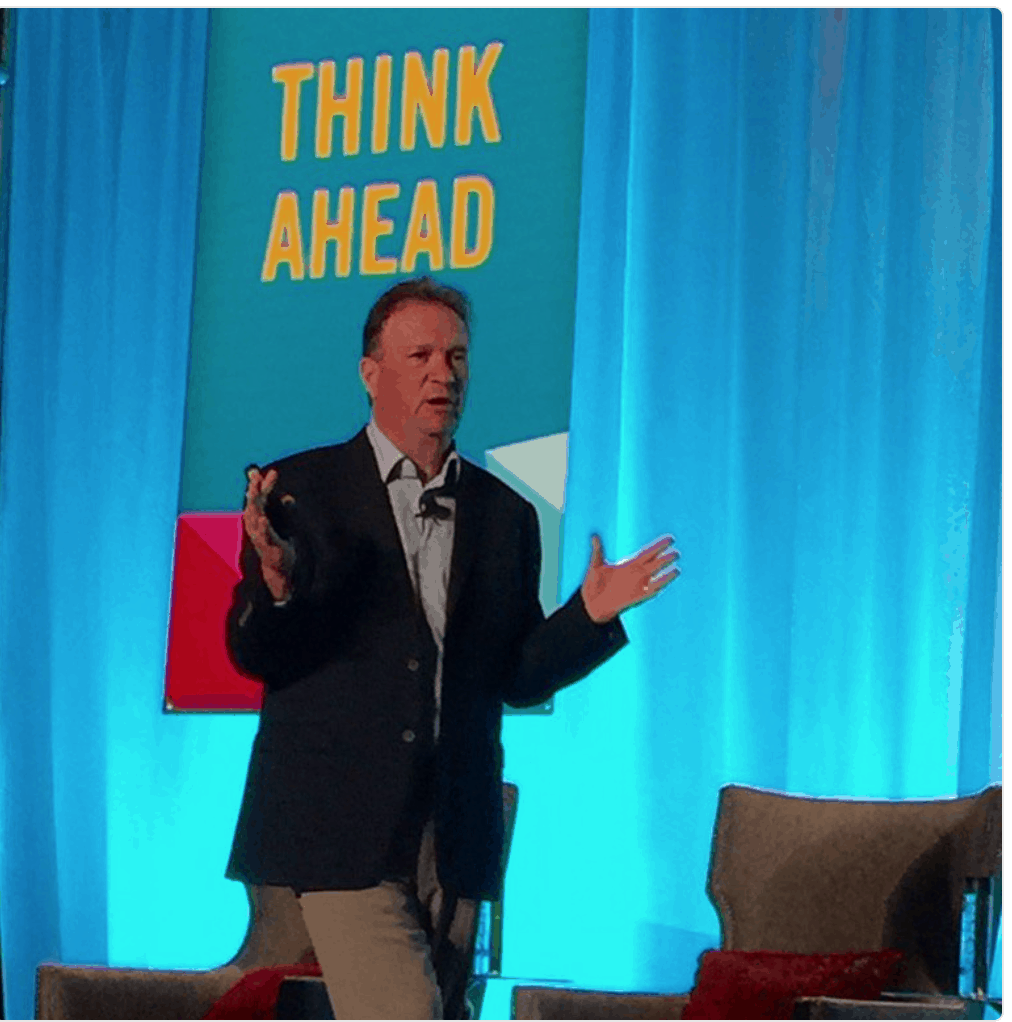
What happens when Silicon Valley takes over the innovation agenda within an industry? In this video clip from a recent keynote, Jim challenges his audience to think about what happens in the world of banking, particularly with the likely fast paced emergence of contact-less payment technology based on mobile devices.

Innovative organizations need to make sure that they understand the external factors that will influence their future, and need to react appropriately. And as we enter the era of hyper-connected intelligent devices, with the impact of location-intelligence technology and the rapid adoption of mobile technologies, we’re likely to see every industry — even beyond financial services — impacted.

New business models, disruptive competition, a shift in control, customer churn — everything is up for grabs once Silicon Valley seizes control and defines your future!

A key innovation message that I spend time with my clients focusing upon involves the concept of “thinking big, starting small, and scaling fast.”

(With all due respect, the thought process comes from a customer-service oriented strategy at McDonald’s many years ago, but it is easily extended to encompass innovation in general.)

What does the message imply:

  • think big: identify the long term transformative trends that will impact you. These could include significant industry change, business model disruption, the emergence of new competitors, product or service transformation; anything. Essentially, you need to get a good grounding in the “big changes” that will impact your future over a five or ten year period
  • Continue Reading

2010FinancialAdvisor.jpgI spend a lot of time speaking to global financial organizations — some of the world’s largest institutions — helping them understand what they need to do from an innovation perspective to stay ahead of fast paced change.

These talks are often aimed at the idea of “how do we need to transition our advisory services — financial planners, investment advisors, insurance agents and brokers — to keep up with fast paced change?”

Here’s a laundry list of some of the strategies that I’ve been talking about:

Continue Reading

2010FinancialLocationIntelligence.jpgI had quite a few financial oriented keynotes through the last year, for banks, mortgage groups, credit unions and others. If there was a key theme as to the insight my clients were seeking, it was this: what are the BIG trends that are going to impact us (I’m a futurist), and what do we need to do about it (I specialize in insight on what global leaders are doing in the area of innovation.)

The scope of some of these engagements is pretty significant; Diners’ Club featured me as the opening speaker for their global franchise conference; my focus was on the big trends that would impact the organization into the future.

Continue Reading

2009Accountant-Fast.jpgOne of the columns I write on a regular basis is for CAMagazine, which goes to about 100,000 professional chartered accountants. My big secret? Despite the fact that I spend my time advising some of the biggest organizations in the world on strategies for innovation and creativity, I’m also a professional accountant. I spent some 12 years way back in the 1980′s with one of the world’s largest professional services firm.

My June column is out — and it talks about the challenge of trying to reconcile the emerging demands for more financial disclosure with the short attention spans that come with the Twitter era.

Continue Reading

2009Wizzit.jpgI’m off to Austin, Texas today, where I’ll be the closing keynote speaker tomorrow for the annual meeting of the Texas Credit Union League.

My role is to motivate and challenge the audience to continue to focus on applying innovative and creative ideas to their businesses, given that there is constant change within the financial sector. Not just due to the financial crisis, but also due to rapidly shifting consumer behavior, the rapid emergence of new technologies, and the extremely fast development of new business models.

Particularly with the idea of mobile banking!

Take the story of Wizzit (which boasts the slogan, “With Wizzit, you have your bank in your pocket“), based in South Africa. 200,000 South African’s have signed up for the service, in which they pay bills, store cash like a debit card, transfer funds, and send remittances. Wizzit is completely text messaging based.
Accounts can be opened in 30 seconds via a call center, and are sold via Wizzkids (It’s based upon the JetBlue model – with these representatives working at home). Plans are to expand the business model into Eastern Europe, according to Bank Technology News.

Continue Reading

ewallet-iphone.jpgI was the opening keynote speaker for a major credit union conference. In the room were the CEO’s and Board members for several hundred small to medium sized CU’s. This coming week on Friday, I’ll be the closing keynote speaker for the annual conference of the Texas Credit Union League in Austin. I spend quite a bit of time speaking throughout the financial sector.

One constant is that I always challenge my audience to think about how to become an agile, high velocity, innovation oriented organization. This isn’t simply an organization that has a constant stream of new products : it’s an organization that also responds to all the rapid change that is swirling around it.

From my slide deck, I’m outline that high velocity innovative organizations prepare for:

  • the rapid emergence of new technologies
  • rapid shifts in market fundamentals
  • the rapid emergence of new business models
  • rapid shifts in customer behavior
  • a need for rapid scaling to adapt to this rapidity
  • constant rapid shifts in marketing outreach methods
  • rapidly changing consumer sentiment
  • constant challenges in building and maintaining brand relevance.

Continue Reading

09FinancialWidgets.jpgMy latest CAMagazine article is out.

In January, I was invited to address a group of CIO’s and CFO’s from some of the world’s largest insurance companies — a pretty heavy duty crowd. My challenge? Get them away from focusing just on the here-and-now, and think a bit about some of the challenges that tomorrow will present.

Part of my voyage took them into a view of what their industry might look like ten years out. Here’s a few extracts:

Are you ready to open up your accounting and financial systems to the Facebook generation? In 10 years, that won’t seem like a silly question. But even today, it’s an issue you should think about

In the next few years, we are likely to enter the world of the “accounting mashup,” in which customers, suppliers and business partners start to interact with you through online widgets. As this happens, you’ll discover new business models that will provide sales opportunities, streamline customer support and reduce operating costs.

Continue Reading

2009Insurance.jpgBack in January of this year, I was invited to address a meeting of insurance executives on behalf of a global consulting company. It was a small but powerful group; in the room were Chief Operating Officers and Chief Information Officers for some of the world’s largest property and casualty insurance companies. (The client that booked me prefers to remain anonymous.)

I was asked to provide my views on the challenges and opportunities that the property & casualty insurance industry might face in 2015. These included a number of issues:

  • unavailability of niche skills due to increased underwriting complexity. Quite simply, faster change and faster science is leading to unique issues in assessing insurance risk, with the result that skills become far more specialized and unique.

Continue Reading

09MonarchBanking.jpgI just finalized my review of the entries for the 2009 Monarch Innovation Awards; for the second year in a row, I’ve been one of the panel of judges for the awards.

The awards are presented by Barlow Associates, a leading banking industry market research organization. As their press release notes, “the awards honor innovation in the financial services industry and seek to recognize financial institutions that provide the most innovative products to business customers and to recognize risk takers who create/promote innovation within their organizations.”

Given all the turbulence in the financial sector, it might seem like an odd time to be focusing on innovation – but it’s not. Cast your mind forward just a few years from now, and think about what we’ll see within the business banking sector:

  • a good part of our financial infrastructure will have migrated to mobile platforms people will think it normal to conduct banking via SMS transactions; a good chunk of the current credit card infrastructure will have migrated into our cell phones, Blackberries and iPods;

Continue Reading

08NextGenCustomer.jpgThis dude to the right? He’s about to inherit a whole whack of money.

Indeed, before the financial meltdown in the last month, the slides I used at a wide variety of financial, banking and insurance conferences noted that the issue of inter-generatlonal wealth transfer is a huge challenge and opportunity. Estimates suggest that we’ll see $12 to $18 trillion in money moving from one generation to another in the next 12 years ….. put that up against US GDP of $12 trillion. Cut in half for the stock market crash, and it is still a staggering number!

By 2053, the number will total $130 trillion – and the funds will move to a far more independent, financially savvy, technically sophisticated generation.

How do you maintain your relevance to this next generation customer? Through innovation.

Here’s something of interest: despite the caustic conditions throughout the global banking and insurance industry, there are still a huge number of senior executives who are focused on the key trends that will impact them in the future. They do know the one thing that I know to be true: one day the volatility in the banking and insurance sector will have gone away. Things will have calmed down, and we’ll have a banking, insurance and financial sector that is “back to normal.” Or, at least, a “new normal.”

Continue Reading

2008FinancialMeltdown.jpgI don’t want to distract from the seriousness of the events unfolding on Wall Street, but check out these headlines:

  • American banks face financial meltdown if their reforms fail.
  • Mortage Meltdown!
  • Bloody and Bowed — Money Managers Remain Badly Shaken by the Meltdown.
  • Market Cap Meltdown — Billions in Blue Chip Stock Values Have Been Blown Away.
  • Congress caught in a bind over bank crisis.
  • Crisis Looming As Realty Slump Becomes Global

Continue Reading

benchstrength.jpgI’m in Vancouver, about to deliver a keynote to a global professional services firm, with the working title, “Extreme Skills Specialization: What Comes Next with Global Talent, Global Organizations?

The working description goes like this: “The future of every career is either extremely specialized, or
massively general. Most professions are fragmenting into dozens, if not hundreds or thousands of specialities. Someone needs to understand all this, and help organizations tap into narrow bands of knowledge.

This is a major trend, and perhaps one of the defining trends of the next 10 years. Here’s how I’m presenting the challenges to my audience today:

  • the ability to assist your clients with high-velocity change will be a key success factor

Continue Reading

At my keynote to the US Association of Actuaries this week, and for a keynote to LOMA last week (an insurance association conference), I played a series of maps that showed the rapid emergence of obesity in the US population from 1995 to the present day, The maps were provided by the Insurance Information Institute.

I challenged the audience to think about what will happen through the next five years: we will see the emergence of “location intelligence dashboards” that will allow such professionals, to examine in real time, the emergence of new risk factors in their industry.

Continue Reading

iStock_000004927019XSmall.jpgI just came back from delivering the opening keynote for the annual meeting of the US Association of Actuaries. This crowd is the risk assessment side of the US life insurance industry, and given the rapid pace of change, their job has become much more difficult through the last several years.

They know that. They also know that there are many who don’t understand the critical role that they play, and so they set out to change that last year, by refocusing on a re-branding of the profession.

It turns out that they did a great job, having just picked up the Corporate Branding Campaign of the Year 2008 from PR Week magazine, even beating out “uber-cool” Tesla Motors.

The re-branding campaign fits with the challenges they are faced with: as the economy speeds up, they have to continually migrate their skills, capabilities and knowledge in order to continually assess new and more challenging forms of risk. One of those new skills might involve their transitioning to the role of “location intelligence professionals,” a trend I’ve written about here. This would involve learning how to marry the vast stores of information on current policy holders to the vast sources of “spatial” (think Google Maps) information emerging online, to come up new forms of assessing insurance risk.

Continue Reading

QuickPoll.jpgOver the last several months, I’ve been incorporating some live text message polling into my onstage presentations.

Yesterday, at an insurance industry conference, I put up a quick poll, and gave the audience three minutes to text message their answers in. It’s quite a bit of fun, because the results begin to appear automatically on screen — and are constantly, dynamically updated.

Here’s what’s fascinating: out of a crowd of about 300 people, only about 25 managed to get an answer in! There were a few reasons for this; first, since the A/V screen wasn’t great, it was hard to see the text message number, and I actually called out the wrong number for the first minute and a half – until someone pointed out my mistake! But at the same time, it was obvious that a good chunk of the crowd — baby boomers and up — had no clue how to send a text message.

Continue Reading

Here’s something to think about: we are going to see $12 to $18 trillion in intergenerational wealth transfer in the next 12 years in North America. (US GDP is $12 trillion). By 2053, $130 trillion will have moved from one generation to the next, in rolling waves of wealth transfer. All this will involve monies moving to new customers who are far more independent, financially savvy, and technically sophisticated.

In other words, tomorrow’s customer is going to be completely unlike the customer of today. That’s why innovating — keeping up with the future – is critical!

Tomorrow I keynote a group of professionals in the life insurance industry. Next Monday, I keynote a national Association of Actuaries; the following week, an international accounting and professional services powerhouse. Last week, a major bank and a number of wealth management firms. The heavy duty theme this month is the world of finance!

Here’s the thing about anyone doing business in financial services: you can drown in all the noise and short term hype and hysteria that involve markets and economies in rapid change.

Or, on the other hand, you can manage through that, and think about the innovations that are set to occur through the next five years. Focus on those, and there’s your future strategy.

Continue Reading

I’m about to head out the door to keynote a leadership team, business analysts and IT staff for a leading multinational bank. The theme of my luncheon talk is, of course, innovation in the high velocity financial sector.
There’s been a tremendous amount of new research undertaken in the last day, so that I can add to the insight that I’ve already accumulated through the years as to the innovations occuring in this sector.

There are a couple of key observations that I’ll share with the crowd. I start out with a list of pretty scary headlines. American banks face financial meltdown if their reforms fail. Mortage Meltdown! Bloody and Bowed — Money Managers Remain Badly Shaken by the Meltdown. Market Cap Meltdown — Billions in Blue Chip Stock Values Have Been Blown Away.Congress caught in a bind over bank crisis. Crisis Looming As Realty Slump Becomes Global

Continue Reading

MessagetoCEO.jpg

Memo

To: CEO’s worldwide,
       (particularly in the financial sector)

From: Jim Carroll

————————-
I know things are extremely busy, particularly given our economic climate, but I think there’s a key issue that you need to make sure is on your agenda.

The most important thing that you can do *right now*, as you work to navigate your way through the challenging economic shoals that surround you, is to make sure that you don’t kill innovation in its tracks.

In the last few years, you’ve nurtured and created a core group of people in your organization who have become relentlessly focused on innovation. They’ve been obsessively focused on process, service and product innovation. They’re matching the needs of customers, are taking you in to new markets, and are figuring out what to do in an economy that changes at a furious pace.

In the months and years to come, these executives are going to be some of the most important and critical individuals on your team.

Leaders set the tone. The tone you need to set for your leading innovators is that innovation matters now more than ever.

I know it’s a tough sector to be in right now; there’s a lot of bloodletting underway, and there’s likely more to come as hundreds of billions of dollars of losses are absorbed. Yet you’ll likely get through it, and you are going to have to be relentlessly focused on meeting customer needs, open new markets, and continually re-orient your business models to continue to focus on growth.

In January 2008. I was honored to be one of the judges for the annual Monarch Innovation Awards. We examined various innovative service and product offerings from such major financial institutions as Wachovia, SunTrust, USBank, Bank of America, WellsFargo and others. The key goal of the awards, sponsored by Barlow Research, was to “recognize financial institutions that provide the most innovative products to business customers” and to “recognize risk takers in the financial services industry who create/promote innovation within their organizations.”

Throughout the financial sector, there are innovation heroes like those who won the Monarch Innovation Awards. These are the folks who are willing to stick their heads up, take a risk, and do something new and dramatic.

It’s your innovation heroes who will help you open the future.

You must ensure that they still have the courage to take risks. To open new markets. To do innovative things that will solve customer problems. To realign the business for the future.

Celebrate them. Elevate them. Make their contributions known.

As the CEO, you set the tone for your organization. You have a momentary chance to ensure that you stay focused on the opportunities that come from your innovation heroes.

If you want to chat about this, give me a call. I’m at 905.855.2950. Or just send me an email: innovationmatters@jimcarroll.com

Sincerely,

Jim Carroll

——–

UA-117171-1

Powered by Web Design Company Plugins