65% of the kids in preschool today will work in a job or career that doesn’t yet exist

Home > Archives

Health Care

By 2020, we had successfully transitioned the health care system from one which "fixed people after they were sick" to one of preventative, diagnostic medicine. Treating them for the conditions we know they were likely to develop.

Some of Jim's clients health care clients include • American Academy of Ophthalmology • American Society for Health Care Risk Management • Association of Organ Procurement Organizations • Axcan Pharma Inc • Blue Cross/Blue Shield • Health Care Industry Distributors Association • National Association of Children's Hospitals • Ontario Hospital Association • Pharmaceutical Marketing Club of Quebec • PharmaLink Congress • Roche Diagnostics • Trillium Health Centre • VHA Georgia • World Congress on Healthcare Innovation & Technology • Waters Corporation • MDS Nordion • Providence Health Plans • Harvard Pilgrim Helath Care • Canadian Medical Association • Glaxo Wellcome • North Carolina Medical Managers Group • Roche Diagnostics • Essilor Eyecare • Alberta Senior Citizen’s Housing Association


Rethinking long term care
February 16th, 2010

Bill Gates once observed that “most people overestimate the amount of change that will occur in two years and underestimate the change that will occur over ten years.”

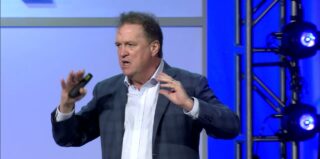
In this video, I challenge an audience to think longer term, and utilize a 10 to 20 year trend perspective to really understand how a particular industry might change. In this case, the health care transformation, as we move from a world of reactive to preventative health care.

I’m a big believer that many of the big transformations that will occur in the future — and which will drive new billion dollar industries — will come from innovations around solving the “big problems” that society faces.

Here’s a video clip from a recent keynote, in which I talk about what will happen in the long term care industry, as we transition to a world of home based, community oriented senior citizen care

A lot of people have convinced themselves that there aren’t a lot of growth markets out there. They don’t see what I see. Think “BIG challenges = BIG transformations = BIG opportunities!”

Reblog this post [with Zemanta]

2009ACHRI-2.jpgI’m at the airport in Austin, Texas, having just delivered the opening keynote for Facilities ’09: National Association of Children’s Hospitals Design conference.

The room was full of CEO’s, board members, architects, and managers responsible for transitioning the physical infrastructure of these facilities into the modern hospital infrastructure of the 21st century.

I’ve just discovered that someone from NACHRI is live-blogging the event, and they covered my talk. I’ll have more to write about this later, but there’s a quick summary of the challenges I raised to the crowd here.

Jim Carroll’s keynote at NACHRI: So the question becomes: what mindset should we have going forward, and what are we doing for the future?

  • We need a relentless focus on market growth. There is an unprecedented opportunity for growth through increased efficiencies, cost savings and greening of facilities.

Continue Reading

HealthCare2020.jpg


Grab the PDF by clicking on the image on the right!

The world of healthcare and medicine is on the edge of a period of massive transformation.

Do you have any idea as to how sweeping the forthcoming changes are?

Maybe not — the future of healthcare is often lost in a raging debate that focuses on the current challenges faced by the system.

But if you step back and think about where we’ll be in 2020, then you can appreciate the scope of the trends which are now underway.

Rapid technological development and relentless innovation are the two key trends that will provide for a forthcoming massive
transformation
of our health care system.

I’ve learned that sometimes, it is easier to open up the minds of people to big trends by taking a look *back* rather than by taking a look forward. When I was the closing keynote speaker for the 4th Annual World Healthcare Innovation & Technology Congress in Washington DC last December — one of the world’s premier health innovation events at the cusp of innovative healthcare thinking — I took the approach of looking back from 2020, to see what happened in the last 10 years.

Continue Reading

2009Seniors.jpgIn the interview just posted on my site (“What is a futurist“), I commented that “we live in transformative times — we’ll look back at 2009-2010 as the period of time in which we started to apply really transformative thinking to solving some of the big problems we have in health care, energy and the environment.”

I find that a lot of people don’t think about the major changes that are going to occur over the long term. Bill Gates caught this reality when he observed that “we always overestimate the change that will occur in the next two years and underestimate the change that will occur in the next ten.”

Continue Reading

2009Design09.jpgI’ve been confirmed as the opening keynote speaker for “Facilities 09“, a conference organized by the National Association of Children’s Hospitals and Related Institutions, to be held in Austin, Texas in mid-May.

They’re running with my “Moving Beyond the Meltdown: Aligning for Growth Through Innovation” topic. It’s another group who finds that in order to move the their association forward, they need to move them beyond their current mindset. They’re using the keynote description:


“In the face of widespread economic volatility, organizations have three choices: they can panic, making rash decisions on structure, markets, investments; they can freeze and do nothing; or they can respond to rapid change through innovation, particularly with respect to strategies, structure, capabilities, markets, products, and activities. Jim Carroll, one of the world’s leading futurists, trends and innovation experts with clients such as Lincoln Financial, Caterpillar, the Walt Disney Organization and Nestle, will share his insight on the strategies that leading edge organizations are pursuing to stay ahead of the economy.”

Continue Reading

Here’s a clip from my keynote for the World HealthCare Innovation & Technology Congress, where I focus on the key trends impacting the healthcare industry out to 2020.

This was based on a posting I wrote some months back, “It’s January 15, 2020: What Have We Learned About Healthcare in the Last Decade?” That is as good a synopsis of the transformative trends that are occurring now.

More information

I received the DVD of my closing keynote for the World Healthcare Innovation & Technology Congress today. It was a barnburner of a speech!

The attendees had just encountered three wonderful days covering all the fascinating new ideas, technologies, methodologies and change that is coming to the world of health care.

I spoke to them on how to ensure that they pursued all the innovative ideas they heard about. There’s a number of clips that I’ll put up.

In this particular clip, I’m providing a bit of guidance on “setting bold short term goals” and avoiding “aggressive indecision” ; I talk about the seven stages of economic grief — and how you need to move beyond anger and denial to innovation.

More information:

  • Innovation and the “Seven Stages of Economic Grief?”

iStock_000005300448XSmall.jpgAsk yourself that question. The year 2008 will look like this: it was the year that a global economic tsunami caused massive change — but it was also the year that saw the start of some pretty significant transformations.

As we go forward from 2008, it’s important to appreciate that we’re about to see a lot of big turns in the years to come in a wide variety of industries. Really, really big turns.

The word I like to use is “transformation.”

I’m a big believer that we live in truly transformative times, and that the next decade is going to witness some pretty staggering changes. Much of this transformation will come about because of the scope of potential problems that loom.

Staggering challenges eventually lead to equally staggering solutions. Think of a few:

  • Health care is an obvious huge problem, and the World Healthcare Innovation & Technology forum that I keynoted last week featured hundreds of innovative ideas. In 12 years, the health care system will look nothing what it looks like today. If you want a sense of what that is, read the healthcare trends post I did a few weeks ago.

Continue Reading

I’ve got my keynote for the World Health Care Innovation and Technology Conference this week; I blogged about it a few weeks ago with a futuristic post about health care.

A fellow over at the blog Our Own System found the post to be of interest. And in a blog post about it, he cut to the meat of my longish post, and provided links to a variety of Web sites that puts each trend in perspective. It provides interesting food for thought, so I’m reproducing a chunk of his post here. Make sure to visit his blog for the full post.

Jim Carroll had a very intriguing post at World Health Care Blog last week on health care innovation. The post is a keynote at a conference in 2020. His reflections provide insight to the ten biggest changes in health care since 2008. The changes are drastic. They’re innovative. They’re also exactly where we need to go.

Continue Reading

futuremedicine.jpg

On December 8th, the 4th annual World HealthCare Innovation and Technology Conference 2008 will open in Washington, DC. The afternoon keynote address, by Newt Gingrich, former Speaker, U.S. House of Representatives, is built on the theme of “Innovation, Technology and Competition: Transitioning to a 21st Century Intelligent Health System.”

I’m quite certain that Mr. Gingrich will offer some compelling thoughts on how to fix health care. And yet I’m certain that the prescription he offers will be much of the same old thinking that seems to dominate the health care agenda.

I’m the closing keynote speaker, on Wednesday, December 10th. I’m honored to speak at an event that includes Mr. Gingrich and other luminaries such as Scott McNealy, Chairman and Co-Founder, Sun Microsystems and Colin Angle, Chief Executive Officer and Co-Founder, iRobot.

What am I focussing on? My keynote will stress that right now is the time for big, bold, transformative thinking in the world of health care. We’re on the edge of something pretty big, both in terms of the depths of the challenge, and yet with the scope of the innovative solutions and thinking that are coming to the marketplace.

Continue Reading

Healthcare-08.jpgI provided the opening keynote yesterday for over 275 CFO’s of the Ontario Hospital Association. Collectively, they manage over $15 billion in spending.

My topic was Innovating for Our Future Health: The Strategic Role of Financial Leadership in our Hospitals. The subtext: “A look at the new strategic role that financial professionals must play as health care comes to dominate overall GDP spending. Innovation is no longer just a fashionable phrase — it’s the new leadership focus for executives in the health care sector“.

Every keynote carries one core theme, and the message of the day was: “as high velocity change envelopes the health care sector, you must transition from a tactical to a strategic role, to provide the analysis, insight, reporting, decision support tools and financial infrastructure that can help hospital leadership make ever more complex decisions.”

Continue Reading

bioconnectivity-08.jpgIt’s been announced that I will be a keynote speaker at the World HealthCare Innovation & Technology Conference, to be held in Washington, DC in December. In particular, I’ll be taking a look at the importance of one of the most significant trends that is just starting to unfold.

Twenty years from now, most people will look back and realize that right about now, we had three huge, transformative trends underway: device connectivity, geo-connectivity, and bio-connectivity

Essentially, everything around is about to become linked in — every device that surrounds your life. My home thermostat is linked to the Internet, and that has changed the scope of how I interact with energy.

Layered on top of device connectivity is spatial intelligence for each device — vis-a-vis Google Maps types of applications. Think about new forms of energy management built upon sophisticated geographic mapping applications.

Continue Reading

At my keynote to the US Association of Actuaries this week, and for a keynote to LOMA last week (an insurance association conference), I played a series of maps that showed the rapid emergence of obesity in the US population from 1995 to the present day, The maps were provided by the Insurance Information Institute.

I challenged the audience to think about what will happen through the next five years: we will see the emergence of “location intelligence dashboards” that will allow such professionals, to examine in real time, the emergence of new risk factors in their industry.

Continue Reading

bioconnectivity-08.jpgIn a keynote to a health care industry conference last week, I emphasized that in the high velocity economy, new business models, products, markets, and careers are appearing at a fast and furious pace. And it’s by watching for, observing, and understanding these trends that you’ll discover opportunity for innovation.

Consider the rapid emergence of new markets. As new scientific discoveries occur at an ever more rapid pace — due to the massive global collaboration with Web 2.0 as well as new information research sharing paradigms within established peer review based research methodologies — there are countless new products and markets that are being brought to life.

Take that reality, and apply it to any industry. Say, health care. Then parse that industry down into dozens or hundreds of sub-markets, and you’ll discover forthcoming new, billion dollar markets.

Consider, for example, the concept of bioconnectivity, which will be one of the most significant trends — and new markets — to play out in the next twenty years in the health care industry. What is it? Quite simply, the marriage of the computer chip and connectivity technology to medical devices, and ultimately, to people.

One small submarket that will come with bio-connectivity is the emergence of smart, intelligent, home-based medical devices. Have you ever seen a Sharper Image catalogue, or its online Web site? It’s the ultimate source for unique gadgets and toys of every type. Think about what the catalog might look like in 10 years, when its full of home-based bioconnectivity devices aimed at the baby boomer set.

Digital Connect Magazine, which monitors development with home and business connectivity devices, suggests that U.S. revenue from digital-home health services will quadruple to exceed $2.1 billion by 2010.

The two fastest growing areas? “Wellness monitoring services” and “e-health services” will each achieve a compound annual growth rate of more than 50 per cent. The former allows doctors to remotely monitor a patient’s condition (such as their insulin levels), while the latter provides active medical care (such as an intelligent sub-dermal medicine patch, which not only provides a patient automatic ingestion of a particular pharmaceutical, but allows the doctor to monitor its effect.)

It might sound like science fiction, but it is a very real development. Sit back and think about the business models and opportunities that flow from such a transformative trend. Link it to another trend: a whole bunch of baby boomers are getting older, sicker, and the health care system is breaking down. Hospitals will go virtual, extending their services through bio-connectivity, so that non-critical care boomers can be treated and monitored at home. This is slam-dunk obvious!

It’s a BIG TREND. It’s but one of many.

Simply put, our new reality is that science, and hence markets, industries, products and services, are evolving and changing at a rate never seen before.

And that’s where your own opportunity for innovation comes from!

futuremedicine.jpgI was the opening keynote speaker yesterday in Dallas for a get-together of the Strategic Marketplace Initiative. This is a group that represents a variety of health care providers and hospitals, as well as pharmaceutical companies and other health care suppliers. There were some heavy hitters in the room — even WalMart was there, which is indicative of the role it is seeking to carve out in the pharmaceutical side of things.

The group is devoted to trying to continue to improve the efficiency and quality of the supply-chain within the health care industry. My talk examined the future of health care; I’ve done such talks recently for the Blue Cross Blue Shield National Office, the Association of Organ Procurement Organizations, Harvard Pilgrim Health Care, Providence Health Care and the American Society for Health Care Risk Management.

There are certainly some big challenges. Consider these realities:

  • total health-care spending – by individuals, companies, the government – reached $2.3 trillion in 2005
  • health care spending is set to double to 20% of GDP within the next 10 years
  • 400,000 nurses are set to retire by 2010
  • 76 million baby boomers will be flooding the system for care
  • lifestyle diseases wlll continue to drive stress into the system

At the same time, the health care system must innovate at a furious pace to keep up with the trends that are set to impact it in a significant way, such as:

  • the rapid emergence of new technologies
  • massive skills challenges (both demographic and scientific!)
  • new business models and “competition,” particularly as retail concepts come to the industry, and “customer” expectations continue to increase
  • combined with the rapid emergence of new knowledge, methodologies, treatments, pharma, driven by rapid science

The sad thing is that little of the political debate occurring in the US on how to fix the system has to do with the real trends which are occuring; it tends to focus only on the difficult and challenging issue of insurance and coverage.

My talk stirred a lot of debate, and was very well received. There’s an overview of some of the trends that I covered in my FUTURE MEDICINE Prescriptions for 21st Century Healthcare trends summary.

Pharmalink.jpgI’m here in Las Vegas today, about to provide the opening keynote for Pharmalink 2007.

This is an annual meeting of senior executives — mostly C-Level, Sr. VP’s — from major pharmaceutical companies. It’s a forum where they can examine the challenges, issues and opportunities that come from a greater integration of the supply chain within the world of health care.

It’s a tough issue to crack — there are a lot of vested interests, long-standing business models, inertia towards change, and built-in routines. There’s a lot of sophisticated technology that is and can be used ; and yet, there still remains a tremendous amount of inefficiency in the U.S. health care system.

My keynote will focus on the theme, “what do innovative organizations do”, and will play into several trends:

  • concentrate on adaptability: in the longer term, change resistance retires out of the economy. The current generation of 35 and under staff in the health care system will rapidly adopt EHR (electronic health records) and all other forms of technology. Initiatives to date have been held back because of slow-to-act, change resistant boomers; however, as they leave the system, the rate of adoption of new ways of working will soar.
  • prepare for intensity: business cycles are getting faster, and R&D is too. It’s the ability to adapt to the sudden emergence of new markets and products that is critical
  • attitude with agility: business models are set to change; any industry that has a lot of wholesalers and distributors will find massive, fundamental, structural change to be a given on a 10 year horizon. Understand that, accept it, and work with it.
  • massive connectivity changes everything: pharma will be impacted in a huge way as everything, including drugs themselves, has sensor, location and intelligence awareness built in. Innovative around that — and the concept of bioconnectivity, and big opportunities can be found
  • structure with flexibility: volatility is the new normal. Think how quickly China and quality became linked; build a team and structure that can act fast, think fast, and react fast.

There’s an entire theme on these issues in my Ready, Set, Done: How to Innovate When Faster is the New Fast book — so it ties in nicely!

More information

  • read Future Medicine: Prescriptions for 21st Century Health Care
  • read “Are you watching the major transformations, or just the piddly stuff?”
  • Watch the “transformations” video
  • The view of the future by most is often short term oriented. What happens when you think about long term transformations?

    In my keynotes, I often put into perspective the big, massive, sweeping transformations that can change entire industries over the longer term. That’s one of the best ways to begin a process of thinking of innovation, and in finding creative solutions to challenges as well as opportunities. There’s not enough long term thinking today; there is simply too much short term hype.

    In this short video clip, I take a look at the world of health care, and the transformation that is occuring as we move to a world of personalized medicine.

    • read Future Medicine: Prescriptions for 21st Century Health Care
    • read “Are you watching the major transformations, or just the piddly stuff?”

    A bit of a backgrounder on my work in the health care sector/

    Partial client list

    Waters Corporation • MDS Nordion • American Society for Health Care Risk Management • VHA Georgia • Blue Cross Blue Shield national office • Association of Organ Procurement Organizations • Phamalinx annual conference • Health Care Industry Distributors Association • Trillium Health Care • Providence Health Plans • Harvard Pilgrim Helath Care • Canadian Medical Association • Glaxo Wellcome • American Academy of Opthalmology • North Carolina Medical Managers Group • Canadian Organization For Advanced Computers & Health • Health Administration Association of BC • Ontario Hospital Association • Roche Diagnostics • Essilor Eyecare

    Areas of trends and innovation focus

    • managing health in an era of constraint and challenge • opening up the minds of health care workers and adminstrators to the potential of the future • a futuristic examination of impact of digital technology and connectivity of health care • rethinking health care delivery in the digital age • business case issues for medical adminstrative staff on digital business • motivational kickoff/keynote for staff events • medical company sales force training and motivation • innovation — new business models, exploiting new opportunities in the health care sector • a look to the future • strategy sessions

    Highlights

    • Jim recently spoke to 600 employees of a major health care supplier, from the perspective of “A Day in the Life of a Patient in 2030.” He took a look back at the massive and huge transformative changes which occurred in the world of health care from 2006 to 2030.
    • Jim provided the opening keynote for about 3,000 health care professionals at the annual American Society for Health Care Risk Management in San Antonio, TX, with an indepth futurist view of key health care trends
    • co-authored “Good Health Online” a book that examined the role the Internet can play in our own health care, long before this became an issue on the radar of the health care industry
    • Jim has provided workshops for senior managers of health care organizations, focussing on the issue of health care services in the digital age, and the impact of e-biz on the health care industry. He provided senior management of Blue Cross/Blue Shield Florida with an interactive workshop — and they were so thrilled with the result that they had him down for four more sessions. He has now walked 400 of their senior staff through workshops that have helped them to assss the future of health care
    • Jim helps health care professionals and executives understand the massive change occurring in the world of healthcare, and think about ways that healthcare services are provided and delivered in a time of rapid change
      as a futurist, he takes a unique look at the opportunties and challenges in the world of health care as change envelopes the industry at a a furious pace, and helps administrators and medical professionals conceptualize the strategies and issues that need to be pursued

    I spoke in November in Iowa to a group of energy cooperatives, providing some different insight into the future of energy supply in terms of not what’s happening today, but in terms of “what comes later” — say, five, ten or fifteen years out.

    Likewise, I’ll be speaking to the Healthcare Industry Distributors Association at the end of the month. Many of the folks in the room will be focused on the short term trends that surround them; they won’t be thinking about the massive transformation that is really going to impact their industry over the longer term.

    future-oil.jpgThat’s the problem that people usually have when they try to figure out the future. They tend to focus on the the small, incidental, day-to-day, one-to-two-to-five year trends that they can see around them.

    I take my time looking for the “big transformations” – the sweeping, massive, significant types of change that causes everyone to sit back twenty years later and ask, “Wow! Where did that come from?”

    And in the world of health care and energy, that involves phrases such “preventative medicine” and “bio-refineries:” that’s where you’ll really find the future.

    Consider, for example, the world of health care and life sciences. Certainly everyone is aware that current trends indicate that the challenges are vast and the opportunities are significant. There’s a looming shortage of skilled workers, dramatic rates of discovery of new knowledge, the rapid emergence of new medical methodologies, and other forms of significant change.

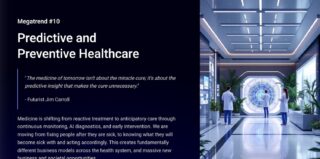
    And yet, with everyone focused on these issues, most people are missing the big, long range transformation that is underway: we are in the midst of a fundamental and significant shift in healthcare philosophy and medical research that makes every other trend within this industry pale in comparison. We’re rapidly moving from a world in which we “react” to disease and illness after it has happened, to one in which we will be doing far more in advance to “prevent” specific health care problems from occurring in the first place.

    futuremedicine.jpgThat’s one of the trends I’ve covered in my FUTURE MEDICINE Prescriptions for 21st Century Healthcare trends summary.

    The driver for this massive change is the emergence of extremely specialized and highly personalized medical treatments based upon your own particular DNA. Preventative medicine has already become a part of the health care system: for example, a simple pap smear test has resulted in a 70% reduction in the date rate from this disease. Yet, it is estimated that clinical diagnostic spending of this type makes up only 1% of global health expenditures.

    DNA “sequencing” is set to change that, as it allows researchers to examine an individuals DNA, and determine their risk for developing particular diseases or medical problems. Already, a test has been developed that examines a few hundred strands of DNA, from which a prediction can be made of your risk of developing cystic fibrosis. The test accurately identifies the unique DNA strand in 88% of Caucasian CF and 69% of African Americans. Expect the degree of accuracy to only continue to improve in coming years.

    That’s but one example of a “deep transformation change” that gets little attention. Consider another critical industry: energy supplies.

    In the last few years, we have certainly seen a lot of price volatility as a result of the unexpected, such as Hurricane Katrina, rapid new demand growth from Asia, and commodity market fluctuations often driven by speculation. One result of volatility has been a renewed interest in bio-fuels, and in particular, the opportunity that exists from the creation of ethanol from corn and other crops. Ethanol has grown quickly to become a rather significant industry; and yet, what we are seeing today involves only baby steps.

    The big transformation that is occurring involves a rapid changeover from “first stage” bio-energy companies to “second stage” bio-refinery companies.

    The first stage consists primarily of agricultural companies, using their insight into the science of agriculture to develop production systems that convert grain to ethanol. The second group are the big oil companies, who are bringing to the industry their insight into how to build big, production oriented, cracking and distillery methodologies to the world of ethanol. In doing so, they will be transforming a high velocity industry into an faster and more complex industry involving “bio-refineries.”

    The transition is both massive and seeping in scope. Royal Dutch Shell Europe, for example is involved with a “2nd generation” project that involves a capital investment of $2,000 per ton to construct, compared to $190 ton for a first generation bio-fuel plant.

    The switch to bio-refineries will be significant, with some estimates suggesting that the oil major will be able to grab upwards to 17% of the global biofuel market within a few short years.

    It’s by watching for and identifying such massive shifts : a switch from reactive to preventative medicine, or the emergence of a bio-refinery industry, that you can spot real areas for innovation and creativity.

    That’s why, when looking at the big picture, you should always step back and look for an even bigger picture.

    UA-117171-1

    Powered by Web Design Company Plugins