1/2 of first year college knowledge is obsolete or revised by graduation

Home > Archives

Tagged analytics


I spend a lot of time speaking to global financial organizations —some of the world’s largest institutions — helping them understand what they need to do from an innovation perspective to stay ahead offast paced change.

These talks are often aimed at the idea of “how do we need to transition our advisory services — as financial planners,investment advisors, wealth managers — to keep up with fast paced change?” No where is that question more important than when thinking about the impact of technology and social networks on investing. Think about the change that the investment industry faces. We are witnessing the early stages of a massive transition of wealth from one generation to another. The numbers are staggering: we’ll see $12 to $18 trillion in intergenerational wealth transfer In the next12 years (US GDP is $12 trillion) in North America; and by 2053, some $130 trillion will have moved from one generation to another.

When it comes to financial services, adopt change as a mantra and prepare yourself to reach, support and interact with Gen-Connect in new and different ways.

That’s a lot of money sloshing around — and much of it is going to a new, tech-savvy financial consumer.

This next generation — I call them Gen-Connect — continue to aggressively integrate technology into their lives; they’re busy researching health care, insurance, retirement planning and investment advice online, on Facebook and through other social channels.

So what do you do? Adopt change as a mantra and prepare yourself to reach, support and interact with Gen-Connect in new and different ways.

Here’s a list of innovation strategies I provided in a recent keynote for a major global financial institution

1. Focus on growth

With so much volatility in the financial sector, it’s all too easy to take your eye off of the “opportunity ball.”

Yet there are huge opportunities that surround us ; probably the biggest is that we are going to witness a massive intergenerational transfer of wealth from the baby boomer generation to their uber-wiredGen-Connect children. In every area of the world this is going to involve a requirement for a lot of financial advice. As I noted in my remarks for a recent keynote to a group of senior bankers: “Never before has the need for financial advice for Australians been greater;only 20% of Australians are currently getting professional advice.”The same holds true for North America.

That means there are tremendous opportunities for growth! For many, access to financial advice is still too hard and complicated – that’s why it’s a great time to innovate, in order to build market share!!!!

2. Structure for fast paced change

There are several certainties in the financial sector as a result of the impact of technology.

We will see more business model change as companies leverage technology to change relationships in the world of wealth management; we will see more sophisticated competition as a result, and continuous business model disruption with new, young upstarts that really know how to leverage technology and social network relationships. Combine this with continual shifts in consumer behaviour as we manage more of our money and investments using online tools — and speed things up with even faster technology-driven fast change, such as with the impact of mobile technologies.

What happens when ‘there’s an App for everything’in wealth management? That’s what you need to keep up with!

3. Reshape brand messages faster

Clearly there’s a lot of fast-paced change in financial services , and it’s critical that financial institutions continue to reshape their brand at the pace of rapidly changing consumer perception.

Part of this has to do with how quickly volatility comes and goes. Noted Jim Buchanan, Senior VP of Consumer Marketing at the Bank of America in an article in Advertising Age, October 2009: “Six months ago, we were trying to re-assure the market and consumers that we are safe and secure….now consumers are telling us they’re not worried about those things anymore…..What they are interested in is ‘How can you help me manage my finances?‘”

Innovative organizations ensure that the brand message evolves at the pace of a world in which volatility is the new normal. As a financial manager, you must make sure that your brand and image are seen to be modern, up to date, and in tune with the brand expectations of Gen-Connect. You can’t be “your grandfathers’ wealth manager” anymore.

4. Adapt to momentum of financial consumer change

Quite simply, the new financial client is online in a big way, and smart financial organizations will evolve their service and support message to these platforms.

The numbers are staggering; in the case one recent keynote I provided for a major financial institution, I emphasized that:

    • 147 million people interact globally on social networks via their mobile phones – we can expect 1 billion within five years!
    • usage of Twitter continues to grow at a staggering pace — and people spend more time on Facebook each week than they do on watching television.
    • they spend far less time reading newspapers and magazines in paper fashion — and in fact, some don’t look at such products at all!

The result of this i that they are increasingly influenced by advertising, marketing and branding messages that they see online. Ifyou are still trying to reach out to them through traditional media,you might be missing them altogether.

It’s not just about marketing — it’s also about customer support. The entire world of customer support has gone online, and you need to be able to support them in the world to which they are accustomed.

The bottom line for financial and investment advisors is that social networks are an extremely effective tool to keep core clients in the loop; as an outreach tool, they’re fast, effective, unique, quirky,and certainly the story of the day. Financial advisors have to go where the client is going, and should be thinking about how to become socially-networked oriented advisers. Given regulatory issues, that can be a big challenge!

5. Adjust platforms to this changing behaviour

I continue to emphasize with my global financial clients that the impact of mobile technologies on financial services is absolutely massive. Think about Wizzit, a South African service that is essentially a text message based banking system.The reality is that the new financial consumer expects to be served on new platforms: as noted by Thomas Kunz, Senior VP at PNC Financial: “Gen-Y does not reconcile checkbooks, and they don’t believe in float. For them, their balance is their balance.”

That’s why PNC has released a “virtual wallet app” available for iPhones. They’re reaching out to this new financial consumer in a big way. That’s why every organization is scrambling to keep up with “Appworld” particularly considering that Apple sold 3 million iPad 3′ within the first 3 days of release.

Aggressive change with business platforms provides big opportunity for business model disruption. A key factor here has to do with new client acquisition: what’s happening is the point of origination of the relationship might change as people transition their banking to mobile devices. Opportunity can come from continuing to build the advisor and distribution channel into these new platforms.

And that’s not a threat – that’s a huge opportunity!

6. Leverage off of new peer-to-peer behaviour trends

The new financial consumer relies more than ever before for advice from their social networks. Peer-to-peer social driven advice through sites such as TradeKing is coming to the forefront: it’s a service that allows people to share stock tips and research through extended social networks.

Does this diminish the role of advisory services — not at all, if you drive in and become a part of the peer-to-peer conversation!

7. Re-orient distribution channels

Here’s another key point: I’ve emphasized to my insurance and other financial clients that the next-generation advisor/broker/agent expects ever more sophisticated technology platforms to help support their role.You’ve got to make sure you are keeping up with their needs.

In one survey in the insurance sector, 80% of brokers indicated that the sophistication of the technology platform of the provider would influence who they would choose to do business with.

According to Kevin Murray, EVP and CIO at New York-based AXA Equitable: “The younger generation of financial professional will almost demand online self-service….they will want to text any questions they have into the service centre or self-service from their mobile device. We’re going to have to be able to provide that capability. It’s how they will operate.”

8. Build your own peer-to-peer collaborative knowledge networks

The new financial advisor is also thinking socially, and is actively looking for peer-to-peer collaborative knowledge. Imagine building a financial advisory team that is collaborative for ideas, share insight on market wins, constantly leverages insight from new branding campaigns that work in unique ways, and constantly shares great idea son new methods of converting leads into clients — that’s how this next generation works!

Back to Kevin Murray: “They will also want an online collaboration tool to …find answers concerning product or questions from their customers. The X and Ygenerations are going to demand a different way of selling and servicing their customers.”

What’s it really all about? Freeing up their time to build opportunity, make sales, close deals.

9. Reduce churn through electronic relationships

Here’s something else to think about according to Chief Marketer (October 2009), “The average brand saw one third of highly loyal consumers in 2007completely defect to another brand in 2008“.

People are far less loyal, and far more likely to jump ship at the drop of a hat. That’s why continuous innovation in terms of the relationship is critical — and that’s maybe why continually transitioning to new technology platforms such as an iPhone app might reduce that churn

10. Better, more focused niche marketing

We’re in the new era  of analytics and analysis, which provides new opportunities for advisors to reach out to markets previously unattainable. As noted by Money Management Executive in October 2009: “Financial advisers generally prefer to manage a small number of high-net-worth clients rather than a large number of small accounts,but recent advances in automation technology could change this dynamic.”

11. Evolve the approach

Insurance and financial advisory services are products that are always sold based on fear — they aren’t bought.

This reality doesn’t go away because of new technologies. What does change is that technology is a powerful enabler that frees advisors forum having to focus on the mundane, routine, time wasting stuff, in order to focus on providing the advice & guidance that advisors can provide. Focus on the core role!

12. Enact change

Many advisors will be in comfortable, established routines. Change is not easy. That’s why organizations in the financial sector that are trying to be innovative need to help existing advisors focus on the opportunity and the benefits that come with rapid change, rather than being fearful of the change that technology is bringing to the industry.

Bottom line? As I sum up in many of my keynotes — “Innovative organizations make bold leaps, in order to keep up — and stay ahead —of a faster future.

I haven’t done of these posts in a while — it’s a semi-regular summary of 10 of the most recent search phrases that resulted in people discovering information in my blog through the last week.

It’s a useful way to see what people around the world might be thinking about, or some of the issues that are top of mind. It’s also a great way to discover some of the unique blog posts throughout my site — with well over 1,000, there’s a lot of useful content in here that you might not find.

You might consider buying a copy of my book, The Future Belongs To Those Who are Fast — it’s a great compendium of the best of these posts from over 10 years of blogging!

You can see some other What’s Hot entries here.

I use some fabulous Web site tracking software — notably Woopra and OpenTracker — both of which give me *real time* insight into what people are discovering on my site, so it’s pretty easy to pull this information together. Here we go:

  • a search for “what trends are driving today’s consumer” led to the Consumer & food category of my blog; it leads to a whole series of blog posts that focus on these issues
  • someone in India looking for “innovations in retail” was led to the post “Creativity, trends and innovation in retail, packaging and consumer goods“, a post from 2005 that still bears powerful relevance to what is happening in these sectors today
  • from South Africa, a search for “futuristic trends in agriculture” led to “10 Big Trends for Agriculture” — a post I wrote many years ago but which continues to be one of the most popular pages on my Web site. And even though it was written in 2005, it still remains powerfully relevant today. I do a LOT of keynotes in the agricultural sector
  • over in Belgium, someone was looking at Google for “new trends in fitness and wellness.” They hit a relatively new post I did earlier this year, “Trend Report: The Future of Health, Fitness and Wellness
  • from Cincinatti, a search for “latest trends in the property and casualty insurance industry” led to “The insurance industry in 2015” , a concise overview of how this industry is undergoing dramatic and fast paced change
  • in Indiana, someone searching for “10 ways to kill innovation (or what not to do)” found the blog post “10 Surefire Ways to Destroy Innovative Thinking,” one of the most favourite blog posts I’ve ever written
  • a search for “fast food industry trends” from someone in Louisiana led to my blog post, “The BIG food industry trend for 2012: Bold Goals, Big Bets
  • If only I had a dollar for each search done where people from the US end up on my site for information on future healthcare trends. A search from a major US pharma company for “key trends business us healthcare market led to “10 major health care / pharmaceutical trends, a really concise summary of the scientific, technological and other trends that are transforming the sector
  • Just moments after this search, someone from Florida was looking for “future healthcare trends , and they were led to a more comprehensive detailed post that gets a lot of traffic, Healthcare 2020: The Transformative Trends That Will REALLY Define Our Future
  • and from the Philippines, a search for the phrase “Leaders are innovative and future – oriented. They focus on getting the job done” led to my blog post, “How future ready is your organization?” It provides some good insight on whether your organization is clearly aligned for what comes next — or is simply stuck in the here and now.

That’s 10 search phrases — and a simple summary of some great insight. Stayed tuned — more “What’s Hot” posts to come!

If you want to track analytics on your own Web site, I highly recommend both Woopra and OpenTracker. Fascinating insight!

Big data. Big opportunities!
April 23rd, 2012

Back in February, I flew into Aspen, Colorado, to speak at the leadership meeting for a major consulting firm. My topic? An extremely customized keynote on the trends and opportunities that are unfolding with the new era of analytics and what has come to be known as “big data.”

There was a tremendous amount of customized research for the event; it’s a big topic, so to speak. After that, I ended up focusing my upcoming May CAMagazine column on some of the ideas and concepts that I covered.

Cashing in on Big Data
CAMagazine, May 2012 

By analyzing and tying together massive amounts of information, we can change the way we conduct business, manage healthcare, work in the world of agriculture or manage energy consumption.

Have you ever noticed how, all of a sudden, a new phrase enters our lexicon and becomes the next big thing? So it is with “big data.” If you

haven’t heard this term yet, you will. What is it?

By analyzing and tying together massive amounts of information, we can change the way we conduct busi- ness, manage healthcare, work in the world of agriculture or manage energy consumption.

As everything around us plugs into the Internet — thermostats, fridges, washers, dryers, industrial HVAC equipment — we are generating huge amounts of information. Companies can examine this information through powerful analytical software to look for unique patterns and insight, which might then help to drive key business decisions.

Consider the energy industry, for example. The NEST thermostat, created by one of the original iPad designers, can recognize you when you walk in the room and adjust the heat to your favourite temperature. It’s also plugged into the Internet — and that’s where the potential for big data comes in.

Imagine the possibilities for an energy company to easily poll how millions of customers are using energy through such thermostats — and to then link that data with a deep analysis of upcoming weather patterns. Suddenly, it can predict and manage upcoming spikes in energy consumption, which could have a direct impact on the purchase of natural gas or other sources of energy. Through this analysis, it can do a far better job of managing its costs.

IBM expects big data to be a large driver of future growth, noting that “there are upwards of a trillion inter- connected and intelligent objects and organisms .. all of this is generating vast stores of information. It is estimated that there will be 44 times as much data and content coming over the next decade …reaching 35 zettabytes in 2020. A zettabyte is a 1 followed by 21 zeros.”

In the field of agriculture, people have been talking for years about the concept of “precision agriculture.” A farmer would use a system which knows, for each particular square yard of ground, how much fertilizer and seed to apply, based on real-time data insight and GPS information.

That world is arriving pretty quickly. Kenna, a data analytics firm in Mississauga, Ont., has put together a system which cross references customer purchase data to weather patterns to real-time tractor position based on GPS to do just that, with the goal of helping a farmer get the best yield possible.

Las Vegas is said to be using the idea of deep analytical research to offer a free lunch to a slot payer who is marginally closer to a payout — thereby reducing it’s risk.

Of course, there are big opportunities in big data. The data and analytics market is already worth an estimated $64 billion according to global management consultants McKinsey & Co. The firm also predicts there will be a shortfall of 140,000 to 190,000 graduates with deep analytical talent by 2018. Similarly, a survey by data giant EMC suggests that 65% of data professionals expect a significant shortage in “big data” skills expertise in just five years.

Accountants are, of course, supposed to be the folks with deep analytical insight. Do we have the capability to step up to the big opportunity that is unfolding here?

I often wonder if the discussion about health care in many parts of the Western world has come off the rails – with the result that many opportunities for real innovation are not being pursued.

That’s the focus of quite a number of keynotes I’ll be giving in the next few weeks, including for the American Association of Preferred Provider Organizations annual conference in Jacksonville, the 2012 National Pharmacy Forum in Tampa for the Healthcare Supply Chain Association, and a private leadership event for the Mercy healthcare group based in St. Louis.

One of my key messages is that it’s time for bold thinking, big actions, and new ideas in the world of healthcare — and that can only be accomplished if people change the conversation.

What’s the problem? I think that many in the system are stuck in sort of a groundhog day like existence — they get up every morning, and everyone around them keeps talking about the same old thing as the day before — in the US, healthcare reform. In Canada, the discussion is all about wait times. In other countries, the issue of the future of healthcare often swirls around a single issue.

The result is that real healthcare innovation is stifled, smothered, and never given a chance to flourish. Yet there is so much other opportunity if we link ourselves to the major trends that are going to unfold in the future at a furious, blinding velocity.

We need big thinking, because the health care cliff in the Western world is massive. In many countries,  we’ve got a ratio of workers  to retirees of 4 to 1. By 2030, that will decline to 2 to 1. Most of those workers support the health care expenditures of those who place the greatest demands on the health care system. In Canada it’s suggested that as a result, by 2030,  Old Age Security and health care is likely to suffer a $71.2 billion shortfall that will require a GST of 19% and a top tax rate of 71%. In the US, the numbers are even more mind-boggling.

The fact is, we need big, bold thinking, Grand ideas. Dramatic change. Champions with courage to challenge the status quo. The need is desperate.

That’s what I take a look at in my keynotes, by looking at where we will be in the world of health care by 2020. The changes are massive — which implies the opportunities for real innovation are unprecedented. Consider the trends:

  • Preventative: By 2020, if we do the right things, we will have successfully transitioned the system from one which “fixes people after they’re sick” to one of preventative, diagnostic genomic-based medicine. Treating patients for the conditions we know they are likely to develop, and re-architecting the system around that reality.
  • Virtual & Community:  A system which will provide for virtual care through bio-connectivity, and extension of the hospital into a community-care oriented structure. Wireless and mobility health apps that link consumer wellness monitoring to medical professionals.
  • Consumer driven: A consumer driven, retail oriented health care environment for non-critical care treatment that provides significant opportunities for cost reduction.
  • Real time:  Real time analytics and location-intelligence capabilities which provide for community-wide monitoring of emerging health care challenges. “Just-in-time” knowledge concepts which will help to deal with a profession in which the volume of knowledge doubles every six years.

That and much, much more. The fact is, we are going to witness more change in the world of health care in the next ten years than we have seen in the last 200.

That’s the message that has resonated with the global audiences that have been bringing me in to challenge them to think about the real opportunities for innovation in the world of health care. And through that, I’m discovering experts, politicians and people within the health care system who really are thinking big enough about the potential opportunities for real innovation within the system.

Think big. Do great things. Accomplish massive change. The need is dire, the urgency is fast.


A big shout-out to the 10 companies that helped the most in keeping the JimCarroll.com Web site infrastructure in great operating shape throughout 2011. If you want to do a great Web site, you need to do it right. These are some of the technology companies that have supported my site in various ways through the year.

  • Awesome, reliable WordPress backup!
  • Another fabulous WordPress backup service
  • Web site analytics – amazing dashboard – deep insight!
  • Absolutely fabulous real time, deep traffic insight
  • Fast, responsive Web hosting – great service!
  • Web site caching service – performance booster.
  • Customized coding – they designed this cool slider!
  • Web site performance monitoring
  • Rock solid domain name service.
  • Live text message polling


Throughout 2011, my Web site has played an incredibly powerful role in supporting my speaking activities worldwide.

Quite a few clients have told me that they’ve found it through a Web search for a ‘futurist’ or ‘innovation speaker’, or have been sent there by one of my speaker bureau clients. They’ve told me they’ve watched the video clips throughout the site, and that with other background information, has convinced them that I’d be a great addition to their corporate leadership meeting or association event.

Keeping a Web site such as JimCarroll.com up and running with little downtime,  in a way that it is fast, responsive, and always available, takes a bit of effort. I do all the maintenance, blog postings and updates on my own. But it’s also through the help of a variety of partners that I’ve got a site in which the average Web page loads in under 3 to 4 seconds — pretty good for a media rich, complex site.

And so as we wind down the year 2011, I thought it would be a good time to give a shout-out to the many technology partners that I use to keep this Web site in tip top shape, or let me watch how well it is working. In no particular order, these partners include:

  • Blogvault: A fabulous WordPress backup service. Plug it in, pay a small fee, and you’ve got peace-of-mind knowing that your Web site is being backed up on a regular minute by minute basis. What’s better is their 1-button Web site restore. For example, I just had to move my son’s Web site over to my main Web server, and using the backup copy it worked like a charm – instantly!. Highly recommended!  
  • VaulltPress; another WordPress backup service that I am using. I started out with VaultPress before I met Blogvault, but I’m not one to easily leave a relationship that is working so well. Like Blogvault. this service does a regular minute by minute backup of my entire WordPress based Web site. Redundancy of backup can be a good thing – that’s why I’ve got two backup services!  
  • Woopra – Web site analytics software. With these folks, I’ve got a fabulous real time dashboard that shows me how people are using my Web site — how they found me, what they’re looking at, and what pages they are spending their time on. This has allowed me to continually redesign my site, ensuring that my clients can easily find the insight they are looking for. There are almost 1,000 blog posts — and I’ve discovered where people really spend their time. 
  • OpenTracker. These folks are a competitor to Woopra — and have their own unique strengths. I particularly like how I can do some pretty deep analysis of Web traffic as it is happening in real time – it gives me a real sense of what people were looking for, and what pages really draw significant attention. 
  • MediaTemple: extraordinary Web hosting with incomparable service — if you are willing to pay for a strong, reliable host, you’ll get stellar service. I had a support question on Thanksgiving Day — and it only took minutes for them to respond. I started the year out with a shared Web hosting service, and to be honest, you can take a significant performance hit if your site gets busy. In April I moved over to their DV (Dedicated Virtual) service, so that I’m the only one running as a server on the space I share. I’ve seen major performance improvements and fabulous reliability. Pingdom tells me I’ve only had 5 outages, and I know that each of those times has been due to something I’ve screwed up on my own. 
  • W3TC: a typical Web site / WordPress blog can slow down when it is serving up a variety of video, images and other information rich sources, particularly under heavy traffic loads. That’s where this service comes in — it spreads out the content to my “content delivery provider,” Amazon CloudFront …so that the images that you see on the Web site don’t actually come from my site, but from a variety of Amazon servers around the world. If you want to speed up a WordPress based Web site, W3TC is likely the best tool out there. 
  • CopterLabs: every once in a while, you need some custom programming done on a Web site. I found and hired Copter Labs to design the cool ‘image slider’ that you see on the top of this post. They do great work, are extremely professional, and truly do draw upon a team of WordPress experts worldwide – while my project was managed from Portland, Oregon, the actual work was done by a fellow in the UK. 
  • GTMetrix: to keep this complicated infrastructure moving and in great operating shape, you’ve got to able to do some deep analysis of where any bottlenecks might be emerging in your site. Every time you add a new feature, you run the risk of introducing some slow performance. GTMetrix lets me look into performance and continually fine tune its operations.  
  • easyDNS: the key component to any Web site is having a domain service that figures out just “where” jimcarroll.com happens to be located — and where and when images are being serviced from Amazon Cloudfront. Not just that, but a great domain service should automatically flip your Web site to a backup host in case things go wrong. That’s the role of easyDNS — I’ve been using them for 15 years — and could not recommend them more highly!  
  • Poll Everywhere: last but not least, but PollEverywhere ranks as my favourite tech tool of 2011. I was described in a blog post as a ‘raving fan’ of this service, and that is extremely true. I use PollEverywhere to do live text message polling while on stage – while they’re not really a part of my Web site, they are a very, very important partner! 

That’s my list of my key 10 providers for 2011. Obviously, there is a lot more at work here in terms of the technology infrastructure. I must mention Apple in light of the  : the home office consists of a Mac Pro, new Macbook Pro, iPad, iPhone, and just about everything-Apple. Between the home and the chalet, we’ve got 4 Apple TV’s and just about ever other whiz-bang iDevice possible. The fact is, Apple has helped to take my business to new levels — Pages, Number, and most importantly, Keynote have all replaced the Microsoft office tools that I was using up until 2007. Earlier this year, while on stage, I actually had to use Windows 7 when I wasn’t allowed to use my Mac on stage — and I was completely, totally lost!

Not to forget as well Keynote Pro: these folks designed the Keynote presentation template that I use on stage — one that has now probably been viewed by over 100,000 people in the last two years alone. It’s not a key part of what I do on my Web site, but from a stage perspective, it’s certainly a key part of my success! 

Thanks to all – and here’s to 2012!

Update: For those asking about how I manage to walk on stage and do what I do, and also manage the tech infrastructure — you can’t figure out the future if you don’t deeply into the technology that will drive it! For what it’s worth, I’ve been geeking out as a hobby since 1982, starting with a Radio Shack Model III. My latest project, in my ongoing effort to keep the Website humming along, is to utilize a MediaTemple VE server running on an “LNMP stack.”  (I’ve had a test site running with Apache and Nginx as a proxy, but there’s still a lot of Apache overhead.) So the next stage involves a barebones Ubuntu operating system (Linux), running Nginx (instead of Apache, for performance), Mysql and PHP. (Hence, LNMP, not LAMP). It’s based on this article here. Looks awesome!


The phrase is bit of a mouthful, isn’t it?

Get used to the concept. It’s part of an overall massive trend in which computational analytics come to play an increasingly more important role in helping us solve some of the big problems in society, in the fields of health care, energy, the environment and other industries. I wrote about this some time ago in a post, “Computational Analytics is the New Platstic.” It’s one of the next new billion dollar industries and it’s happening now.

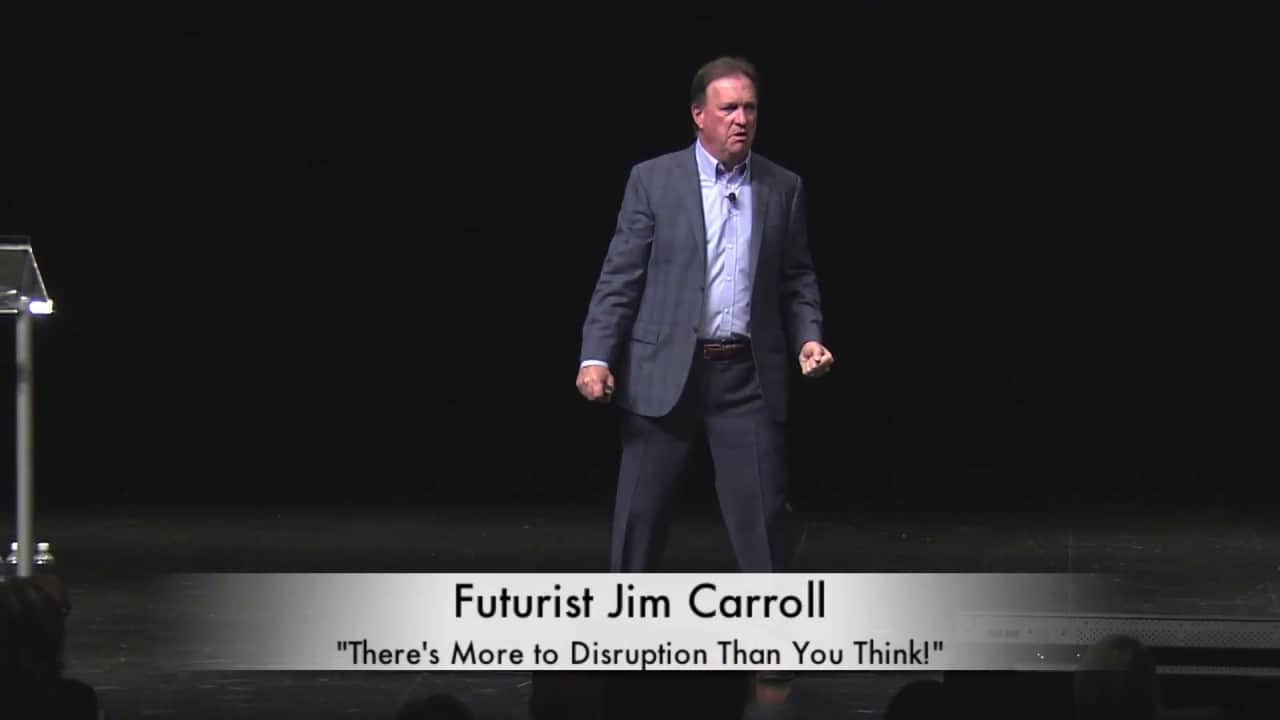
Here’s a keynote from a recent keynote in which I’m talking about these “From a recent healthcare keynote, based on my Healthcare 2020″ keynote. The slides are running at the same time that I’m speaking – watch the screen as the data unfolds! Then cast your mind into the future….

I haven’t done of these posts in a while — it’s an observation of 10 of the most recent search phrases that resulted in people discovering information in my blog through the last week.

It’s a useful way to see what people around the world might be thinking about, or some of the issues that are top of mind. You can see some other What’s Hot entries here.

I’ve got some fabulous new Web site tracking software — notably Woopra and OpenTracker — both of which give me *real time* insight into what people are discovering on my site, so it’s pretty easy to pull this information together.

Here we go:

    • a search for “food product trends marketing” from Ireland resulted in someone hitting what is currently one of the most heavily visited pages on my Web site — “Food industry trends 2011 – Report from a keynote“. Literally a few hundred hits a day!

  • from Bangalore, India, a search for “healthcare industry trends presentation” led to the page “Healthcare 2020: The Transformative Trends That Will REALLY Define Our Future“, also one of the most popular pages on my site. What is evident is that people find a tremendous amount of value in the detailed trends outlines as found in this type of post and the previous food industry post — there are a lot of these scattered throughout my blog covering a wide range of industries. Try the Trends link for a list by industry.
  • another popular search concerns the future of the meetings and events industry. From San Diego this morning, a search for “event industry 2012 trends” led to the post “Future of the meetings / events industry
  • from Singapore, a search for “characteristics of the 21st century” led to the post “10 Unique Characteristics of 21st Century Skills” which is a useful guide to the key HR issues that you are facing now and into the future
  • on the HR theme, it’s kind of funny that someone in Larisa, Greece, did a search this morning for “Jobs of the future 2015“, which took them to the post “Good jobs in Bad Times – I’m interviewed on PBS on future career trends“. Maybe it will help to inspire someone for post-Greek economic meltdown HR innovation!
  • from Kenya, a search for “importance of innovation to consumers” led to the post “The importance of innovation in the era of the “new normal.” This post is a good summery of the key factors which require fast paced innovation today.
  • from Malaysia, someone searching for “future ready organization” hit the post, “How future ready is your organization?”. I wrote that in 2009 – and write about the velocity ratio, the rate of ‘rising tides’ and other factors that might give you a sense of whether your organization is keeping up with the speed of innovation occurring in your industry.
  • out in Madras, India, a search for the phrase “innovation themes for wealth management technology” led to a post that summarized my 2009 keynote for the National Australia Bank – “14 Key Innovation Strategies for Financial Advisors & Financial Organizations”
  • from North Carolina in the US, a search for “bioengineered body parts” odd to the post from 2006, “Bio-engineered body parts, the Cold Store and personalized medicine…” Consider what I wrote in 2006! “The pill bottle linked into my home network grid in order to interact with the prescription drug company. They had specifically engineered this medicine the day before for my own bio-code, based on a quick sampling of my blood and sinus condition that was done at the local Cold Store.”
  • last but not least, someone in Las Vegas did a search this morning for the phrase “things you have to do in vegas during the recession.” That took them to a great post that still works with the current and ongoing volatility in the global economy, “10 Things You Need to Do to Innovate in a Recession

That’s 10 search phrases — and a simple summary of some great insight. Stayed tuned — more “What’s Hot” posts to come!

If you want to track analytics on your own Web site, I highly recommend both Woopra and OpenTracker. Fascinating insight!

I’ve recently done a number of very high profile talks in the health care, pharmaceutical and related industries, including opening the recent World Pharma Innovation Congress in London, England.

Just last week, I was the opening speaker for a very early start at 730AM in New Orleans for over 4,500 people at the International Foundation 57th U.S. Annual Employee Benefits Conference – always a fascinating experience to have that many people out in N.O. for an early keynote!

The organizations selected me specifically because I could give them an overview of future health care trends, without taking at look at the political issue of health care reform. After all, the real trends that will provide the real solutions to some pretty massive challenges in the world of health care will come from the world of science, hi-tech and pure research — not from an ongoing, relentless, annoying and ultimately useless amount of hot-air from politicians, regardless of their political stripe.

For New Orleans, the keynote description emphasized this : which is perhaps why so many showed up!

“Jim Carroll, one of the world’s leading futurists, will share his thoughts on transformative trends that will define the road ahead in the critical area of health care. The fact is we will witness more change in health care in the next ten years than we have seen in the last 200. Hear Mr. Carroll forecast what paradigms will change as health care is transformed through the next decade, far beyond the impact of health care reform.

At events such as this one and the keynote in London, I take a look at the future of health care from the perspective of medical science, social and demographic trends, the impact of increasing velocity of knowledge and other major trends that have absolutely nothing to do with the political debate around health care reform. You can’t wish a problem into a solution — you need pure research and innovation to make things real.

And certainly one of the trends that is going to provide tremendous opportunities for innovation in the sector will come about as Silicon Valley sets its sights on health care. Years ago, a senior executive at Intel noted that “we have the potential to aim our innovation engine at the age wave challenge and change the way we do health care from a crisis- driven, assembly-line, hospital approach to a personal-driven approach, with people taking care of themselves with help from family, friends and technologies.” At the time they were speaking of health care being one of their top five sources of revenue in the years to come.

That’s why one of the biggest growth markets we are beginning to witness now is emerging as Silicon Valley and the hi-tech industry begins to get involved in the world of health care in a whole variety of different ways.

First and foremost, it’s happening in a very big way with consumer-oriented health care apps, particularly on the iPhone and Android. A recent survey indicated that:

  • 78% of consumers are interested in mobile health solutions
  • medical and health care apps are 3rd fast growing category for iPhone and Android phones
  • the Apple App store now has 17,000 health care related apps, 60% of which are aimed at the consumer

We will certainly see a huge amount of product innovation, such as the new iPhone based blood pressure monitor from Withings:

What is really significant is that with such personal medical monitoring and wellness technology, we are going to see very significant involvement by health care providers and professionals, insurers and others within the system to adapt to a new world in which a large number of patients become immersed in the world of interactive healthcare and wellness monitoring.

Then there is the world of bio-connectivity — a trend that will see the emergence of more sophisticated medical device technology that will let medical professional monitor their patients from afar. This is a topic that I’ve explored at length in a variety of posts on this site. Quite simply, in the years to come, the concept of a physical hospital is going to change as it goes virtual through the extension of bio-connectivity technologies and methodologies:

  • Imagine the hospital of 2020? I can 
  • The future of seniors care / assisted living: Big trends or crazy ideas? 

Silicon Valley will also play a huge role as it comes to develop real time health care predictive dashboards and other new forms of medical insight that will help the system to be better predictors of emerging health care risks and crisis situations. Big math, big computers, big analytics and health care – a match made in heaven!

  • Remember those kids who were really good at math? They own the future 

It doesn’t stop there. In the world of pharmaceuticals, the impact of Silicon Valley is going to have one of the most dramatic impacts on an industry that we have ever witnessed. For years, the sector has been busy exploring the opportunity for ‘pharmacogenetics’ — that is, how can we determine if a particular drug treatment is going to have its greatest impact on a group of people who share a common characteristic in their DNA.

This type of very specific genomic medicine has been around for years — but it is about to take off like a rocket as Moore’s law comes to have an impact. Quite simply, the cost to do what were once very expensive genetic tests are simply going to plummet.

  • Costs of DNA sequencing falling fast – look at these graphs 

I could go on ; there are dozens of examples where the impact of technology upon the health care system is going to be dramatic.

Suffice it to say, if you want to watch one of the trends that will have the most impact in the next decade, this is one of them.


In the last few weeks, I’ve done a number of insurance oriented keynotes, including one for a meeting with the CEO and top leadership team of one of the largest insurers in the world, as well as a top insurance association.

We are quickly moving into an era of "performance oriented insurance" with policies / pricing based on performance. There will be huge opportunities for disruptive business model change as this trend unfolds.

And I’ve been busy speaking to the trends and opportunities for innovation that are going to come into this often-slow-to-react industry at lightning speed.

In an era in which everything around is plugging together,  there are tremendous new opportunities for some pretty massive business model change. I often make a joke on stage that perhaps one day my weigh scale might send an email to my fridge one day if I’m not living up to the terms of my life insurance wellness clause.

Yet, is such thinking far fetched?

Maybe not!

One of the biggest trends which is going to hit the world of insurance like a tidal wave is performance based insurance policies. If you live up to or exceed some performance standard, you’ll get a rebate or reduction on your insurance  policy rate.

It’s going to happen extremely quickly in the field of automotive insurance. A flood of GPS enabled performance measuring devices will soon come to inhabit most automobiles throughout the industrialized world. Insurance companies will set a policy price, and then give you a rebate if you exhibit better than average behavior.

Consider a program already underway in the UK:

Insure The Box measures drivers’ mileage, when they drive, and how they drive. Excessive G-forces, sudden braking or cornering and long periods of driving without a break are monitored.

Policyholders are charged by the mile and motorists initially pay for 6,000 miles. Once these are used up they can buy more miles as they need them. Policyholders are rewarded with “free” miles if they drive safely.

Money: A spy in the car that could cut cost of cover for young drivers
The Guardian, UK, April 2011

You can expect most North American insurance companies to roll out similar technology and performance. Or maybe not — some organizations won’t have the speed, agility and flexibility to do this at the pace that the market, competitive and customer pressure will require.

The result is a classic opportunity for big business model disruption.

The same type of thing is going to occur in the world of life insurance.

It has long been the assumption that despite the rapid emergence of genomic, preventative medicine, that it would never be desirable, ethical or even fair to underwrite policies based on a DNA test.

I’m a believer that this is a pretty big assumption to make. History shows that assumptions that underlie a business model barely last. When I speak about innovation, I advise people it’s often best to challenge assumptions — those who don’t often miss the biggest opportunities.

Clearly, we know that there are some powerful trends at work:

  • the cost for a DNA test that can be used to predict with a high degree of accuracy the disesases and conditions you will inherit in your lifetime is set to collapse, as Moore’s law comes to drive the cost of DNA sequencing machines that do the test
  • hence, greater numbers of people will have the opportunity to gain such insight (whether it be good or bad)
  • those who have a test that shows a life that will be relatively disease and condition free would likely be able to offer themselves up to a group of speciality insurers and get a policy discount compared to the average population

Again, there’s opportunity for big business model change and upheaval as this happens.

So too is the concept of a rebate of your life, medical or disability insurance, if you can prove that you are taking regular, active steps to ensure that you are in good health. Certainly there are those in the the health care system, who know that with the massive challenges in front of, the system, a lot of big, bold transformative thinking is necessary.

A federal grant program authorized in the health overhaul law is offering states $100 million to reward Medicaid recipients who make an effort to quit smoking or keep their weight, blood pressure or cholesterol levels in check. The grant program is meant to encourage states to experiment with an uncertain approach to wellness: offering incentives for healthy behavior.

Healthy behaviors pay off; Medicaid recipients who commit to improving their health will be eligible for financial rewards, Los Angeles Times, April 2011

Extend this type of thinking into what comes next in our hyperconnected world — individuals who monitor their blood pressure, glucose levels and other vitals that they are willing to share with their insurer. Exercise and wellness apps on their iPhone that they can use to demonstrate the commitment to a regular series of workouts. Adherence to a personalized lifestyle plan — with insurance cost reductions based on performance.

This type of stuff isn’t far-fetched at all. And it’s going to hit the insurance world quicker than it thinks.

Then there’s the issue of the underwriting of insurance risk. Today, in the life insurance industry, you must undergo a battery of medical and blood tests so that they can make an assessment as to whether you are insurable.

Tomorrow will be completely different, and it will be here before the industry knows it:

“Assuming privacy regulations require it, by 2020 underwriting will consist of one question: ‘Can I look up everything about you?’”

The Next Decade in Innovation, Insurance & Technology, May 2011

Tomorrow? They might simply look you up on Facebook, and based on what they see, come to a decision as to whether they will insure you or not.

Farfetched? Not at all!  In fact, some in the insurance industry are already talking about it:

“Insurers are preparing to use people’s Facebook profiles and online spending habits as a way of setting premiums based on their lifestyle. The Sunday Times, December 2010

The article goes on to note:

“Studies for the insurers suggest that people’s online data detailing their food purchases, activities and social groups can be as good an indicator of their life expectancy as conventional medical examinations.

The trials were conducted by Deloitte Consulting LLP and showed that consumer data, based on a sample of 60,000 people, was as effective in identifying potential health risks as if the applicant for insurance had gone for a blood and urine test

Aviva, one of Britain’s largest insurers, is planning to introduce the new “predictive modelling” in Britain next year after studying the results of trials in America. Swiss Re is also working on a similar scheme.

The Sunday Times, December 2010

The bottom line is that in the next several years, at a very fast paced, the world of insurance is going to be challenged through innovation involving analytics and predictive modelling, performance based policies, and a whole series of other opportunity.

The future will belong to those who are fast!

People are getting sick to death of listening to politicians bicker about health care, and want to know where the real opportunities for change and  innovation.

".... data constantly generated by our bodies is monitored and informs better health and healthcare decisions..."

In light of this trend, I’ll find myself in October in New Orleans. I’ll be one of the keynote speakers for the 57th U.S. Annual Employee Benefits Conference. In the audience will be upwards of 5,000 trustees, administrators and professional advisors serving union and public sector benefit plans.

These folks have got some pretty tough issues on their plate, with dramatic challenges impacting state, municipal and federal spending; and certainly a lot of challenges in managing benefit costs into the future while providing the best support to their members.

My keynote will focus on opportunities for innovation through the transition to Healthcare 2020: and by riding the trends that will really influence healthcare through the next decade. I wrote a blog post on the theme some time back.

There has been a huge demand for this topic ; I’ve had many keynotes through the last year, involving situations where folks want to move beyond the health care reform debate, and are seeking insight into the scientific, structural, knowledge, skill set, technology, business models that will really impact health care. Just this month, I was the opening keynote speaker for the International Society of Medical Publications Professionals; last month, the opening keynote for a major seniors care conference.

And what’s been happening with these talks? When I began a recent keynote talk for the Minnesota Hospital Association CEO Summit, I announced that Ie wouldn’t even mention health care reform — and the audience of 300 senior executives cheered! Instead, I told the audience that I would take them on a voyage to the world of healthcare in the year of 2020, and provide them the insight they really need to deal with the challenges and opportunity of the future.

Everyone in a leadership position in the US health care system knows that even with health care reform, the challenges facing the US health care system are substantial and immense. That’s why innovation has quickly come to be one of the top issues that senior healthcare executives and medical professionals are thinking about. There is a realization that there is an urgent need to challenge the very philosophies upon which the system is built. They’re seeking insight into the major scientific, technological, consumer and social trends that will, by the year 2020, allow for some very dramatic change in the concept of health care delivery.

Where will we by the year 2020? We will have successfully transitioned the system from one which “fixes people after they’re sick” to one of preventative, diagnostic genomic-based medicine. Treating patients for the conditions we know they are likely to develop, and re-architecting the system around that reality. A system which will provide for virtual care through bio-connectivity, and extension of the hospital into a community-care oriented structure. A consumer driven, retail oriented health care environment for non-critical care treatment that provides significant opportunities for cost reduction. Real time analytics and location-intelligence capabilities which provide for community-wide monitoring of emerging health care challenges. “Just-in-time” knowledge concepts which will help to deal with a profession in which the volume of knowledge doubles every six years. That and much, much more.

The fact is, we are going to witness more change in the world of health care in the next ten years than we have seen in the last 200. There’s plenty of opportunity for innovation!

Here’s the press release for the upcoming keynote:

International Foundation Announces Annual Conference Keynote Speakers
12 April 2011, Targeted News Service

BROOKFIELD, Wis., April 12 — The International Foundation of Employee Benefit Plans issued the following news release:

The International Foundation announces the following keynote presenters for their upcoming 57th U.S. Annual Employee Benefits Conference to be held October 30 – November 2, 2011 in New Orleans, Louisiana:

Lou Holtz–Considered among the greatest motivational speakers in America, Mr. Holtz will share how to overcome seemingly impossible challenges by setting personal goals and striving to achieve them. As one of the most successful college football coaches of all time, he has tested and proven that philosophy.

Jim Carroll–One of the world’s leading futurists, Mr. Carroll will share his thoughts on transformative trends that will define the road ahead in the critical area of health care. He will forecast what paradigms will change as health care is transformed through the next decade, far beyond the impact of health care reform.

Bertice Berry, Ph.D.–Ms. Berry will bring a dynamic close to the conference with her message, “When you walk with purpose, you collide with destiny.” As a best-selling author and college professor, she is a gifted speaker with a comic edge and a comic with a serious message. Attendees will leave with a sense of renewal and commitment to life, family and work.

More than 5,000 trustees, administrators and professional advisors serving multiemployer and public sector benefit plans attend the Annual Employee Benefits Conference each year. Attendees to the event discuss the latest cost-saving ideas, get updates on legislative developments, find creative approaches to new challenges and collaborate with their peers who face similar issues.

The conference features more than 125 sessions ranging in complexity from basic to advance, that cover health and welfare, pension, investments, fiduciary responsibility, communication, administration, technology, public plans, and training and education funds.

Learn more about the Annual Employee Benefits Conference at www.ifebp.org/usannual.

As an association executive, are you thinking BIG enough?

That’s the challenge I raise in a forthcoming article for the April / May CSAE Association publication, due out in print any minute.

You can get a sneak preview right now!

How small is your world? Are you thinking BIG enough?

Here’s how I close the article.

There is a lot of transformative change that is underway. This is no time to think “small.” This is the time in which you need to be thinking “big.” How “small” is your world? Do you have a narrow view of opportunity? The reality is that right now, thinking BIG in terms of opportunity and the future will be crucial to your future success.

What does that does it mean for your future? In the old days, companies had “industries” that they worked within, “markets” that they sold into, and “business models” that they pursued. Assumptions that drove their decisions. And associations that represented them in a world that moved relatively slowly.

Every single assumption that you might have about your future could be wrong. Challenge those assumptions, think about the rapidity of future trends, innovate — and you’ll find the growth opportunities that seem to elude so many others.

Think about this NOW!


What happens when the world goes “real time?” When we’ve got the capability to process vast amounts of information to see what is really going on, and we can make decisions based on what we see?

"Competing with analytics - the next billion dollar industry"

We witness the birth of new billion dollar industries. Massive business model disruption. The rapid emergence of fascinating new solutions to complex problems. We get some pretty BIG and exciting stuff!

Back in December, I was invited to be the opening keynote speaker for the annual users group conference for Siemens XHQ in Orlando.

XHQ is a specialized division of the company that focuses on the provision of specialized software that helps organizations to manage their business in “real time.”  In other words, tools and insight that let you drill down into vast quantities of real time information in order to make better operational decisions, whether in manufacturing, the utilities sector, energy companies or elsewhere.

It was exciting to be a part of this, since I have been predicting for years that one of the biggest trends in the future is that organizations would find their operations, business models, and opportunities for innovation explode as the field of ‘real time analytics’ matures.

For example, I wrote one blog post a few years, back — “Competing with analytics – the next billion dollar industry” — which itself was based on my “What Comes Next?” trends document, which suggests that “aanalytics is hot….it’s where the next-billion dollar industries will be born!”

Take a look at that document – and the section “Revenge of the Math Geeks”, where I make the comment, “Remember those kids in school who were really good at math? They own the future!”

I speak about analytics in a wide variety of industries. In the world of health care, I’ve been speaking about the potential for analytics as a disease / condition predictive management tool for almost a decade. Take a look at my document, “It’s January 15, 2020: Do You Know Where Your Healthcare System Is?” for some insight into the role of analytics in that field.

And in another previous blog post about future trends, I wrote that “the future is owned by the math geeks. We’re entering an era in which extremely intelligent people who know a lot about how to throw a bunch of computers at a complex problem in order to come up with interesting solutions.”

So it fascinating to see an article appear in Network World (“Health provider wants algorithm that can predict illness, Network World, March 29, 2011″) covered the looming role of analytical, real time data mining in the world of health care.

The article covered the plans of a health provider, Health Provider Network, “to do for healthcare what technology in the film “Minority Report” did for police work” — and that is, real time aanalytics to predict emerging health conditions:

“it wants to use technology to pre-emptively predict when illness is likely to strike and take measures to prevent costly hospitalizations. This week Heritage announced that it was offering a prize of $3 million for any developer who successfully created a “breakthrough algorithm that uses available patient data, including health records and claims data, to predict and prevent unnecessary hospitalizations.”

Exactly! Back in 2008, I keynoted the Institute of Actuaries, and noted that we were entering a world in which we would see fascinating new developments in the world of health care with predictive aanalytics. There’s a blog post, ‘Computational Plastics is another new plastic“, that is well worth a read.

This is but one small example of where analytics is emerging as a force to reckon with. If you want to ride a trend, this is a big one.

Analytics is hot, and getting hotter!


It’s an interesting time in the US. The healthcare reform debate continues; the future is uncertain. Health care groups everywhere and those impacted by the bill are spending a huge amount of time thinking about the implications of the bill, and the role of innovation.

Real innovation in the healthcare sector will come from riding the future trends that will allow for the reinvention and re-architecture of the the entire system. Click to read more!

In my own case, I’ve been doing and am scheduled to do quite a few keynotes for health care or related institutions (insurance, tax, financial, pharmaceutical, and others..) that focus on future trends in health care. And I’m finding that people are bringing me in as the ‘thought leader’ to really open the minds of people beyond the policy and political discussions which are underway in these leadership meetings.

For example, for an upcoming conference in Arizona, there will be two days looking at health reform issues. There will be:

  • a policy wonk, looking at the politics of health care in Washington
  • an economist, who will take a look at the global and US economies, and the impact on health care dollars
  • a health system specialist, who will talk about how to implement the requirements of the health care bill
  • and me — the future — to provide a closing keynote on the REAL trends that will impact healthcare into the future!

There are a lot of policy and political issues on the table today, and organizations need to address them. But I’m also finding that quite a few CEO’s and senior executives are working hard to move their team beyond just those issues, and are looking for the real opportunities for innovation within the system. That’s where I come in!

As I note in my healthcare keynote description:

When Jim Carroll began a recent keynote talk for the Minnesota Hospital Association CEO Summit, he announced that he wouldn’t even mention health care reform — and the audience of 300 senior executives cheered! Instead, he told the audience that he would take them on a voyage to the world of healthcare in the year of 2020, and provide them the insight they really need to deal with the challenges and opportunity of the future.”

What are some of these trends, that go well beyond reform? I cover them in my talk:

Where will we by the year 2020? We will have successfully transitioned the system from one which “fixes people after they’re sick” to one of preventative, diagnostic genomic-based medicine. Treating patients for the conditions we know they are likely to develop, and re-architechting the system around that reality. A system which will provide for virtual care through bio-connectivity, and extension of the hospital into a community-care oriented structure. A consumer driven, retail oriented health care environment for non-critical care treatment that provides significant opportunities for cost reduction. Real time analytics and location-intelligence capabilities which provide for community-wide monitoring of emerging health care challenges. “Just-in-time” knowledge concepts which will help to deal with a profession in which the volume of knowledge doubles every six years. That and much, much more.”

Health care reform is a big issue, and likely one of the biggest in the US economy today. But you’d be doing yourself a disservice if you think that innovation in the health care sector is limited to the impact of the bill. There are so many trends providing so much opportunity for innovation, you’d be doing yourself a disservice if you didn’t understand them.

Think BIGGER – read my “It’s January 15, 2020: What Have We Learned About Healthcare in the Last Decade” document!

A clip from a conference for hundreds of health care executives in Orlando in December 2010 – I’m speaking to the issue of the rapid emergence of new careers – including the “location intelligence professional.”

Stretch your mind a little – location aware dashboards, health care alerts as to looming health care issues, and new forms of business analytics all of which provide real time insight based on location sensitive knowledge. This is a huge trend unfolding before our very eyes!

For more insight, read my post “Location is the new intelligence” which I wrote last April.

A semi-regular report of search phrases on JimCarroll.com

A few weeks ago, I began using the Reinvigorate.Net simple, real time web analytics & heatmaps” service on  my Website.

I thought it might be of interest to put in perspective, on a weekly basis, some of the things that people have been discovering on my site. With over 1,100 blog posts full of insight and content, there’s a lot of information in there!

So here’s the 2nd version of ‘search phrases’ that people were using this week — and the Web page on my site that the search engine directed them to.

Listed first is the search phrase; next is the page that they ended upon at my site.

We are in the era of big thinking, yet a lot of people have a small outlook.

Consider what leading edge innovation organizations are doing today; they’re prepared to:

  • make big transformations: I’m dealing with several organizations who realize that structured operational activities that are based on a centuries old style of thinking no longer can take them into a future that will demand more agility, flexibility and ability to react in real time to shifting demand. They’re pursuing such strategies as building to demand, rather than building to inventory; or pursuing mass customization projects so that they don’t have to compete in markets based on price.
  • undertake big brand reinforcement: one client, realizing the vast scope and impact of social networking on their brand image, made an across the board decision to boost their overall advertising and marketing spend by 20%, with much of the increase going to online advertising. In addition, a good chunk of existing spending is being diverted as well. Clearly, the organization believes that they need to make bi broad, sweeping moves to keep up to date with the big branding and marketing change that is now underway worldwide.
  • anticipate big changes: there’s a lot of innovative thinking going on with energy, the environment and health care. Most of the organizations that have had me in for a keynote on the trends that are providing for growth opportunities have a razor sharp focus on these three areas, anticipating the rapid emergence of big opportunities at a very rapid pace.
  • pursue big math: quite a few financial clients are looking at the opportunities for innovation that come from “competing with analytics,” which offers new ways of examining risk, understanding markets, and drilling down into customer opportunity in new and different ways.
  • focus on big loyalty: one client stated their key strategic goal during the downturn this way: “we’re going to nail the issue of customer retention, by visiting every single one in the next three months to make sure that they are happy and that their needs are being met.” Being big on loyalty means working hard to ensure that existing revenue streams stay intact, and are continually enhanced.
  • focus on big innovation: one client stated their innovation plan in a simple yet highly motivating phrase: “think big, start small, scale fast.” Their key goal is to build up their experiential capital in new areas by working on more innovation projects than ever before. They want to identify big business opportunities, test their potential, and then learn how to roll out new solutions on a tighter, more compact schedule than ever before.
  • thinking big change in scope. One client became obsessed with the innovation strategy of going “upside down” when it came to product development. Rather than pursuing all ideas in house, they opened up their innovation engine to outsiders, looking for more partnership oriented innovation (with suppliers and retailers, for example); open innovation opportunities, and customer-sourced innovation. This lit a fuse under both their speed for innovation as well as their creativity engine
  • innovate in a big way locally: we’re in a big, global world, but that doesn’t mean that you can’t innovate locally. One client in the retail space pursues an innovation strategy that allows for national, coordinated efforts in terms of logistics, merchandising and operations, yet also allows a big degree of freedom when it comes to local advertising, marketing and branding.
  • share big ideas. One association client pursued an innovation that was relentless on community knowledge sharing. They knew if they could build an association culture in which people shared and swapped insight on a regular basis on how to deal with fast changing markets and customers, that they could ensure their members had a leg up and could stay ahead of trends. Collaborative knowledge is a key asset going forward into the future, and there’s a lot of opportunity for creative, innovative thinking here.
  • be big on solving customers problems. Several clients have adopted an innovation strategy that is based on the theme, “we’re busy solving customers problems before they know they have a problem,” or conversely, “we’re providing the customer with a key solution, before the customer knows that they need such a solution.” That’s anticipatory innovation, and it’s a great strategy to pursue.
  • align strategies to the big bets. There’s a lot of organizations out there who are making “big bets” and link innovation strategies to those bets. WalMart has bold goals for the elimination of all packaging by a certain date; this is forcing a stunning amount of innovation within the packaging sector. Some restaurants aim to reduce food and packaging waste by a factor of dozens; this is requiring stunning levels of creativity in the kitchen

FastFuture.jpgMy “infrastructure is the new plastic” post drew attention; at a keynote last week, I was asked, “what other areas are seeing the emergence of the ‘next plastic?’” (It’s a play on the theme in the sixties movie, The Graduate, when the kids dad’s friend mentioned “plastics” as being the industry of the future.)

  • Analytics. The future is owned by the math geeks. We’re entering an era in which extremely intelligent people who know a lot about how to throw a bunch of computers at a complex problem in order to come up with interesting solutions. Here’s an example: backyard energy. Lots of people would like to do their part in helping the environment by having their own back yard solar or wind power station. The problem is that most of the North American electric grid wasn’t designed for two way transmission — meaning that you can’t pump your excess energy back into the grid. Yet, some smart math dude will come along and come up with a fascinating new load-balancing technology, based on sophisticated mathematics and massive amounts of computer processing power, to solve the problem. There are going to a be a lot of unique solutions, and hence, unique industries that are set to unfold.
  • Location-intelligence. Think about the transformative change that can occur when you link the type of information found in GoogleMaps to existing corporate data. In the insurance industry, individuals are looking at how they can link existing insurance policy information to spatial (i.e. geographic) oriented information, in order to come up new forms of assessing, understanding and underwriting insurance risk.
  • Pervasive connectivity. Everything around you is about to become “plugged-in”, and life is about to get really strange. One day you’ll get up, and your weigh scale will send an e-mail to your fridge. Just kidding, but consider this reality: many of the things that we use in an industrial, commercial or residential setting are about to undergo three distinct transitions. They are gaining intelligence; and at the same time, we are seeing the emergence of information that advises us as to their location, and their status. Think about what happens when you bring home a box of popcorn, and it interacts with your microwave, linking into a centralized database to determine the best cooking duration for your particular microwave brand.
  • Hyper-innovation. China is rapidly transitioning from the “made” phase to the “created” stage. Think “Designed in China” as the next big wave that will lead to rapid product innovation. Half the population in China is under the age of 25. They’re collaborative, highly educated, and eager to continue the transition into the wealth that comes with being a member of the Chinese middle class. They’re about to innovate like crazy, and will soon be flooding our stores with all kinds of innovative consumer products, not to mention stuff for the industrial, health care, packaging and just about every other industry out there. Someone is going to import, support, sell and install this stuff.
  • Skills specialization. The future of every career is either extremely specialized, or massively general. Most professions are fragmenting into dozens, if not hundreds or thousands of specialities. Someone needs to understand all this, and help organizations tap into narrow bands of knowledge. In the health care industry, we are seeing the emergence of “hospitalists” : medical professionals who now fulfill the role of steering a patient through the ever increasing complexity that is the world of medical care today. The field is expected to swell from about 15,000 today, to 120,000 within a decade. The rise of similar “uber-generalists” is expected in most other industries as well.

Dig beneath any of these trends, and you’ll find the birth of billion dollar industries, the emergence of new careers, and all kinds of opportunity!

Performance Optimization WordPress Plugins by W3 EDGE