The total mobile location intelligence market will grow to US$70 billion by 2014

Home > Archives

Tagged Change


Here’s the text for a keynote I’m doing in Calgary tomorrow at noon for a group of IT executives.

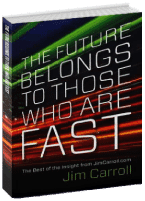
Lots to think about here – the future belongs to those who are fast!

———–

"The new business model for everyone will increasingly use speed as a metric, and fast-innovation is a core capability"

Certainly the last forty years have seen technology play a huge impact on business.

Name any industry – auto, health care, manufacturing, energy, banking — and it’s clear that we are witnessing a fundamental and distinct shift of the innovation agenda to one which is driven by the speed of Silicon Valley, and by a generation of people in the computing world who think fundamentally differently about the source of innovation in an industry.

As this occurs, we will see massive business model disruption as new, faster, more nimble competitors who understand technology based disruption, cast aside their slower, ingrained counterparts who are stuck with old, ingrained ideas.

The future belongs, in other words, to those who are fast. Tech companies and tech based innovators certainly understand that logic. Their entire DNA is bound up in the ability to move fast.

That’s why financial organizations are finding themselves plunged into a whirlwind of change as our mobile devices become our credit cards. As slow-to-change insurance companies find that driver-performance oriented insurance policies, linked to in-dash GPS monitoring technologies, wreak havoc on old-line insurance assumptions. As the world of health care adjusts to the reality of a less than $1,000 genomic sequence machine — something that would have cost over $1 million just ten years ago, leading us much quicker to a world of personalized medicine. And an oil and gas industry which is witnessing hyper-innovation in terms of extraction techniques, driven by deep data analysis and other capabilities, which are leading to year over year yield increases which were unmanageable years ago.

The new business model for everyone will increasingly use speed as a metric, and fast-innovation is a core capability.

That’s why you should join iON Secured Networks and Check Point Security Technologies, as we bring you the unique insight of Jim Carroll, who has emerged as one of the world’s leading international futurists, trends and innovation experts, with a client list that ranges from Northrop Grumman to Rockwell Collins; the SouthWest Gas Association to RGA Reinsurance; the Walt Disney Organization to NASA. Jim has had the opportunity to study what world-class innovators have been doing to keep up with a world in which the future belongs to the fast. He will share with us the new role of leading edge technologies involving cloud networks, agile computing, just-in-time development and other key strategies that will help organizations to deploy the right technologies at the right time for the right purpose — a strategy that will be increasingly important as all industries come to innovate at the speed of Silicon Valley.

I was the keynote speaker for the 14th Annual KIRA Technology Innovation Awards Show in New Brunswick, Canada last week.

I think it went well, based on this article.

———————————————
KIRA – Looking to the future
By Colin McPhail
The Daily Gleaner, Fredericton & Region, Friday, May 4, 2012

The spotlight was on Jim Carroll as he aggressively paced the stage at the Fredericton Convention Centre, gesturing emphatically while citing statistics and quotes in a dazzling manner. The renowned futurist, however, spun the metaphorical spotlight on the audience.

“You need to think bigger,” he said.

There was no rest for the weary in a night that celebrated innovators from New Brunswick’s information technology sector. The best minds in the industry were challenged to continue to build on their success in a world where the rapid pace of change can’t be overstated. There’s no stopping or you’ll be left behind.

Carroll spoke to a crowd of more than 300 Thursday night during a keynote address at the 14th annual KIRA awards. He offered three simple words to help demonstrate the current climate of innovation: speed, scope, opportunity.

Waiting for the right time to move forward could be fatal, he said, adding the market demands creativity at a level never seen before.

“The future belongs to those who are fast,” Carroll said.

“The time to be focused on innovation is right now.”

Emphasizing the need for speed, Carroll said that 60 per cent of Apple’s revenue comes from products that weren’t in production four years ago. Half of what is taught in the first year of any science degree will be obsolete when the student graduates, while 65 per cent of young children will grow up and get jobs that don’t exist today. The list goes on, and IT is at the forefront.

“Silicon Valley controls the speed of innovation,” he said.

“The speed in which this is evolving is staggering.”

Seemingly timeless industries are already being revolutionized, he said, and the pace in which it occurs will only increase.

I recently discovered that I was quoted in one of the Phillipines major business journals, BusinessWorld, n an article, “Biggest Business Innovations Engines of Innovation” published back in February.

It’s always great to see the media pick up on a few of the key themes that I am always trying to hammer home to people — there’a s lot of very simple and basic guidance, that often seems so obvious, that can help organizations get on the right path with their innovation efforts.

So it is with the two points that are referred to in this article.

They picked up on two key themes that I often focus on, and it’s worth pointing them out:

Stagnation will also buy a company a quick ticket out of business. According to futurist and innovation speaker Jim Carroll, the most original firms and industries are those that experience very high velocity, or a lot of fundamental change at a fast pace. For them, this is a necessity in the face of various trends and challenges – whether it’s to address shorter product life cycles, to keep up with ever-changing customer expectations, or to collaborate with a partner organization and leverage their skills.

Taking notes from firms that evolve at such a pace is one way to rekindle that creative spark. Curiously, Mr. Carroll has noted that these sources of inspiration are often found in completely different sectors from one’s own.”

I’ve often suggested that companies try to deepen their creative pool, either by studying innovation in completely dissimilar industries, and event o the point of hiring people you don’t like. Otherwise, you can simply get stifled with the sameness that comes with unoriginal thinking. I’ve even suggested to people that rather than going to the same old conferences every year, they should pick one or two events from entirely different industries in order to site their creative juices.

  • 10 great innovation ideas – “hire people you don’t like” 
  • Article – Re-energize your association – Listen beyond the grassroots 

I also find that too many organizations get caught up in fads when trying to innovate. Certainly that is true right now with social networking; while it is certainly important, I think too many are jumping in without a clear idea of what they are trying to do. This was referred to in the article:

On the other hand, Mr. Carroll has warned against blindly pursuing the latest innovation trend, a common trap he has called “bandwagon innovation.” If taking the hip approach ends in failure, it can derail any creative progress the company has made so far.

By then, employees may become too disillusioned and burned out to try out the next “in” strategy. A company’s real free-thinking workers are not compelled by the “slogan-based management” that comes with bandwagon innovation, and will hardly be enthused when they see their execs following the crowd.”

 I’m also referring to situations in which I’ve seen a company or organization form a special innovation team. They start up their project, go into a special room — and everyone wonders, ‘what’s up?” This fails because it makes innovation special; it makes it seem like it is something you do once as a project; it is just wrong on so many different levels. Innovation is a corporate culture — an attitude driven from the leadership that continually challenges everyone to ask themselves, “what can I do to run this better, grow the business, and transform the business.”

  • 10 surefire ways to destroy innovation – Form a secret committee 


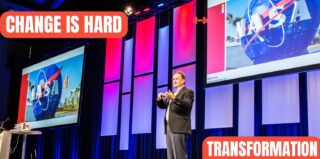
I was a keynote speaker in San Diego last week for the PSCU 2012 Senior Leadership & Member Forum. I was honoured to be following Captain Mark Kelly, NASA astronaut, onto the stage.

Need to think a bit more about opportunities from innovation? Read my "Masters in Business Imagination Manifesto!"

The conference is attended by senior executives of credit unions from throughout the US.

My keynote, built in close consultation with the client, focused on key three points related to the overall theme of innovation:

  • it’s urgent that credit unions focus on innovation right now
  • it’s important that as they do so, they re-evaluate the concept of what they believe innovation to be
  • it’s critical that they take on a large number of experimental projects oriented towards innovative thinking, and that they do it now

Putting each of this issues into perspective explains my thinking:

Do it now: The world of financial services is faced with unprecedented change — the impact of mobile banking, the transfer of wealth to a new generation who thinks about financial management in entirely different ways, the emergence of new competitors. The list goes on and on. That’s why it important that credit unions establish a culture in which innovation is a priority, in order to keep up with and take advantage of the trends swirling around them

Reframe the concept:  Many organizations fail at innovation because they don’t realize understand what it could be. For many people, they think innovation is for cool people who design cool products that change the world: call it the “Apple effect.” But for years, I’ve been reframing innovation from another perspective that helps to open up the minds of people as to its opportunity.

Innovation is a culture in which the leadership and the entire team continually challenges themselves with three questions: what can I do to run the business, grow the business, or transform the business?

There’s a good video clip that you can watch on that theme, “Rethinking Innovation”  

A few years back, I was interviewed at ProfitMagazine, and had this to say about the concept of innovation as I see it:

Profit: So Jim, one of the frustrating things that I find with the term innovation is that people often equate it with only product development.  So what’s your definition of innovation?

Jim Carroll: It’s absolutely true.  I Call it the Steve Jobs iphone innovation problem.  Everybody hears innovation, they think of the iphone, they think about iPod, they think about Apple and they think that’s all that innovation is, you know, coming up with cool products.  To me, it’s about much more.  It starts out with a fundamental presumption, it doesn’t matter what your business is or what industry you compete in, you’re going to be faced with more competition, more challenging customers, your business model is probably going to be subjected to greater changes.  You’ve got issues in terms of cost input, you probably finding your top line, your revenue line is being subject to the pressure.  You’ve got all kinds of challenges being thrown at you.  And from my perspective, innovation is coming up with a lot of unique ideas, whether it’s around your business model, whether it is around the manner by which you compete, whether it’s around your structure, whether it’s around, you know, the methods that you use to compete in your market place, whether, you know, nothing to do with your skills, I mean, it’s everything.  It’s simply, you know, taking the mindset that that my world is going to change on a continuous basis and I am going to make sure that I have a constant stream of ideas as to how I can keep up and how I can deal with those trends.

Experiment – a lot: There is so much changing the world of banking and credit unions. Technology, social networks, new competitors, the emergence of the digital wallet — you name it, and there is an absolute flood of ‘new stuff.’ World class innovators continually establish a regular series of projects by which they can build up their experience with the stuff that comes from the idea-flood. The more experience they build up, the more “experiential capital” they create. I’ve argued that going into the high velocity 21st century economy, “experiential capital” will become as critical if not more important than financial capital.

I actually spoke about the concept of “experiential capital” when I was the opening keynote speaker for the annual general meeting of the PGA of America – it’s worth a watch.  

Suffice it to say, if you rethink innovation in terms of these three basic concepts, it will help you deal with a world in which the future belongs to those who are fast!

Mashable just ran a post, “9 Bold Predictions for the Digital World of 2020“.

I’m quoted in point 5 – Virtual Hospitals”.

9 Bold Predictions for the Digital World of 2020

Here’s what I said: “By 2020, if not before, most industries – health care, agriculture, financial – will have found that they have been transformed by the velocity of Moore’s law. Mobility, wireless, pervasive connectivity – everywhere we look, we see that the big trend for the next eight years is that technology will drive the pace of innovation in every single industry.

Credit cards will be replaced by smartphone transactions systems; auto insurance will be forever changed through GPS-based monitoring devices that reward good driving performance; hospitals will become virtual through the extension of bio-connectivity, involving remote medical monitoring and management.

The big trend is that as tech comes to change industries, change in those industries will occur faster than ever before. The winners will have been those who understand this reality, and adjust their innovation engine to keep up with this new speed of change.”

There are a few ways to put this into more detail, through various posts and videos on my site where I talk about this trend:

  • Major 10 year trend: The Future of Every Industry to be Controlled by Silicon Valley Innovation  
  • A report on my keynote for the 2011 T. Rowe Price Investment Symposium  
  • Video – When Silicon Valley Takes Over Your Innovation Agenda  
  • Silicon Valley Innovation Velocity Set to Dominate Every Industry 
  • Video: Healthcare 2020: Moore’s Law, Genomics and Velocity 

Here’s a clip where I’m on stage in (again) Vegas — speaking to how food and consumer product companies are learning to innovate faster.

In the economy today, its your ability to change, innovate and adapt that will define your success.

Can you innovate fast enough? Watch and think!


One of my recent talks featured me as the keynote speaker for Talent Strategies 2012 in New Orleans; the conference tagline was “Creating the Organization of the Future: Meeting Tomorrow’s Challenges Today.”

I’ll blog more on my talk later – I do an extensive number of talks on the future of workforce, skills issues, and organizational structure.

But here’s a quickly video clip which should get you thinking about the velocity of change with industries and skills — particularly, in this case, in  the world of healthcare!

This kid is soon be the next lawyer in your legal practice - or the lawyer you hire to support your legal issues. Are you ready to deal with him? He's wired, uber-connected, collaborative, fast, and is unlike any lawyer you have ever known!

I’ve been remiss in blogging – 20+ keynotes since January, so I’ve been on the road. I’ve got lots to report on what I’ve been focused on in a huge range of different industries.

Back at the start of this travel odyssey, I found myself in Palm Springs, California, as the opening speaker for the 2012 California Community Associations Institute annual conference. In the room were several hundred lawyers and legal professionals supporting condominium and other community developments.

My focus? The key trends that would impact their role, both as lawyers and as individuals involved with complex real estate, construction and building design issues. So I did my homework, and put together what I thought was a great keynote. Certainly the instant Twitter feedback emphasized that I likely hit a home run.

I addressed numerous issues — including what will happen to the legal profession when the next generation of kids — who have grown up never knowing a world without an iPhone — enter the legal profession. Everything changes….

And here’s the fun part of my job — its’ always fascinating to find, after the keynote, the impact that I might have made on some people in the room. Which leads me to a post I found at the blog for Goodman, Shapiro and Lombardi LLC, a firm specializing in this industry, but based in Massachusetts and Rhode Island.

After a brief intro, the post, headlined “Embracing Technology: Insights from the CAI’s Law Seminar,” gets right to the point:

I was somewhat skeptical about what I’d glean from the keynote speaker, Jim Carroll, a corporate consultant who describes himself as a “futurist.”

 I’m often greeted by such a reaction. But that’s my job — I spend a huge amount of time thinking about future trends, undertaking research in dozens of industries, meet hundreds of executives at the events that I speak at and prepare for — and synthesize all of this into a concise 45 minute to 1 hour overview of what the folks in the room should be thinking about. In this case, my keynote focused on two big issues: the future of the legal profession, and the key trends that would impact the construction/condominium industry and communities going forward into the future.

After that introduction, the blog post goes on:

“Turns out he is recognized worldwide as a “thought leader” on global trends and has helped many companies, including NASA and the PGA, transform their businesses through creativity and innovation.”

This is true — you can read about my keynote for NASA in this post, and a simple search for PGA on my Web site reveals all kinds of posts on my keynote for the “largest working sports organization in the world.” You don’t get to to do my type of job if you aren’t on your “A-Game” all the time!

So what did he think? This makes for a good read:

Part of my keynote in Palm Springs focused on my "10 Big Trends for the Legal Profession" - read the PDF by clicking on the image.

Among the intriguing facts he imparted was a study citing that 65% of today’s preschoolers will work in jobs and careers that do not even exist yet.  He piqued our interest with other obvious-yet-provocative statements… our kids have never known TV without a remote and have never heard the phrase, “Please get up and change the channel.

It bears emphasizing that he was talking to a roomful of lawyers – people who, by definition, practice in a conservative profession averse to change or novelty. Indeed, much of the law is based on precedent and the notion that if it hasn’t been done before, it probably can’t be done now.

Yet our challenge, at this particular moment in history, is to get ahead of the curve, to dare to be groundbreaking.  This may seem threatening, but it’s a message that should resonate within our industry as we think about what this means in concrete terms. On the horizon, I see more green buildings; eco-design; solar panels; and electric cars, among other innovations.  There will certainly be legal implications for all this, and we need to be ready.  In short, we need to think creatively and to embrace change.

And there’s my home run from the keynote – right there: “In short, we need to think creatively and to embrace change” and “Dare to be groundbreaking.” My job is to get people thinking about the future, and challenging them to think and act differently to deal with an ever faster rate of complex change.

It’s always a thrill to look back to see that I’ve pulled it off!

Read more in another post I wrote: “What Goes Into Building a Great Keynote?”  


I was recently the keynote speaker at two major corporate events, both of which really have to seem a key theme at the heart of the “big issues” that organizations are faced with — and that is, we are in a period of time in which the very concept of ‘cash’ is being fundamentally changed, due to the impact of mobile technology.

The first event was for Visa’s 2012 Prepaid Forum in Phoenix — at which, in my keynote, I made the observation that “if you think about it, we’ve only redefined cash once in our history — when credit cards were introduced. We’re about to do it a second time as smartphones become the new credit card!”

The second event was in Las Vegas, at GlobalExchange 2012, an event held by Pollard Banknote, one of the largest printers of lottery tickets, with attendance by a large number of senior executives from throughout the global lottery industry. I made the same observation, but in this case challenging the audience to think about how the world of retail, and hence the world of lottery ticket sales, would come to be challenged through this transformation of cash.

Both event featured similar session descriptions in that the issues that both are confronting through strategic thinking are very much the same.

In the case of the VISA event (click to view)….

…and for Pollard Banknote (click to view)

This is a huge trend that is unfolding at lightening speed as a wide variety of Internet companies (Google, Facebook, PayPal and more) all position themselves in terms of the “virtual wallet”, at the same that smartphone makers (Apple, etc) , banks and credit card companies all explore the space.

Yet it is a pretty massive undertaking : as noted in the Wall Street Journal, 
November 2011, “Yankee Group analyst Nick Holland estimates it will cost $15 billion to deploy the technology that will make mobile payments ubiquitous.

As we get the second biggest disruption with cash to occur in our entire history, we can be certain there will be a huge number of business model disruptions, new competitors, existing market turmoil, new customer challenges and opportunities — and just a tremendous amount of change.

One of my observations in both keynotes is that every organization needs to get involved and get their feet wet — fast. There is so much going on so quickly that in this case — the future will truly belong to those who are fast. That means trying out a whole bunch of new ideas and innovating at top speed.

But does that mean that we are going to see someone win in this space in 2012? I doubt it — the scope of the undertaking and the infrastructure is involved is simply too big. That doesn’t mean anyone can avoid it though – because those who are making bold plays now will become big players tomorrow. Noted Thomas Kunz, Senior Vice President,  PNC Financial, when it comes to mobile payments2012 will be about a beta and expanding that beta test. It will take some time for this to become mainstream.

As a result, my key innovation mantra — THINK BIG, START SMALL, SCALE FAST — fit perfectly into the themes and stories I weaved on stage in Phoenix and Las Vegas!


I often wonder if the discussion about health care in many parts of the Western world has come off the rails – with the result that many opportunities for real innovation are not being pursued.

That’s the focus of quite a number of keynotes I’ll be giving in the next few weeks, including for the American Association of Preferred Provider Organizations annual conference in Jacksonville, the 2012 National Pharmacy Forum in Tampa for the Healthcare Supply Chain Association, and a private leadership event for the Mercy healthcare group based in St. Louis.

One of my key messages is that it’s time for bold thinking, big actions, and new ideas in the world of healthcare — and that can only be accomplished if people change the conversation.

What’s the problem? I think that many in the system are stuck in sort of a groundhog day like existence — they get up every morning, and everyone around them keeps talking about the same old thing as the day before — in the US, healthcare reform. In Canada, the discussion is all about wait times. In other countries, the issue of the future of healthcare often swirls around a single issue.

The result is that real healthcare innovation is stifled, smothered, and never given a chance to flourish. Yet there is so much other opportunity if we link ourselves to the major trends that are going to unfold in the future at a furious, blinding velocity.

We need big thinking, because the health care cliff in the Western world is massive. In many countries,  we’ve got a ratio of workers  to retirees of 4 to 1. By 2030, that will decline to 2 to 1. Most of those workers support the health care expenditures of those who place the greatest demands on the health care system. In Canada it’s suggested that as a result, by 2030,  Old Age Security and health care is likely to suffer a $71.2 billion shortfall that will require a GST of 19% and a top tax rate of 71%. In the US, the numbers are even more mind-boggling.

The fact is, we need big, bold thinking, Grand ideas. Dramatic change. Champions with courage to challenge the status quo. The need is desperate.

That’s what I take a look at in my keynotes, by looking at where we will be in the world of health care by 2020. The changes are massive — which implies the opportunities for real innovation are unprecedented. Consider the trends:

  • Preventative: By 2020, if we do the right things, we will have successfully transitioned the system from one which “fixes people after they’re sick” to one of preventative, diagnostic genomic-based medicine. Treating patients for the conditions we know they are likely to develop, and re-architecting the system around that reality.
  • Virtual & Community:  A system which will provide for virtual care through bio-connectivity, and extension of the hospital into a community-care oriented structure. Wireless and mobility health apps that link consumer wellness monitoring to medical professionals.
  • Consumer driven: A consumer driven, retail oriented health care environment for non-critical care treatment that provides significant opportunities for cost reduction.
  • Real time:  Real time analytics and location-intelligence capabilities which provide for community-wide monitoring of emerging health care challenges. “Just-in-time” knowledge concepts which will help to deal with a profession in which the volume of knowledge doubles every six years.

That and much, much more. The fact is, we are going to witness more change in the world of health care in the next ten years than we have seen in the last 200.

That’s the message that has resonated with the global audiences that have been bringing me in to challenge them to think about the real opportunities for innovation in the world of health care. And through that, I’m discovering experts, politicians and people within the health care system who really are thinking big enough about the potential opportunities for real innovation within the system.

Think big. Do great things. Accomplish massive change. The need is dire, the urgency is fast.


Trend: The Ski Resort of 2015
January 12th, 2012

Here’s a fun little trend to think about — what will happen with the sports of snowboarding and skiing as we go into the future?

That’s the focus of a little trends documents that I whipped together for some fun, but never got around to posting online.

I just did a quick re-edit to bring it  up to date, and it’s available as a PDF on the right or here.

Here’s how it opens:

By 2015, the ski industry had positioned itself to support the emergence of the next ski demographic.

It was well prepared through an investment in technology and people to deal with the reality that the majority of the new skiers and snowboarders of of 2015 — and many existing enthusiasts — were completely wired, mobile, and expecting a far more interactive ski resort experience. In doing so, the industry  was keeping up with the massive societal change that was occurring as mobile technologies, social networks, and location-oriented “apps” came to change the very nature of the skiing / boarding experience worldwide.”

I took up the sport of skiing at the age of 40, having never really known how to ski. I keep getting a little better every year; have had the opportunity to ski the Swiss Alps and other “big mountains,” and live a family lifestyle that involves a voyage to our home “ski club” every weekend. Both of my sons have become snowboard instructors — and I daresay that I think the sport has changed my overall life in a very good way.

Take a read — you might find the future of this sport, as it becomes influenced by mobile, technology, location and social to be kind of fascinating.

And there’s more on this topic through the links below, include some video clips where I talk about these trends on stage!

Related postings:

  • Blog post – The future of skiing 
  • Blog with video : Jim on the future of snowboarding and skiing 
  • Jim Carroll on “the future of skiing” in the San Jose Mercury Post 
  • read Don’t Mess with My Powder, Dude! (PDF) 
  • Personal : Why we ski  

I do a tremendous number of keynotes in the agricultural sector — from groups such as the Texas Cattlemen’s Association to the Mid-America Crop Protection Association to the US Farm Credit Co-op. As I note on my agriculture trends page, I “spent so much time customizing the presentation for one agricultural conference that at the conclusion, one fellow came up and asked him how long I had been a farmer!

With that in mind, I just got off the phone from a planning conversation for an upcoming agricultural keynote for the Grain Farmers of Ontario annual conference occurring this March.

I was speaking about generational turnover on the farm, the rapid emergence of new agricultural methodologies, and the impact of a significant acceleration in the science of agriculture.

Which brought me to mention an article I wrote way back in 2004, “I found the future of manure!” for Profit Magazine. Though a bit dated, it still helps to put in perspective some very critical and important trends — no matter what line of business you happen to be in.

What led to the article was that during my research, I discovered that a new career had emerged in this sector – professional manure managers. Heck, they even have their own magazine, Manure Managerhttp://www.manuremanager.com/

Can you apply the rules of “I found the future in manure” to your particular industry? Probably!

Believe it or not, manure can teach us a great deal about the future of business.” I wrote that back in 2004, and I still think it holds truth today!

Here’s the article!


I saw the future in manure!
Believe it or not, manure can teach us a great deal about the future of business
Profit Magazine
December 2004 

This past summer, I was invited to speak at a western agricultural company’s annual golf day. In attendance were several hundred farmers, their families and various folks from the local area, in a small town about 100 miles from the nearest city. It was about as rural as you could get.

I was asked to address “what comes next” in the world of agriculture, so I looked into the unique challenges facing agriculture today, as well as the trends that will impact the industry over the next five to twenty years.

While doing my research, I came across the phrase “manure management.” That was a new one! And the deeper I dug — so to speak — the more I came to realize that, believe it or not, we can learn a great deal about the future by looking at what is going on with manure. These are the lessons I learned from manure:

1. Accept that times are changing: We live in a time when change is taking place faster than ever, and is speeding up. The mere fact that there’s a profession of people known as “manure managers” shows we’re entering a world that will be far more complex. Recognizing that fact is step one to succeeding in the future.

2. Science is making waves : Manure managers exist because there’s a lot of innovation and R&D occurring with manure. For example, one of the biggest manure management problems involves what’s known as “pit crust.” As the name suggests, it’s the top layer of the manure in the pit, and it gets rather hard and crusty, leading to flies and rodents, not to mention enhanced smell problems.

Rapid evolution in biogenetics is helping to deal with the problem. Scientists determined that most of the pit crust comes from the outer shell of the corn that is fed to the animals, so they developed a specialized bio-enzyme that breaks down the shell during digestion, leading to a thinner crust. The result: fewer rodents and flies, less potential for disease and a big, positive environmental impact.

That’s but one example of how rapid scientific advance is causing change. Look into any industry, and you can see the emergence of all kinds of rapid innovation and new developments. Expect that trend to become more pronounced and even faster over time.

3. Hyper specialization will soon be standard : Given that there is so much new stuff going on, the typical farmer might not learn of the latest advances in manure management. That’s where the manure manager comes in — individuals who possess the specialized knowledge of what’s out there and what can be done with it. They are partners in the process, helping the farmers cope with the rapid change swirling around them.

A typical farmer can no longer be expected to know everything there is to know about farming today. They must call in outside expertise to help them deal with every type of complex issue, of which manure management is only one. And this is a trend true across the economy.

There is now so much new knowledge emerging that every profession and career is fragmenting into dozens of sub-specialties. No one person can be expected to master everything anymore.

4. A specialized partner can save you money : Manure managers are experts in providing farmers with the opportunity for revenue enhancement through the more intelligent application of manure on the fields. In one area in the U.S. Midwest, experts have been working with local farmers to undertake detailed soil and yield analysis to determine the best application rates for future plantings. The returns have been significant — one family farm saw a $19 increase in revenue yield per acre through such efforts. That might seem like a small number until you multiply it by 2,000 acres, for a net result of $38,000 — a big revenue improvement for a family farm operation.

That’s but one small example of how a specialized partner, dealing with specialized knowledge, can help you with your business. As the body of knowledge that surrounds us grows, there are all kinds of innovative, new and challenging ways to run the business better .

5. The future will be increasingly complex : Manure provides a useful signupst to a world that is going to involve a lot more change, specialization and complexity. Everything we know – the jobs in which we work, the professions in which we’ve been trained, the skills we possess, the marketplace in which we sell our products, the industry in which we work and the knowledge that we’re expected to master—will be extremely different tomorrow.

The fact that there exists in the world a group of people who are proud to be recognized as manure managers tells us a lot about the complexity of our future. Figuring out how to deal with such complexities will become the essence for innovative thinking, and from that, our future success.

The International Dairy, Deli and Bakery Association has invited me to be the closing keynote speaker for the 2012 international conference in New Orleans. I’ll appear before an audience of 8,000 key players in this massive global industry.

I’m honoured to join a list of previous keynote speakers that includes Mike Ditka, General Colin Powell, Emeril Lagasse, John Cleese (!), and even Sinbad.

This is another sign that innovation, and keeping up with high velocity change — my main themes — continues to rise to the top in many corporations and associations. Consider what I’m talking about : here’s the brochure copy which announces my participation:

The New Normal: Innovation, Hyper-niching, and Transformative Change

The “new normal” says nothing will ever be normal again. Instead, deep substantial change is transforming nations, markets, industries, jobs, and knowledge. We’re at the leading edge of the merger of three perfect trends: the rapid and massive mobile infrastructure with increasingly intelligent devices; pervasive location awareness as a result of GPS and location intelligence-mapping trends, and a consumer mindset that is increasingly open to new forms of interaction. The result is massive business model disruption, market change, and obliteration of old assumptions aobut the nature of customer relationships. Futurist, Trends & Innovation Expert Jim Carroll will show new ways to uplift product in retail space, how to change customer loyalty through new forms of interaction, and how to enhance one-to-one conversations through hyperniching. He’ll walk us through the impact of increasing business intensity, innovation, and creativity as it relates to the world of food.

The key phrase to think about is “deep substantial change.” And the key thing to think about, is are you ready for it? Is your leadership team, innovation strategy, partners, infrastructure, culture and mindset aligned for transformative change?

Folks, we’re going to look back at 2012 as a year in which the world began to change even faster than any other year prior.

My key phrase has always been, “the future belongs to those who are fast.”

Are you?

Here’s some of the key trends that I see unfolding through 2012 and beyond.

My unique job allows me the opportunity to see and hear what a lot of CEO’s and senior executives in a lot of organizations are thinking about. The  nature of my keynotes and small board / leadership meetings allows me to understand what folks are focused on. The research I do, whether for a major manufacturing conference in Las Vegas or a small corporate meeting with an ice cream company allows me to see the key trends that are unfolding right now.

And so given this unique perch, here’s some of the most important trends which will play out in the year to come.

  •  Biz competes again. North American and Western European companies have lived with constant fear, with the rapid rise of China, the BRIC countries and the N11 on the world  stage. And yet, we’re now witnessing a scene from the movie 2010: “HAL-9000 – ‘What’s going to happen?’ DAVE – ‘Something wonderful.‘ My sense is that a wide variety of industries, from agriculture to manufacturing to industrial design have been going through a renaissance of thinking in the last few years, and have learned what they need to do to re-innovate, grow again, and aggressively return to local and global markets. Read my “Build-America” blog post for some of what I’m thinking here — and stayed tuned!
  • The rise of the tinkering economy. The future is once again being built in the garage next door. But this time, it’s the hyper-connected, innovation oriented tinkering economy which is driving things forward. Get used to phrases like “micro factories,” “hobby designers” and”personal factories.”  The future of design, business and manufacturing is being reinvented at collaborative idea factories such as Ponoko, Etsy and  eMachineShop.com. There’s a revolution underway which is being driven by a globally connected, creatively driven new generation of hobbyists, and the impact is going to be massive!
  • Relationships change. Everywhere around us, the relationship that we have in our lives with the things that surround is, well, changing. Our relationship with food is changing as mobile technologies come to influence what we buy, how we shop,  and how we track our food intake. Our relationship with our body is undergoing a change as we come to use those same mobile technologies to monitor our diet, track our blood pressure another vital signs. Our relationship with clothing is changing as embedded technology becomes a part of what we wear — think about GPS enabled shoes for Alzheimers patients and Zephyr’s smart-clothing — which can be used by athletes to track their performance. When relationships change, everything changes, and opportunities for growth and innovative thinking abound!
  • Generational re-generation: everywhere we look, there’s a massive generational turnover underway, with a change in ownership of organizations from slow moving change adverse baby-boomers to a younger generation that inhales change as a form of innovation oxygen. As family farms and ranches are passed on from father to son and daughter, the rate of adoption of new farming and herd management ideas takes on a greater degree of speed.  As older doctors and nurses who were weaned on the paper-heavy patient file head into retirement, they being replaced by new medical residents who are arriving in the clinic, operating room and by the hospital bed with their iPads, ready to plug in! A shift from change-aversion to change-is-the-greatest-drug is a trend that speeds up our world even more!
  • Revenue reinvention. Every company is coming to face the reality that they have to become just like Apple in order to survive. The fact that Apple generates over 60% of its revenue from products that didn’t exist 4 years ago might today be an aberration, but given the increasing velocity of business cycles, product innovation, the arrival of new business models, changing customer expectations, the impact of social networks and a series of other trends, and soon every organization will find itself in a reality in which constant, relentless reinvention of its product or service line will the crucial to future success.
  • The Dominance of Design. We’re on the edge of a massive new era of creativity, with a trend that we might even call the ‘IPad-ization of Life.’ All one has to do is look at the new Nest thermostat to realize that a new generation of brilliant creativity is about to remake our world. We’re not doomed to a future in which everything around us in the future is going to look just like it did in the past – Apple’s design influence is quickly going to impact everything around us – from the cars we drive to the lamps we use to the fridges we open, to the buses we catch. Clean, simple, easy interfaces and crisp, cool lines, But it’s not just the looks — its the fact that with this new era of design comes intelligence. Our future is going to look great , intelligent and interactive!
  • Chip-velocity! Moore’s law used to apply only to the computer industry. Yet the rule that the processing power of a computer chip doubles every year while its cost cuts in half is taking on new meaning, as your phone becomes a credit card, your car watches how well you drive on behalf of your insurance company, and your clothing talks to your doctor! All of a sudden, in the era of relentless, pervasive connectivity, innovation in every single industry speeds up when Silicon Valley takes over the innovation agenda!
  • Life beyond politics. While the US Presidential election and political turmoil will dominate the headlines for 2012, a new generation of leaders are focused on BIG THINKING, BIG IDEAS, and BOLD MOVES. There’s a realization that political gridlock is the new normal, whether its the Democrats and Republications staring each other down, or France and Germany looking at Italy and Greece with a mystified sense of stunned confusion. So while politicians fail to get things done, innovative organizations are casting their mind to the future trends which will really provide opportunity in the future. It’s fascinating — the future is back in vogue again! And the thinking that is driving it is that we aren’t going to fix the problems of the future by doing what we’ve done in the past. And if we do things differently with those problems – that’s how we’ll discover the next big opportunity. This is the new mindset driving activities in the world of energy, the environment and healthcare!
  • Leading locally. There’s something odd going on — as the world gets global, we’re all going local.  We’re seeing it with sustainability  and local foods; angst and anger at banks and moves to credit unions; and a new volunteerism – as unemployment grew to 7.6%, volunteer service grew by 16%! We’re seeing it with local business – a University of Pennsylvania study found that areas with small, locally owned business (<100 employees) had greater per capita income growth than those with the presence of larger, nonlocal firms! There’s a new focus on local co-ops — with more than 100 million people employed worldwide in some type of local co-op. Thats’ why its fitting that 2012 is the International Year of the Cooperatives, a business model that has stood the test of time for over 150 years. Where-ever you look, while we are thinking global, we’re acting local!
  • Strategy re-dos. The impact of all these trends? Executives quickly coming to realize that what they’ve been doing in the past isn’t to hold them forward into the future. It’s time to throw out all the old assumptions and try things that are new!

Here’s to 2012!

Approaching a new year is always a good time to check your mindset. Do you have the right degree of optimism and enthusiasm to tackle the opportunities of the future? Are you spending enough time of thinking about what you can really do if you are innovative? Are you really prepared for how the ‘next generation’ of wired kids is going to change our world? Here’s a few video highlights from various keynotes throughout the year that might get you thinking!

  • Do you really think about the scope of opportunity that is unfolding on a global basis?
  • On stage for the PGA of America, with a message on retaining the concept of innovation – open up your mind as to what it’s really all about!

  • Are you prepared for increasing intensity and velocity of business cycles?
  • What happens when 250 high school kids are TOLD to text in class!.
  • Think big, start small, scale fast — the title of the book I’ll release in 2012!
  • What’s the mindset that you’ll carry into 2012?
  • Do you need an MBI degree to take you into the future?
  • Are you really ready for this next generation?
  • Have you stopped innovating because of uncertainty?
  • Are you thinking big enough?
  • Three words – mobility, location, awareness!
  • My personal favourite clip from the year
  • Change – deal with it!
Upcoming 2012 Events
December 8th, 2011

Here’s a preview of just a few of the upcoming events for 2012!

  • In Orlando, I’ll host a major conference on innovation in the manufacturing sector at the Manufacturing Innovation conference
  • Enercom 2012 will focus on innovation in the global energy industry; I’ll be the opening keynote

  • PCUS 2012 in San Diego, oriented towards credit unions, where I will take a look at trends impacting the industry, and the massive opportunities for innovation!
  • I’m the opening keynote speaker for the upcoming 2012 Accenture International Utilities and Energy Conference in San Francisco, focusing on future opportunities for innovation in this critical sector.

<p>

There are many others already booked — it’s going to be a great year. To give you a sense of just one of the topic areas I’ll be covering, here’s the keynote description for my address to the 2012 International Dairy, Deli, & Bakery Annual Congress in New Orleans.

The New Normal: Innovation, Hyper-niching, and Transformative Change

The “new normal” says nothing will ever be normal again. Instead, deep substantial change is transforming nations, markets, industries, jobs, and knowledge. We’re at the leading edge of the merger of three perfect trends: the rapid and massive mobile infrastructure with increasingly intelligent devices; pervasive location awareness as a result of GPS and location intelligence-mapping trends, and a consumer mindset that is increasingly open to new forms of interaction. The result is massive business model disruption, market change, and obliteration of old assumptions aobut the nature of customer relationships. Futurist, Trends & Innovation Expert Jim Carroll will show new ways to uplift product in retail space, how to change customer loyalty through new forms of interaction, and how to enhance one-to-one conversations through hyperniching. He’ll walk us through the impact of increasing business intensity, innovation, and creativity as it relates to the world of food.

As we wind down 2011, it’s a good time to reflect on some of the events I highlighted this year. It proved to be quite the year year, with many fascinating events where I opened or closed a large scale conference or corporate meeting with a keynote address.

One of Jim's key themes is the opportunities of the future - at one in Las Vegas, one fellow was so inspired by the message that he asked Jim when he might consider running for President of the United States. Click to watch!

As we approach the end of the year, everyone turns their attention to 2012 — and begins to wonder “what comes next?” All of my clients are focused on that theme when they engage me for a keynote or corporate workshop — and so a sense of what they were thinking about in 2011 gives you a good sense of what’s going to be important in 2012!

Some of the highlights from this year includes these events:

  • CSC Executive Exchange 2011, St. Andrews, Scotland. A small, intimate, invitation only event where I shared keynote duties with Jimmy Wales, the Founder of WikiPedia. I had CEO’s, CIO’s and CFO’s of some pretty major global organizations. Key theme: “The Next Wave of Digital Game-Changers” – I took a look at how every industry is soon to be caught up in Silicon Valley velocity, as technological comes to change every industry at lightening speed.
  • McKesson IdeaShare 2011, San Francisco, California. Changing roles, changing opportunities. I open this annual event with a message for 4,500 pharmacist / owners that with significant challenges and change in the world of healthcare and retail, the time is ripe for them to innovate with their role and their methods because their has never provided a bigger time for opportunity. The big theme: “Healthcare 2020: The Transformative Trends That Will REALLY Define Our Future.” This proved to be a huge topic for this year, and continues into 2012, as people come to seek insight on what will really happen in the world of healthcare beyond the current political rhetoric.
  • Multi-Unit Franchising Conference 2011, Las Vegas. I share the stage with Sean Tuohy, subject of the Blind Side, who owns quite a few franchise operations on his own. The focus in my keynote is on the fast changes occurring in the world of retail with consumers, technology, advertising and branding, social networking – you name it all!
  • US Air Force Research Laboratory, Dayton, Ohio: This group, which controls the entire research budget for the Air Force, brings me in to open a conference in which they examine new opportunities and methodologies for innovative thinking. Fascinating audience, and indicative of the fact that every organization realizes that the world is changing so fast that a lot of traditional assumptions about innovation and R&D are changing at lightening speed!
  • Consumer Goods Technology Magazine 2011 , Orlando, Florida. The pre-eminent conference for packaged goods, food and consumer products companies, with a huge number of Fortune 500 executives. My theme focuses on ‘what world class innovators do that others don’t do‘, particularly to keep up with changing consumers, mobile technologies, social networks and a variety of other trends. It leads to a blog post by one fellow, “Some mind blowing stats from Jim Carroll ….” Big themes: “Mobile, Social, Location!
  • Maple Leaf Foods, Toronto, Canada. A blog post, “Food industry trends 2011; Report from a keynote” was based on this talk. This blog post is now one of the first search results for anyone searching for anything having to do with food trends — and is now easily the most trafficked Web page on my site. After health care, food trends is probably the second busiest topic area for the year.
  • T. Rowe Price 2011 Investment Symposium. 600 investment managers, senior executives and CEO’s. The other keynotes are Colin Powell and Charlie Cook. My job is to close this two day event with an inspirational, motivational message based on the theme “When Do We Get to Normal? Why Thinking BIG Will Help You Seize The Opportunities of the 21st Century.”
  • World Pharma Innovation Congress, London, UK. I’m honored to open this renowned global conference on innovation within their crucial sector – most of the global heavy hitters from the world of pharma and bio-science are in the room. Opportunities for growth and innovation are coming from hyper-science, opportunities for externally sourced innovation insight, and the big global ‘idea machine’ that is revolutionizing opportunities for innovative thinking.
  • Interactive Manufacturing Exchange, Las Vegas, Nevada. A massive highlight from September — with a dinner keynote for 600 major manufacturing executives, and a morning keynote for 1,000 more. My keynote focus is that there is plenty of room for growth in the North American manufacturing sector, given the tremendous advances that have occurred with methodology and technology. My message must have resonated — after my talk, one fellow got up during the Q&A and asked if I would consider running for President of the US!
  • DSSI Forum, San Antonio, Texas. One of the largest seniors care conferences in the US. I spoke at length and with passion about the big opportunities for innovative thinking in the sector, particularly in light of the big challenges that society faces. This was a very personal event; those who know me well know that we have learned quite a bit about the challenges society faces with Alzheimer’s as a close family member has suffered from the disease.
  • Lockheed Martin, Washington, DC. I’m asked to speak at their 2011 global HR conference. The organization is aligning itself to deal with fast paced change in ever sector of its operations: my theme is what companies are doing o achieve “skills agility”, and why the issue of “deploying the right skills at the right time for the right purpose” is an increasingly important model for the future.
  • Pearson 2011. The future of education. A talk that linked key future trends to the need for massive, transformation thinking in the world of knowledge delivery. Noted one attendee: “Jim Carroll gave a particularly poignant keynote address about the need for true, innovative thinking.  (Think of a 5 year mission on steroids…)”
  • Bombardier Global Operators Conference. The future of corporate and leisure travel. Manufacturing innovation. Consumer change, and the impact of mobility. A wide ranging talk that challenges global airline operators to think about innovation in every aspect of their operations.
  • Fairmont / Raffles Hotels International. A corporate event, focused on the future of the global meetings and events industry. Key theme: organizations will increasingly require short, sharp shocks of knowledge delivery — corporate meetings and events are a big part of this trend, and are a key part of the short term strategic planning cycles that organizations are focused upon.
  • Texas CattleFeeders Association, Amarillo, Texas. The 2nd of two major talks for the cattle/beef industry in the US. Earlier in the year, I opened a private event that had in the room the top 100 cattle ranchers from across the country – representing a  multi-billion dollar investment. My keynotes focus on the significant opportunities for growth in the agricultural industry.
  • International Foundation 57th annual Employee Benefits Congress, New Orleans, LA. A morning keynote for 4,500 people at 730AM in New Orleans — and they all show up, confirming that description that “what I do for a living is go out and talk to large groups of hungover people.” It’s a rousing talk on the theme of Healthcare 2020: Today’s Trends, Tomorrow’s Opportunities
  • Linde Health Group, Munich, Germany. Global opportunities in the world of healthcare – how do we link future trends to opportunities for growth.

There were quite a few other keynotes for associations, government and corporations. In addition to these high profile engagements, which featured audiences of up to 6,000, I also hosted a number of small CEO level events. In one case in Washington, I spent the morning with a small group of 15 CEO’s/CIO’s/CFO’s in a boardroom style setting, where we explored the opportunities for growth that coming from linking future trends to innovative thinking.

Advance bookings for 2012 are exceedingly strong — so far, I know I’ll be in Palm Springs, Tampa, Orlando, Phoenix, Aspen, New Orleans (x2), San Antonio and many other locations.

Think growth. Think opportunity. Think trends. Think positive!

At the T. Rowe Price 2011 Investment Symposium in Baltimore on Friday, I listened to the technology panel that preceded my luncheon keynote.

It was a fascinating discussion as a number of their leading analysts spoke of the trends that they saw unfolding with consumer and other digital technology companies, such as Apple, Amazon and Samsung.

Name any industry - auto, health care, manufacturing, energy, banking -- and the big trend over the next five years is that Silicon Valley is coming to control the pace of innovation in the industry. And it's speeding it up!

But I thought that the crowd was hungering for a bit more — where are the next big trends, and the next big transformation opportunities that are going to unfold which are going to provide for the birth of new industries, fast growing companies, and billion-dollar market opportunities?

And so I outlined that reality: the next big areas of growth will come from the transformative change that occurs as Silicon Valley comes to drive the pace of innovation in almost every other industry. As it does so,  it will speed up the rate of innovation.

The impact of this trend is that it will also shift control from any particular industry – insurance, healthcare, banking, auto — to the technology companies. The result will be massive business model disruption as new, faster, more nimble competitors who understand technology based disruption, cast aside their slower, ingrained counterparts.

The future belongs, in other words, to those who are fast. Tech companies and tech based innovators certainly understand this! And the key issue is speed : Apple, for example, could innovate much faster with new credit card financial systems than any bank could. Google and it’s tests of automatic car navigation technology will certainly evolve faster than any auto company in Detroit, Japan or Germany could. Unless leaders in those organizations increasingly learn to focus on speed as a metric, and fast-innovation as a core capability.

Consider just a few of the trends:

  • Banks and credit companies risk losing control of their future as our mobile devices, cell phones and iPhones become credit cards
  • the energy industry and home construction is impacted as a new personal energy infrastructure management, in the form of such devices as the NEST Thermostat, provide for a significant change in the way people use energy
  • health care will be transformed by medical device connectivity and bioconnetivity — allowing hospitals and nursing homes to extend the reach of their medical professionals to an increasing number of remote locations
  • the auto industry will face trendmeondous change as an intelligent highway infrastructure emerges as the same time as intelligent, self-guiding cars and trucks become a regular part of our daily world
  • the world of insurance is upended as we head to a world of predictive insurance modelling through the use of sophisticated technologies such as on-board GPS devices which monitor driver behaviour

These are but just a few examples. I can go into any industry today and point out how Silicon Valley and technology is going to cause significant change and upheaval within the industry. I can spot the smart executives who understand the message and realize that right now is the time for aggressive innovation and big thinking.

And then in other clients, I can see this observation pass right over the heads of some of those in the audience, and realize we’ve got folks who are like deer in the headlights — the trends are blinding in their reality, but they are frozen by their inability to do anything.

I spoke about this trend in a recent keynote.

There are a whole series of related posts in which I’ve commented on the significance of this trend and the speed with which it is occurring. These are just a few.

  • Silicon Valley innovation velocity set to dominate every industry 
  • When Silicon Valley Takes Over Health Care Innovation 
  • This ghost town in New Mexico could turn into one of the most important innovation engines 
  • Reinventing the future with transformative technology
  • Silicon Valley: Is Innovation Dead? 

A clip from a recent keynote in San Antonio, Texas — shouldn’t you be thinking about getting a Masters in Business Imagination?

I first proposed the concept of the MBI back in 2003, when I wrote the Masters in Business Imagination Manifesto.

Here’s the intro:

Complacency in a time of rapid, disruptive change can be a death sentence – not only for organizations, but for the careers and skills of those who work there! It’s time to abandon the thinking that has had you anchored firmly to the past – and to shift your focus to the future, with enthusiasm, motivation and imagination.

You can do this by abandoning any pretence that the skills of yesterday will be important tomorrow. Figuratively and literally, it is time to move beyond the thinking that has led us to a world of MBA’s – Masters of Business Administration – and focus upon the critical skill that will take you into tomorrow.

The world doesn’t need more administrators. It needs more MBI’s – Masters of Business Imagination!

Given that the world today is even faster than in 2003, maybe the MBI is an even more important degree than ever before!

The “10 Great Words” page on my Web site is one of the most consistently visited and shared pages on my entire site.

I think that people find the words to be powerful and inspirational, and help to set a good mindset for innovative thinking.

Words are very powerful motivators. I was dealing with a client situation this morning revolving around an upcoming keynote, and during the conference call, jotted down a number of additional words which I think can be powerful motivators.

Words which provide simple insight and motivation are great.

Here’s 10 more to get you thinking about fast change:

  • Adapt: Change is happening faster than ever before. Accept that, adapt to it, and go with the flow. It makes everything a lot easier.
  • Flex : In times of rapid change, agility is a critical skill. Develop flexibility in attitude, skills and capability in order to thrive.
  • Experience: There’s a lot you don’t know. Enhance your knowledge and experience by doing all the things you’ve never done before.
  • Create: Stop managing things, and create things instead. Focus on doing things that make a difference, rather than trying to make a difference with what you’ve done before.
  • Focus: You can’t master all the knowledge there is to know, nor can you do everything you want to do. Do what you do well, and figure out new ways of doing the rest.
  • Partner: Deal with rapid change and complexity by seeking partners who can help you accomplish what needs to be done.
  • Shift: Far too many people view the future with fear rather than thinking about opportunity. Shift your focus, and you’ll discover opportunities for growth.
  • Imagine: Innovators don’t make a difference by redoing the status quo — they accomplish great things by being different. And they don’t constrain their difference with traditional thinking: they simply think differently.
  • Start: You’ve probably been holding off on doing the one thing you always wanted to try to do. Drop the stop now, and begin doing it. Innovators succeed through momentum, and momentum comes from doing.
  • Enthusiasm: People who approach things with passion and purpose live a compelling life. Find your spark, and light it!


    Please consider supporting me with a small donation for this epic fundraising event - I will be riding 200 km / 150 miles over two days with thousands of other riders in support of cancer research. Click the image below for more information.
Performance Optimization WordPress Plugins by W3 EDGE