When the iPhone was released, YouTube traffic rose by 1,700%

Home > Archives

Tagged Keynotes


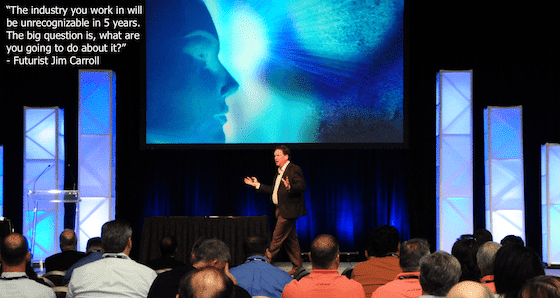
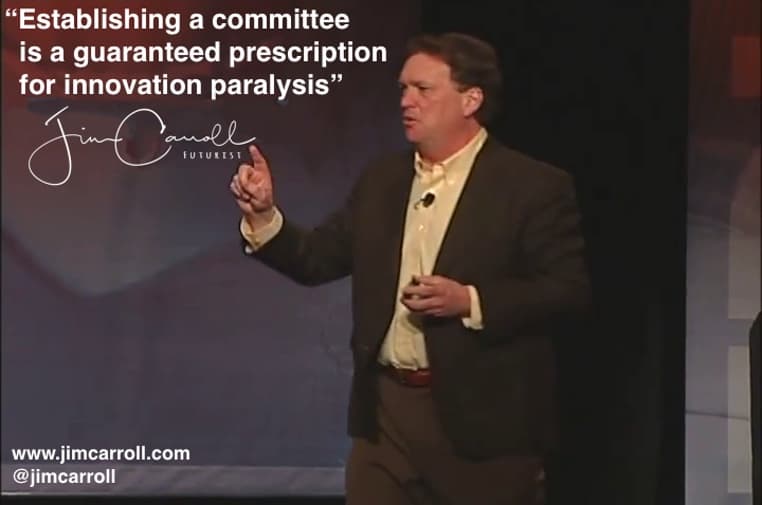
Here I am speaking to an audience of 4,000 at the National Recreation and Parks Association Congress in Salt Lake City – a keynote in which I challenge recreation professionals to think about the future!

This was the keynote in which I received an email thanking me for “changing lives.” It was a powerful day, a powerful talk, and I’ve got lots more video to share in the days to come!

0-sydney_master.jpgEarlier this week, I spoke to a group of executives for a financial institution in Sydney, Australia, live via a fibre optic link — a distance of almost 10,000 miles (or 15,000 kilometres)

The client had wanted to bring me directly to Sydney, but the timing conflicted with a number of other events. Hence, the alternative method of “getting me there.”

Utilizing the services of Toronto based TV2GO, we had a direct fiber optic video and audio link into the conference at the Hotel Intercontinental in downtown Sydney. In addition, I had a live feed of the audience; not only that, but a number of “runners” had microphones available which provided for a direct, instant 2-way Q&A session at the end of my talk. In addition, I had a full Powerpoint deck running on separate screens in Sydney, transitioning to my cue from Toronto.

I’ve worked with TV2Go before, including on a live feed into CNBC for the Business of Innovation show.

If you are looking to me into your next event, you might consider this type of fiber optic or satellite link. With TV2Go, I can get myself via satellite and fiber connectivity to major conference centers or hotels in North America and South America, Europe, the Middle East, and Asia, if they are properly equipped. In the case of Sydney, the financial institution set out to find the facility with the greatest technical experience with this type of thing: hence, the Hotel Intercontinental.

The folks at TV2Go are experts in such international link-ups : their staff speaks, in addition to English, “Italian, French, Spanish, Romanian, Hungarian, German, Egyptian Arabic, Russian, Turkish, and even a little Japanese.” The organization routinely sends feeds into Mexico, Brazil, Argentina, the UK, Spain, France, Germany, Poland, Romania, Russia, Israel, Lebanon, Afghanistan, Iraq, Iran, India, South Africa, Tanzania, and even the Sudan.

What we need at your end is a facility that is capable of receiving a fibre optic feed via one of their global partners; or that can ‘see’ one of the dozens of satellites to which they can uplink. These include Telesat, Intelsat, PanAmSat, SES Americom, New Skies, Hispasat, LORAL and Eutelsat satellites.

The key to making this work is having a fibre/satellite friendly AV team at the other end. In the case of my Sydney, Australia event, Stuart Haynes was a real pro. He’s with the Intercontinental Sydney, and has managed dozens of such events through the years. On short notice, he pulled together an AV team that managed the feed, provided for several cameras in the room to feed back to Toronto, and an AV team that transitioned through my slide deck on cue.

Overall, a tremendous experience, and one that you might consider for your next corporate event.

More information:

  • TV2Go
Report: The future of education
November 18th, 2009

2009EduReport.jpgEarlier this year, I was invited to keynote a conference of leading US higher educators and academics at the College Board Colloquium. This is one of the leading educational conferences of the year.

The group has issued their report from the conference, and there is some pretty good coverage of the essence of my talk. Here’s a key quote:

The future of higher education is huge.” Carroll shared the following observation from Microsoft: “Probably about 50 percent of the U.S. gross domestic product will be taken up by training and knowledge activities within the decade.” Carroll then spoke about what is happening with “the knowledge economy.” The reality is, he said, that “American workers today, whether in a trade or profession, are in a situation in which the knowledge they have is continuously going out of date and needs to be continuously replenished. What is there to be concerned about when we have such massive growth potential?

In a nutshell, my perspective on the future of education (as found within the report) is that we need to rethink the context of “how we teach” in light of the realities that:

  • knowledge is growing exponentially’
  • the foundation of knowledge generation has forever changed
  • the velocity of knowledge is accelerating
  • exponential growth of knowledge leads to massive career specialization
    we are in the midst of a fundamental structural organizational and career change
  • By 2020 or sooner, it will be all about “just-in-time knowledge.”

What is this leading to?

  • rapid knowledge obsolescence
  • rapid knowledge emergence
  • disappearance of existing careers
  • rapid emergence of new careers
  • an ongoing need for continuous knowledge replenishment
  • the migration of knowledge generation further away from academia
  • a massively increased challenge from overseas knowledge generation
  • the fast emergence of new micro-careers
  • an economy that succeeds through knowledge deployment
  • a fundamental transformation in the role of educational institutions

In other words: much of the education structure that we have in place today doesn’t match the reality of what we really need to do, given the rapid change occurring in the fundamentals of knowledge.

More information:

  • Read Jim’s comments at the from 2009 College Board Colloquium by Jim Carroll
  • Read the entire reportNew Visions, New Voices for the 21st Century from 2009 College Board Colloquium by Jim Carroll

Here’s a quick little rap on what innovators focus on:

There’s more on this line of thinking in the Innovation category of this blog. Enjoy!

Here’s another short video clip about the mindset that you can — and should – carry forward as we continue to work our way through challenging economic times!

09Tech.jpgOver the next several weeks, I will be speaking at a series of events sponsored by Microsoft related to their Windows 7 launch. The audience includes key executives (CIO’s, CFO’s, CTO’s and IT managers) from a wide variety of industries.

While much of the news coverage of Microsoft focuses around the “consumer” side of the Windows 7 launch, of equal significance is the release of several new server infrastructure upgrades that permit large and small business to take their business into the next level of operational innovation.

In Toronto the other day, Steve Ballmer was speaking to this aspect of innovation. I find that some media gave the message short shift, because their planned story spin didn’t fit his message.

That’s too bad, because the reality is that having an infrastructure that provides for a lot of business flexibility is going to be critical as we transition into the “next economy.” Clearly, there’s a lot of business turmoil out there, and organizations need to be able to change quickly to deal with new circumstances.

Given that, part of my message at these events will focus on what I’ve come to call the “new rules for the next economy.” What are those rules?

  • structure for growth: In many industries, the painful process of contraction is either over, or coming to an end. Once you’ve done the cost cutting, you only grow the profit line through new revenue. New revenue means new products and services; that comes from insight, collaboration, and thinking. Smart companies are ensuring they have a razor-sharp growth oriented culture, and technology enablers that help them get there.
  • focus on “chameleon revenue”: in many industries, the revenue stream five years from now won’t come from the products or services offered today. You have to keep a product/service innovation pipeline full in order to generate these new revenue sources — and do it faster and better than before. Crayola has two supply chains: one for existing revenue, and one for innovation-based revenue. Interesting concept!
  • speed up: I spoke at a global travel conference a few weeks ago, and noted that 1/3 of all leisure travel is now last-minute; the average time frame for planning now down to just 15 days; 36% of last minute vacations are 3-4 nights; and 30% are 1-2 nights. Smart travel companies have in place an infrastructure that allows them to rapidly change their product lineup, marketing message, brand image, and the flexibility to communicate a new message to a massive client base quickly.
  • ingest new technology faster. There’s going to be a huge amount of business model change as the tsunami of technology continues unabated. Anyone in retail will be hammered by the rapid transition to cellphone based payment technology. Winners will be able to transition at the speed of Silicon Valley — with the result that leaders are those who will continue to find operational innovation in ways they hadn’t thought of before
  • shake up methodology: think Manufacturing 2.0, and a blog post I wrote here some time ago. The future is all about Honda’s thinking: “how quickly can I change” is the defining question in terms of market flexibility. Manufacturing models are undergoing a huge shakeup, and those who transition them for maximum agility and flexibility will dominate the next marketplace.
  • be offensively defensive: no matter what industry you are in, there is someone out there who wants to mess up your business model. Before that happens, you should mess it up yourself, so that you better control the end game. Technology has and will play a huge role in business model transformation, and your infrastructure has to be up to the task.

Bottom line: business will continue to get faster, more complicated, and far more challenging.

Will you be able to ahead with a creaky, finger-in-the-dyke infrastructure?

WhatsNext.jpgWhen you walk off stage, you always wonder how you did!

Last week, I was the opening keynote speaker for an audience of up to 4,000 parks and recreation professionals, at the National Recreation and Parks Association annual conference in Salt Lake City.

Expectations were running high; many tweets were going out under the #nrpacongress tag, indicating enthusiasm for my upcoming talk.

I came off stage feeling like I did a real barnburner of a motivational talk, encouraging the crowd to adapt to the high rate of change that surrounds them.

It must have hit home with some: I received this wonderful email today.


Dear Jim,

I just wanted to let you know that in my 20 years of attending the NRPA Congress, no one has captivated me more than your keynote address. And, all during the week, when we talked about the Keynote, everyone agreed!

In fact, I presented a seminar “Creating the Wow—New Marketing Trends for Everyone”, and mentioned a few of your insightful comments. It was amazing to see how everyone was captivated with your session. In fact, it is the only time I can remember, that people were upset that we were running late and you had to wrap up your talk rather quickly.

In addition, Vendors raved about you pressing attendees to visit the trade show, talk to peers, and see how technology is changing our profession. It was quite a Home Run!

We have a saying in our department, the 2008 NRPA Gold Medal Winner (Class II—100,001 to 250,000), which is, “Engage. Inspire. Change a Life Today!” I wanted to leave you with this… YOU Engaged. YOU Inspired. YOU changed lives that day! Thanks again for sharing your keen insight and talents with all of us!

Respectfully,

Rick Herold

Director of Parks and Recreation

City of Grand Prairie, Texas

www.GrandFunGP.com

Nice!

Shaping Tomorrow is one of the world’s leading trend watching services, observing on its home page that:

“We help 13,284 people and organisations anticipate, and respond to, how we will live”. Find opportunities for growth, discover new solutions, conduct risk and intelligence assessments, make strategic choices, plan and act on decisions, construct scenarios and join our global innovation and foresight network.

A tremendous number of global organizations use Shaping Tomorrow to track future trends. In line with that, the group has just launched a speakers bureau to provide its clients with the additional insight they need to deal with a high velocity economy.

I was asked to write an article for the launch of the site, and it is featured on the home page for Shaping Tomorrow Future Voices.

In “Our Brightest Minds — and the Strategic Value of Thought Leadership Speakers”, I make several observations that outline the role I play in increasing numbers of organizations today:

Steering an organization into the future is often akin to navigating a ship. You can only get so much momentum, and when it is necessary to take a change in direction, it takes a lot of time for the turn to take effect.

That’s where the role of a high profile futurist with a track record comes in. We help you to steer the ship.

I spend my time with a large number of global Fortune 1000 organizations, associations and government bodies. I’m often called in by a CEO or other member of senior management to achieve one particular goal: to help to place emphasis on the issues, challenges and opportunities that the organization faces in the future. In many cases, senior management knows what needs to be done; but being aware of the art of leadership, they also know that they must carefully lead their team through what are often, significant mindset changes.

The leadership team — including you — knows that they need to wake their people up, shake them out of their complacency, and give them a clear understanding that they had better start thinking about the future — and fast — in order to keep up with high velocity change. And perhaps, if they are lucky, stay one step ahead of everyone else.

That’s what we do. We’ve chosen a career path that has us assisting organizations in making the transition into the future. I’ve been doing this for well over fifteen years.

You can read the full article online.

More information:

  • Read Our Brightest Minds — and the Strategic Value of Thought Leadership Speakers

2009NRPA.jpgI head to Salt Lake City next week; I’ll be the opening keynote speaker for the annual conference of the National Recreation and Parks Association.

GovPro News recently ran a press release on my keynote, commenting:

The recession has created an atmosphere of anxiety and uncertainty for many, and those who work in the parks and recreation field are not immune. With so many forces – the economy, politics, and social and leisure trends, for example – out of the control of parks and recreation professionals, thinking about the future could cause a few sleepless nights.

Futurist Jim Carroll has helped hundreds of organizations minimize their sleepless nights when preparing for the future, and he will discuss some of the upcoming challenges and opportunities in the field of parks and recreation when he delivers the keynote address at the National Recreation and Parks Association’s (NRPA) annual Congress and Exposition in Salt Lake City.

So what will I be talking about? The NRPA ran an interview with me in their September issue which is worth a read; I discuss some of the challenges and trends that we face in terms of the future of parks and recreation, and the innovative mindsets that will help folks cope with a future which is faster, more complex, and certainly full of opportunity.

As NRPA Chief Executive Officer Barbara Tulipane commented in the GovPro release: “In these difficult economic times, it will be refreshing and instructive to learn from one of the truly great minds in strategic planning…. Attendees will leave the conference well-armed with a variety of tools and strategies to help them successfully confront the challenges of the coming year.”

More information:

  • Read NRPA article: What the Future Holds
  • visit 2009 NRPA Congress and Exposition Web site
  • Read 2009 NRPA conference casts an eye to the future

2009MHIA.pngNext week, I’ll be in Jacksonville, as the lunch time keynote speaker for the annual meeting of the Materials Handling Association of America. We’ll have about 300 executives in the room, from a broad cross section of North American industry.

My topic? “Moving Beyond the Meltdown: Aligning Yourself for Growth Through Innovation“.

In the last twelve months, I’ve had a unique first hand opportunity to witness what’s happening on the ground throughout corporate North America as companies have grappled with the recession. Throughout this time, I’ve been fortunate enough to speak at a wide variety of leadership meetings, management get-togethers and other corporate events for a fascinating list of Fortune 500 organizations, as well as many prestigious national associations.

And in my own small way, I’ve been busy helping people to understand what they need to do to innovate their way into the “next economy.” That’s because there are an increasing number of CEO’s or other members of senior management who are bringing me in, in order to help place emphasis on their message of the urgency of change.

What’s clear is that we are in the midst of a pretty significant economic transformation. As Mick Fleming at the American Chamber of Commerce put it recently: “It’s going to be this move from a bad economy, to the next economy.”

What is the shape of that next economy? The scope of the change can be seen in the types of deep, transformational change that is underway in many an industry. Consider manufacturing – clearly, we’re moving from a world of mass production, to mass customization and agility-based manufacturing. I often use the example of Honda, as noted in a Bloomberg news article back in 2008:


“Honda’s assembly lines can switch models in as little as 10 days ….. by contrast, it could take months for most rivals to make the same change.”

Clearly, the Detroit based old manufacturing business model was seriously and deeply flawed. The newer model, based on agility and flexibility is the model that will take may manufacturers into the future.

There’s a similar fundamental transformation underway in many other industries — and to understand the link between future trends and innovation, you must get into that mindset. Take health care — 20 years from now, it will look nothing like it does today, as we move to a world of preventative medicine.

And what’s really happening with the global economy are a number of trends that point to growth:

  • There are a tremendous number of new companies and new industries being built around the high velocity of ideas that surround us – which is increasing the pace of business startups;
  • New ideas continue to be explored, markets grow, and industries emerge as rapid innovation occurs in health care, agriculture and countless other fields. It’s all about rapid science today — and exponential knowledge growth leading to faster discovery of the “next thing”
  • Business model innovation continues unabated : I’m seeing revolutionary trends with mobile text message based banking systems, for example
  • Small organizations continue to have the advantage of capitalizing on opportunity quicker; today, it’s all about speed, and these are the innovators who often win in big markets. Just look at what’s going on in pharmaceutical research, where the majority of new discoveries are happening in small labs

It’s easy during a time of economic volatility to lose sight of where the global economy is really headed. Yet while stock markets might rock, innovation thrives.

What’s my role? In each and every case, the individuals who have engaged me know that their industry and the world they live in is set for deep, systemic, transformational change. They have a compelling sense of urgency. They know that maybe the rest of their team does not share the sentiment; they’re suffering from organizational sclerosis; their ability to understand the future is clogged up by todays’ short term focus.

Leaders today know that they need to wake their people up, shake them out of their complacency, and give them a clear understanding that they had better start thinking about the future — and fast — in order to keep up with high velocity change.

And perhaps, if they are lucky, stay one step ahead of everyone else.

More information:

  • Material Handling Association of America – 2009 annual conference
  • Blog post: Are you watching the major transformations, or just the piddly stuff?

missouri-ecdeve.pngTwo weeks ago, I was featured as the closing speaker at the 2009 Governor’s Conference on Economic Development, the 51st annual event of this type. Governor Jay Nixon addressed the crowd on Thursday, Sept 10th, noting in his keynote that:


To compete – and win — in the 21st century, we must encourage entrepreneurship and small-business growth; enhance our workforce; and embrace emerging science and technology as critical industries of tomorrow.

I followed up with a closing keynote on Friday that took a look at the trends occurring with small business, workforce trends, and the rapid pace of innovation in various markets : particularly, energy, the environment, and what I’ve come to call “manufacturing 2.0.” Here’s the session description:

What Comes Next: And What Should We Do About It?

Is there a future out there? Definitely yes, but a constant drumbeat of negative news can cause people to lose sight of what will happen as we return to a period of economic growth.

That’s where Jim Carroll comes in — this noted international futurist, trends & innovation expert spends his time with globally innovative leaders. He’s gained keen insight into some of the key trends which will impact industries, organizations and careers in the next few years to come, in a wide variety of industries from health care, to technology and manufacturing, to the skilled trades.

Jim is a passionate believer that we live in transformative times — and in five or ten years, will look back at this time with awe at the new industries, products, careers, and opportunities that were developed.


Jim Carroll will challenge you to focus on the opportunities of today and tomorrow, rather than the challenges of the past.

There have been quite a few economic development related talks as of late ; it’s my belief that with the downturn, a lot of people have lost sight of the transformational change that is occurring in many industries, particularly with leading edge innovation and future trends, and what local economic development officers might be doing to capitalize on those trends.

Area Development Magazine, a publication that focuses on this area, noted recently that “it’s impossible to succeed at economic development and be a pessimist.”

What I’ve been doing is to help to bring a sense of optimism to those in the room.

2009AchievingGrowth.jpgI’m thrilled that Microsoft has asked me to be the opening speaker for a number of events this fall, related to the Windows 7 launch. We will be talking to CIO’s, CFO’s and CTO’s for a wide variety of organizations from multiple different industries.

My talk with focus on the theme: “Achieving Growth! Why Innovators Will Rule in the Post-Recession Economy–And How You Can Join Them!“; and specifically:

Jim will share his insight into the key trends facing every organization, and the methods by which organizations are positioning themselves for the rapidly changing economy of the 21st century, where time-to-market is the new metric, and fast-innovation rules.”

This has been an area of heavy focus for me through the last year, as the economic downturn took hold. I’ve had the opportunity to watch and study what a wide variety of organizations have been doing to keep a growth orientation.

There are many, many clients who are booking me because the CEO or senior management realizes they need to quickly re-align the thinking of their team towards growth; and through discussion with me, have discovered that I can play an extremely useful role in helping them accomplish this.

Who’s working with me? I’ve had recent and upcoming engagements with General Dynamics / Northrop Grumman ; the 2009 Missouri Governor Economic Development Congress; Signature Travel global owners meeting; Microsoft; the US National Recreation and Parks Association; Yum! Brands; Burger King; US Department of Defence – Commissary Agency ; Rockwell Collins; Oracle ….. all of these organizations have engaged me for a keynote or leadership meeting focused on future trends, innovation and growth!

Think growth!

StLouisArchSmall.jpgSummer’s over, and things are happening fast!

I’m off tomorrow, to deliver the closing keynote for the 2009 Missouri Governor’s Economic Development Conference in St. Louis.

After that, I’ll be spending time with executives at such organizations as Microsoft, General Dynamics, Oracle, the National Recreation and Parks Association, and many others, all around the theme of “innovating into the recovery.”

One group has used this description for an upcoming keynote:

What Comes Next: And What Should We Do About It?

Is there a future out there? Definitely yes, but a constant drumbeat of negative news can cause people to lose sight of what will happen as we return to a period of economic growth. That’s where Jim Carroll comes in — this noted international futurist, trends & innovation expert spends his time with globally innovative leaders. He’s gained keen insight into some of the key trends which will impact industries, organizations and careers in the next few years to come, in a wide variety of industries from health care, to technology and manufacturing, to the skilled trades. Jim is a passionate believer that we live in transformative times — and in five or ten years, will look back at this time with awe at the new industries, products, careers, and opportunities that were developed.

Jim Carroll will challenge you to focus on the opportunities of today and tomorrow, rather than the challenges of the past.

He will cover the trends that will provide for major growth markets through the next five years; where we will see the emergence of new careers, industries, business models and opportunities; and how a relentless focus on opportunity and growth is directly linked to future success. He will help you to make sense of what happened ; where we are now; and what do we do next!

That pretty well sums up my perspective on things.

Stay tuned as we launch into the fall of 2009!

2009ThinkingFast.jpgBack in 2006, I keynoted the Society of Cable Telecom Engineers at their annual conference in Tampa. At the time, YouTube was only just beginning to have an impact, and social networking was still in a nascent stage. It was January — Twitter wasn’t even around!

But there was a lot of talk at the conference about the rapid rate of change that the cable and telecom industry was facing. My job, as opening keynote, was to get them in the right, innovative frame of mind to deal with an upcoming tsunami of change.

I ended up writing an article for Broadband Magazine, on my keynote theme, Are We Thinking “Fast” Enough? I dug the article out the other day with respect to another upcoming talk within the industry.

It still makes for good reading today, starting with the observation that “in this era in which new developments and technology are coming to the market faster than ever before, everyone must become an innovator, whether it be with new business models, skills partnerships or customer solutions.”

Some of the key points I raised are even more critical today:

  • Innovation has moved from the corporate to the collective, a trend that is causing absolutely furious rates of discovery.
  • This rate of scientific advance is such that a world of yottabits and zetabits is going to arrive faster than you might think,
  • Things are happening so fast that some industries are beginning
    to witness the end of the concept of the product life-cycle
  • Rapid innovation and technology development means that new competitors can now come into a marketplace and cause fundamental, significant and long lasting change at the drop of a hat
  • Rapidly evolving technology is resulting in an increasing shortage of critical skills

Run through that list, and ask yourself if that is your industry situation today.

Are you thinking fast enough?

  • Read Are we thinking fast enough? from Broadband Magazine
Innovator's fail faster!
July 20th, 2009

There’s quite a bit of traffic on my clip about the importance of innovation with social networking.

The experience learned here links back to a point I often talk about in my keynotes about the reality of innovation:

  • Innovators fail fast.
  • Innovators who fail fast learn faster.
  • Innovators who learn faster from faster failure master faster markets.
  • Innovators master faster markets because they master fast failure

I was on a planning call with the CEO of a large global company that is having me in for a leadership meeting in the fall. We discussed the reality of his industry — very rapid change in terms of branding, infrastructure, competition, business model evolution, customer loyalty and expectations.

You name it — they’re in a whirlwind of change.

And it’s their ability to learn from their faster failures that will help them to master this hurricane of change.

Fail fast!

2009-Opportunity.jpg

Even though it’s summer, I’m busy dealing with the CEO’s of a large number of clients for events coming up in the fall.

One event features me as the opening keynote speaker for a large global travel organization in Phoenix in October

I was on the phone with the CEO yesterday, discussing a variety of trends.

This CEO gets it in terms of the rate of change, and “how to innovate when faster is the new fast.”

During the call, I made a comment that I often raise with my clients as to the CEO’s key attitude that people need to possess when it comes to innovation:

Many people see a trend and see a threat. Smart people see the same trend and see opportunity

Think about that, and then ask yourself as to how do you keep yourself in an innovative frame of mind. A good part of it has to do with the company you keep! I’d suggest that you surround yourself with:

  • optimists. You need to hang out with people who see all kinds of opportunity – not gloomsters who are convinced there is no future out there!
  • people who do. Action oriented people. Folks who accomplish things. Those that do.
  • people with open minds. Innovators aren’t prepared to accept the status quo – they are willing to explore and understand different viewpoints, and use that as a kickoff for creativity.
  • people who have experienced failure. Innovation comes from risk; risk comes from trying things. Try lots of things, and many will fail. That’s good. That builds up experience, which gives you better insight into a fast paced world.
  • oddballs and rebels. Some of the most brilliant thinking and best ideas can come from those who view the world through a different lens. They may seem odd at times, but they can be brilliantly creative.
  • good listeners and debaters. They’re willing to challenge ideas, analyze issues, and think through the possibilities.
  • people who think differently than you do. If you really want to be innovative, go to two conferences a year that have nothing to do with what you do. You’ll be amazed at what you learn, and how it will re-stir your creative juices.

In every single keynote, I focus on future trends and opportunities, and link that to the process and mindset of innovation. I’m an optimist, continually try new things, listen to other people, watch, observe, and listen. Most important, I refuse to give in to the pervasive negative thinking that so many people seem to envelope themselves within. Maybe that’s why I see so many opportunities in today’s economy.

Think growth!

The motivational wrapup to a recent Las Vegas keynote – advising the audience to “re-engage with the future.”

This is based upon my “10 Great Words” document which you can find here, in a big PDF.

There are 147 million people interacting on social networks through mobile devices today – expect that to grow to 1 billion within 5 years.

A clip from a recent keynote in which I outline the dramatic impact that social networking — Twitter, Facebook, etc — is having on brand image, relevance of brand, and longevity of brand.

Enough said. Get over it. Get out and innovate.

Think growth!

Here’s a video clip from a recent keynote in Las Vegas.

I was on stage in front of an audience of 4,000, speaking for a global organization.

In this clip, I’m speaking about the challenges that organizations face with innovation — and in particular, the fact that every organization has people who wake up each day and ask themselves, “what can I do today to kill innovation?”

Do such people exist? Are there really attitudes like this out there with such high-velocity change in the economy out there? You’ll realize the answer to this question is yes, as soon as you hear the list of the “innovation killers.”

Think about what they say:

  • “We’ve always done it this way”
  • “It won’t work”
  • “That’s the dumbest thing I ever heard”
  • “That’s not my problem”
  • “You can’t do that”
  • “I don’t know how”
  • “I don’t think I can”
  • “I didn’t know that”
  • “The boss won’t go for it”
  • “Why should I care?”

I challenge the audience with this issue, and get them thinking about the need to innovate — faster — to keep up with rapidly evolving trends.

Performance Optimization WordPress Plugins by W3 EDGE